
The Steam House
0 sources
The Steam House
Summary
The Steam House is a literary work[1]. It ranks in the top 4% of literary_work entities by monthly Wikipedia readership (44 views/month).[2]
Key Facts
- The Steam House authored Jules Verne[3].
- The Steam House's instance of is recorded as literary work[4].
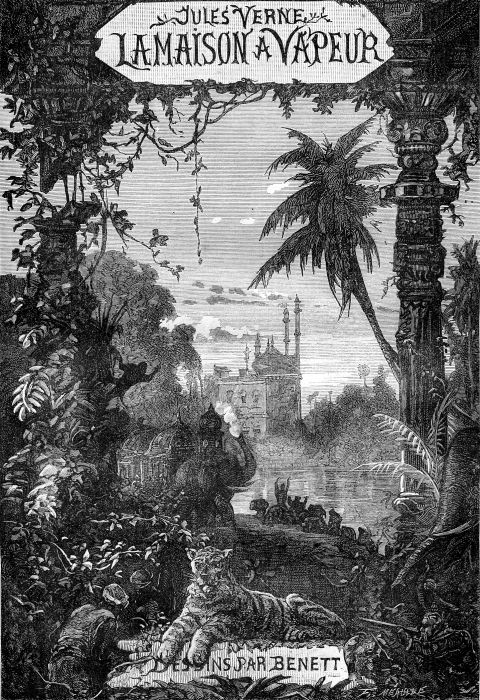
- The Steam House's illustrator is recorded as Léon Benett[5].
- The Steam House was published by Hetzel éds[6].
- The Steam House's genre is science fiction[7].
- The Steam House's genre is adventure fiction[8].
- The Steam House's genre is historical fiction[9].
- The Steam House followed Tribulations of a Chinaman in China[10].
- The Steam House was followed by Eight Hundred Leagues on the Amazon[11].
- The Steam House's part of the series is recorded as Voyages Extraordinaires[12].
- The Steam House's Commons category is recorded as The Steam House[13].
- The Steam House's language of work or name is recorded as French[14].
- The Steam House's country of origin is recorded as France[15].
- 1880 marks the founding of The Steam House[16].
- The Steam House was released on 1880[17].
- The Steam House's has edition or translation is recorded as Q131829940[18].
- The Steam House's narrative location is recorded as India[19].
- The Steam House's title is recorded as {'lang': 'fr', 'text': 'La Maison à vapeur'}[20].
- The Steam House's derivative work is recorded as Captain Nemo[21].
- The Steam House's copyright status is recorded as public domain[22].
- The Steam House's copyright status is recorded as public domain[23].
- The Steam House's form of creative work is recorded as novel[24].
Body
Authorship and Creation
The Steam House authored Jules Verne[3]. It was published by Hetzel éds[6].
Publication
The Steam House was released on 1880[17]. Its language of work or name is recorded as French[14]. Genres include science fiction[7], adventure fiction[8], and historical fiction[9]. Its part of the series is recorded as Voyages Extraordinaires[12].
Subject and Themes
The Steam House's part of the series is recorded as Voyages Extraordinaires[12].
Adaptations and Inspiration
The Steam House followed Tribulations of a Chinaman in China[10]. It was followed by Eight Hundred Leagues on the Amazon[11].
Why It Matters
The Steam House ranks in the top 4% of literary_work entities by monthly Wikipedia readership (44 views/month).[2] It has Wikipedia articles in 17 language editions, a strong signal of global cultural recognition.[25]