
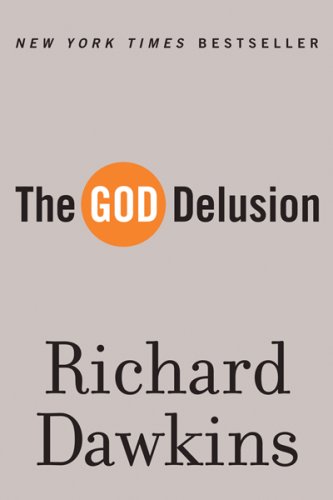
The God Delusion
book by Richard Dawkins
Press Enter · cited answer in seconds
0 sources
The God Delusion
Summary
The God Delusion is a written work[1]. It ranks in the top 0.54% of written_work entities by monthly Wikipedia readership (1,622 views/month, #35 of 6,426).[2]
Key Facts
- The God Delusion authored Richard Dawkins[3].
- The God Delusion's instance of is recorded as written work[4].
- The God Delusion was published by Bantam Press[5].
- The God Delusion was published by Q4201293[6].
- The God Delusion was published by Qanun[7].
- The God Delusion's genre is science[8].
- The God Delusion's genre is philosophy[9].
- The God Delusion's genre is religion[10].
- The God Delusion followed The Ancestor's Tale[11].
- The God Delusion was followed by The Greatest Show on Earth: The Evidence for Evolution[12].
- The God Delusion's Commons category is recorded as The God Delusion[13].
- The God Delusion's language of work or name is recorded as English[14].
- The God Delusion's country of origin is recorded as United Kingdom[15].
- The God Delusion was released on October 2, 2006[16].
- The God Delusion's has edition or translation is recorded as The God Delusion[17].
- The God Delusion's main subject is criticism of religion[18].
- The God Delusion's main subject is atheism[19].
- The God Delusion's described at URL is recorded as https://www.nytimes.com/2006/10/22/books/review/Holt.t.html[20].
- The God Delusion's title is recorded as {'lang': 'en', 'text': 'The God Delusion'}[21].
Product Details
The following facts are restated verbatim from public-domain and CC0 open-data sources — every line is independently verifiable against the named source's catalog.
MusicBrainz — CC0 open music encyclopedia
Body
Designation and Status
The God Delusion's instance of is recorded as written work[4].
Why It Matters
The God Delusion ranks in the top 0.54% of written_work entities by monthly Wikipedia readership (1,622 views/month, #35 of 6,426).[2] It has Wikipedia articles in 25 language editions, a strong signal of global cultural recognition.[24] It is known by 21 alternative names across languages and contexts.[25]