
Telshe yeshiva
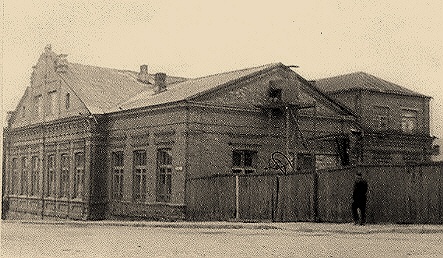
Yeshiva located in Telšiai, Lithuania
Press Enter · cited answer in seconds
0 sources
Telshe yeshiva
Summary
Telshe yeshiva is a yeshiva[1]. It draws 40 Wikipedia views per month (yeshiva category, ranking #8 of 54).[2]
Key Facts
- Telshe yeshiva's religion is recorded as Judaism[3].
- Telshe yeshiva is located in Telšiai[4].
- Telshe yeshiva is in the country of Lithuania[5].
- Telshe yeshiva's instance of is recorded as yeshiva[6].
- Telshe yeshiva's Commons category is recorded as Telshe Yeshiva[7].
- January 1, 1875 marks the founding of Telshe yeshiva[8].
- Telshe yeshiva was dissolved in July 15, 1941[9].
- Telshe yeshiva's coordinate location is recorded as {'latitude': 41.594166666666666, 'longitude': -81.48333333333333}[10].
- Telshe yeshiva's official name is recorded as טעלזער ישיבה[11].
- Telshe yeshiva's Carnegie Classification of Institutions of Higher Education is recorded as special focus four-year: faith-related institutions[12].
- Telshe yeshiva's Carnegie Classification of Institutions of Higher Education is recorded as majority undergraduate[13].
- Telshe yeshiva's Carnegie Classification of Institutions of Higher Education is recorded as postbaccalaureate: single program - other[14].
- Telshe yeshiva's Carnegie Classification of Institutions of Higher Education is recorded as four-year, very small, primarily nonresidential[15].
- Telshe yeshiva's Carnegie Classification of Institutions of Higher Education is recorded as four-year, full-time, inclusive, lower transfer-in[16].
- Telshe yeshiva's Carnegie Classification of Institutions of Higher Education is recorded as professions focus, high graduate coexistence[17].
Body
Founding
January 1, 1875 marks the founding of Telshe yeshiva[8].
Identity
Telshe yeshiva's official name is recorded as טעלזער ישיבה[11].
Dissolution
Telshe yeshiva was dissolved in July 15, 1941[9].
Why It Matters
Telshe yeshiva draws 40 Wikipedia views per month (yeshiva category, ranking #8 of 54).[2] It has Wikipedia articles in 8 language editions, a strong signal of global cultural recognition.[18] It is known by 13 alternative names across languages and contexts.[19]