
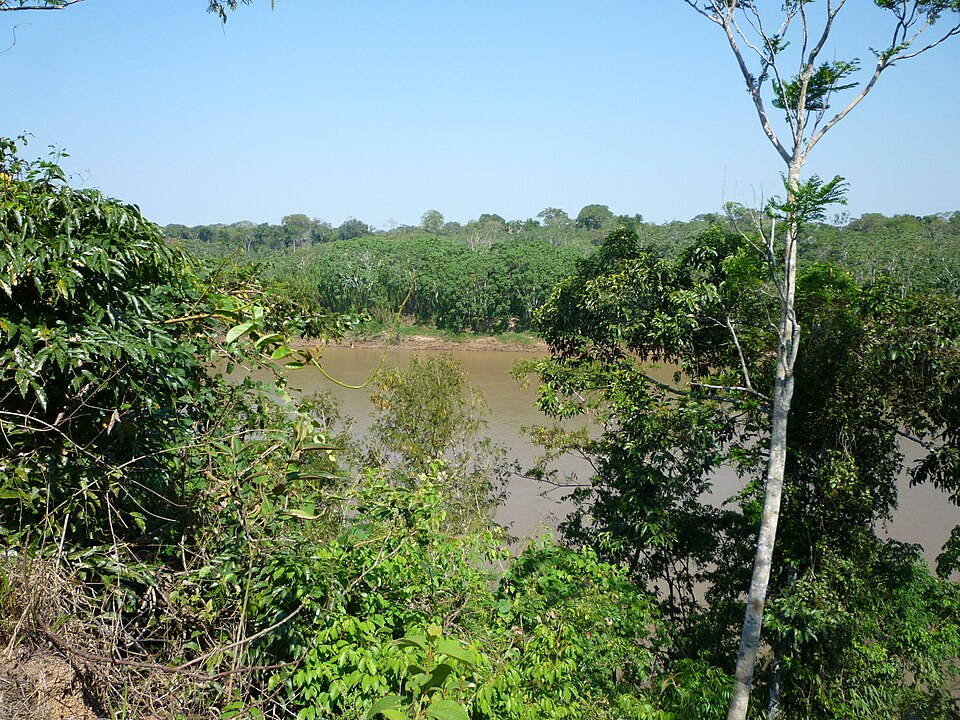
Tambopata River
0 sources
Summary
Tambopata River is a river[1]. It ranks in the top 2% of river entities by monthly Wikipedia readership (69 views/month).[2]
Key Facts
- Tambopata River is located in Puno Department[3].
- Tambopata River is located in Madre de Dios Department[4].
- Tambopata River is located in Sandia Province[5].
- Tambopata River is in the country of Peru[6].
- Tambopata River is in the country of Bolivia[7].
- Tambopata River's instance of is recorded as river[8].
- Tambopata River's Commons category is recorded as Tambopata River[9].
- Tambopata River's mouth of the watercourse is recorded as Madre de Dios River[10].
- Tambopata River's coordinate location is recorded as {'latitude': -12.597145, 'longitude': -69.166507}[11].
- Tambopata River's coordinate location is recorded as {'latitude': -14.575675, 'longitude': -69.207572}[12].
- Tambopata River's drainage basin is recorded as Amazon basin[13].
Body
Geography
Country listings include Peru[6], a sovereign state[14], in Peru[15], founded in 1821[16] and Bolivia[7], a sovereign state[17], in Bolivia[18], founded in 1825[19]. Located in include Puno Department[3], a department of Peru[20], in Peru[21]; Madre de Dios Department[4], a department of Peru[22], in Peru[23]; and Sandia Province[5], a province of Peru[24], in Peru[25].
Designation and Status
Tambopata River's instance of is recorded as river[8].
Why It Matters
Tambopata River ranks in the top 2% of river entities by monthly Wikipedia readership (69 views/month).[2] It has Wikipedia articles in 6 language editions, a strong signal of global cultural recognition.[26] It is known by 9 alternative names across languages and contexts.[27]