
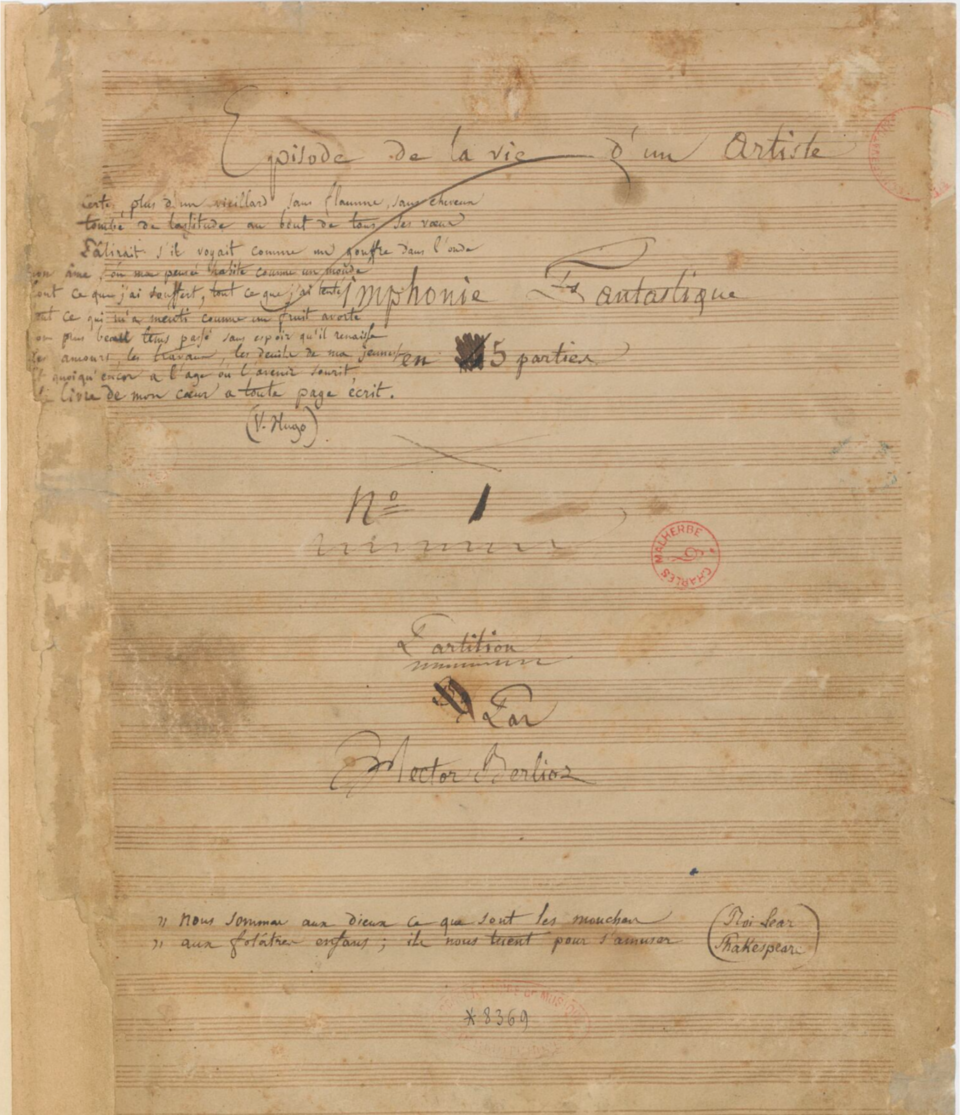
Symphonie fantastique
program symphony by Hector Berlioz
Press Enter · cited answer in seconds
0 sources
Summary
Symphonie fantastique is a musical work/composition[1]. It ranks in the top 3% of musical_work_composition entities by monthly Wikipedia readership (1,346 views/month).[2]
Key Facts
- Symphonie fantastique's instance of is recorded as musical work/composition[3].
- Symphonie fantastique's composer is recorded as Hector Berlioz[4].
- Symphonie fantastique's genre is programmatic symphony[5].
- Symphonie fantastique's based on is recorded as Dies Irae[6].
- Symphonie fantastique was followed by Lélio[7].
- Symphonie fantastique's Commons category is recorded as Symphonie fantastique[8].
- Symphonie fantastique's catalog code is recorded as H 48[9].
- 1830 marks the founding of Symphonie fantastique[10].
- Symphonie fantastique was released on 1845[11].
- Symphonie fantastique's dedicated to is recorded as Nicholas I of Russia[12].
- Symphonie fantastique's date of first performance is recorded as December 5, 1830[13].
- Symphonie fantastique's title is recorded as {'lang': 'fr', 'text': 'Symphonie fantastique'}[14].
- Symphonie fantastique's duration is recorded as {'unit': 'minute', 'amount': '+55'}[15].
- Symphonie fantastique's form of creative work is recorded as symphony[16].
- Symphonie fantastique's opus number is recorded as 14[17].
Body
Publication
Symphonie fantastique was published on 1845[11]. Its genre is programmatic symphony[5].
Adaptations and Inspiration
Symphonie fantastique was followed by Lélio[7].
Why It Matters
Symphonie fantastique ranks in the top 3% of musical_work_composition entities by monthly Wikipedia readership (1,346 views/month).[2] It has Wikipedia articles in 23 language editions, a strong signal of global cultural recognition.[18] It is known by 19 alternative names across languages and contexts.[19]