
Subhas Chandra Bose
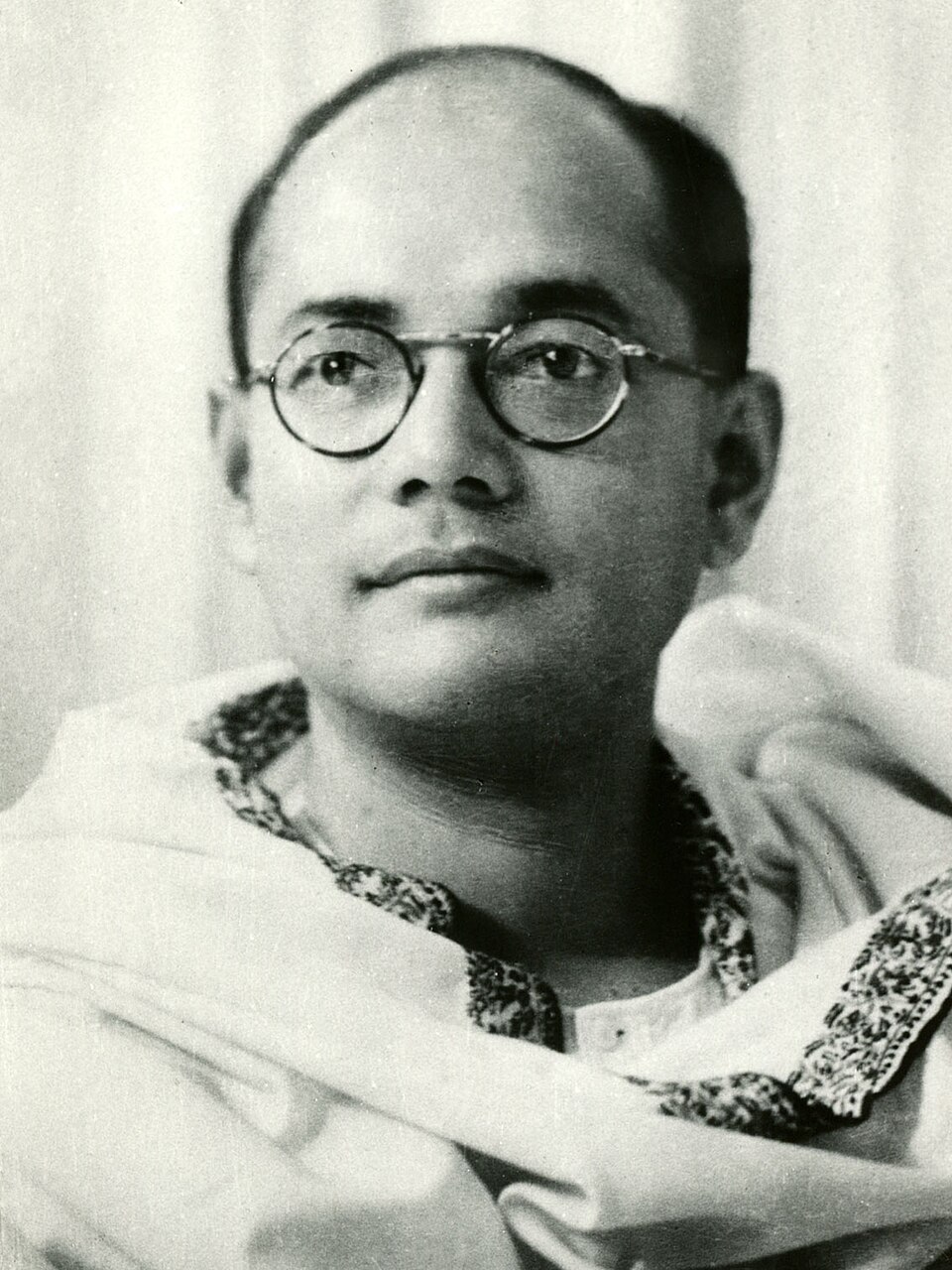
0 sources
Summary
Subhas Chandra Bose was born on January 23, 1897[1], in Cuttack[2]. He died on August 18, 1945[3], in Taihoku[4]. He worked as a politician[5], revolutionary[6], writer[7], freedom fighter[8], and autobiographer[9]. He ranks in the top 0.55% of human entities by monthly Wikipedia readership (33,045 views/month, #5,516 of 1,000,298).[10]
Key Facts
- Father: Janakinath Bose[11]
- Mother: Prabhabati Bose[12]
- Spouse: Emilie Schenkl[13]
- Child: Anita Bose Pfaff[14]
- Country of citizenship: British Raj[15]
- Native language: Bangla[16]
- Ethnic group: Kayastha[17]
- Occupation: resistance fighter[18], political leader[19]
- Position held: President of the Indian National Congress[20], Mayor of Kolkata[21], commander-in-chief[22]
- Employer: Indian Civil Service[23]
- Educated at: University of Calcutta[24], Fitzwilliam College[25], Presidency University[26], Scottish Church College[27], Ravenshaw Collegiate School[28], Bangabasi Morning College[29]
- Notable work: The Indian Struggle[30]
- Religion or worldview: Hinduism[31]
- Sex or gender: male[32]
- Member of political party: Indian National Congress[33], All India Forward Bloc[34]
- Movement: Indian independence movement[35]
- Military branch: Indian National Army[36]
- Commons category: Subhas Chandra Bose[37]
- Said to be the same as: Bhagwanji[38]
- Cause of death: burn[39]
- Residence: Netaji Bhawan[40]
- Participated in conflict: World War II[41]
- Family name: Bose[42]
- Given name: Subhash[43]
- Official website: https://netaji.org/[44]
Body
Works and Contributions
Things named for Subhas Chandra Bose include Netaji Subhas Chandra Bose International Airport[45], an international airport[46], in India[47]; Netaji Subhash Chandra Bose Island[48], an island[49], in India[50]; Netaji Subhas Open University[51], an open university[52], in India[53], founded in 1997[54]; Netaji Indoor Stadium[55], a stadium[56], in India[57], founded in 1975[58]; Netaji Bhawan[59], a museum[60], in India[61]; Saltora Netaji Centenary College[62], a university[63], in India[64], founded in 2001[65]; Netaji Institute for Asian Studies[66], a research institute[67], headquartered in Kolkata[68]; and All India Netaji Revolutionary Party[69], a political party[70], in India[71], founded in 1999[72].
Why It Matters
Subhas Chandra Bose has Wikipedia articles in 28 language editions, a strong signal of global cultural recognition.[73] He is known by 35 alternative names across languages and contexts.[74]
Entities named for him include Netaji Subhas Chandra Bose International Airport[45], an international airport[46], in India[47]; Netaji Subhash Chandra Bose Island[48], an island[49], in India[50]; Netaji Subhas Open University[51], an open university[52], in India[53], founded in 1997[54]; Netaji Indoor Stadium[55], a stadium[56], in India[57], founded in 1975[58]; Netaji Bhawan[59], a museum[60], in India[61]; and Saltora Netaji Centenary College[62], a university[63], in India[64], founded in 2001[65].
FAQs
Where was Subhas Chandra Bose born?
Subhas Chandra Bose's place of birth was Cuttack[2].
Where did Subhas Chandra Bose die?
Subhas Chandra Bose passed away in Taihoku[4].
Who were Subhas Chandra Bose's parents?
Subhas Chandra Bose's father was Janakinath Bose[11]. Subhas Chandra Bose's mother was Prabhabati Bose[12].
Who was Subhas Chandra Bose married to?
Subhas Chandra Bose's spouses include Emilie Schenkl[13].
What did Subhas Chandra Bose do for work?
Subhas Chandra Bose worked as a politician[5], revolutionary[6], writer[7], freedom fighter[8], and autobiographer[9].
Where did Subhas Chandra Bose go to school?
Subhas Chandra Bose was educated at University of Calcutta[24], Fitzwilliam College[25], Presidency University[26], and Scottish Church College[27].