
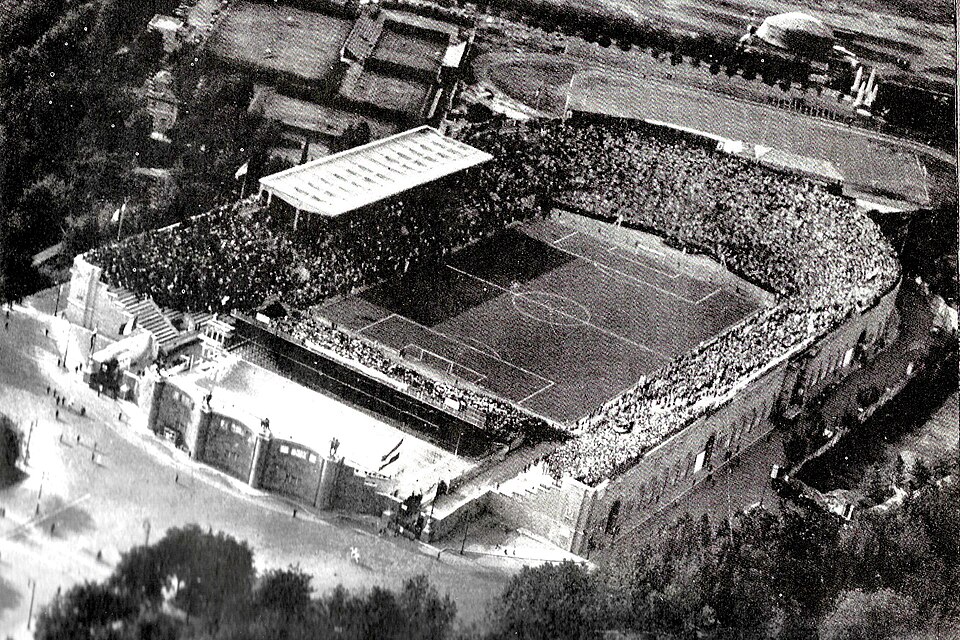
Stadio Nazionale
former sports venue in Rome
Press Enter · cited answer in seconds
0 sources
Summary
Stadio Nazionale is a defunct sports venue[1]. It draws 1,513 Wikipedia views per month (defunct_sports_venue category, ranking #7 of 16).[2]
Key Facts
- Stadio Nazionale is located in Rome[3].
- Stadio Nazionale is in the country of Italy[4].
- Stadio Nazionale's instance of is recorded as defunct sports venue[5].
- Stadio Nazionale's instance of is recorded as destroyed building or structure[6].
- Stadio Nazionale's architect is recorded as Marcello Piacentini[7].
- Stadio Nazionale is owned by Rome[8].
- Stadio Nazionale took place at Rome[9].
- Stadio Nazionale's Commons category is recorded as Stadio Nazionale[10].
- Stadio Nazionale's occupant is recorded as Italy national rugby union team[11].
- Stadio Nazionale's occupant is recorded as SS Lazio[12].
- Stadio Nazionale's occupant is recorded as AS Roma[13].
- 1910 marks the founding of Stadio Nazionale[14].
- Stadio Nazionale was dissolved in 1957[15].
- Stadio Nazionale's coordinate location is recorded as {'latitude': 41.927222, 'longitude': 12.472222}[16].
- Stadio Nazionale's sport is recorded as association football[17].
- Stadio Nazionale's surface played on is recorded as lawn[18].
- Stadio Nazionale's significant event is recorded as 1934 FIFA World Cup[19].
- Stadio Nazionale's maximum capacity is recorded as {'amount': '+47300'}[20].
- Stadio Nazionale's date of official opening is recorded as June 10, 1911[21].
- Stadio Nazionale's native label is recorded as Stadio Nazionale del PNF[22].
- Stadio Nazionale's date of official closure is recorded as 1953[23].
- Stadio Nazionale's street address is recorded as Viale Tiziano, Roma[24].
Body
Geography
Stadio Nazionale is in the country of Italy[4]. It is located in Rome[3].
Designation and Status
Recorded instance of include defunct sports venue[5] and destroyed building or structure[6].
History and Context
1910 marks the founding of Stadio Nazionale[14]. It is owned by Rome[8].
Why It Matters
Stadio Nazionale draws 1,513 Wikipedia views per month (defunct_sports_venue category, ranking #7 of 16).[2] It has Wikipedia articles in 24 language editions, a strong signal of global cultural recognition.[25] It is known by 23 alternative names across languages and contexts.[26]