
Spotted Forktail
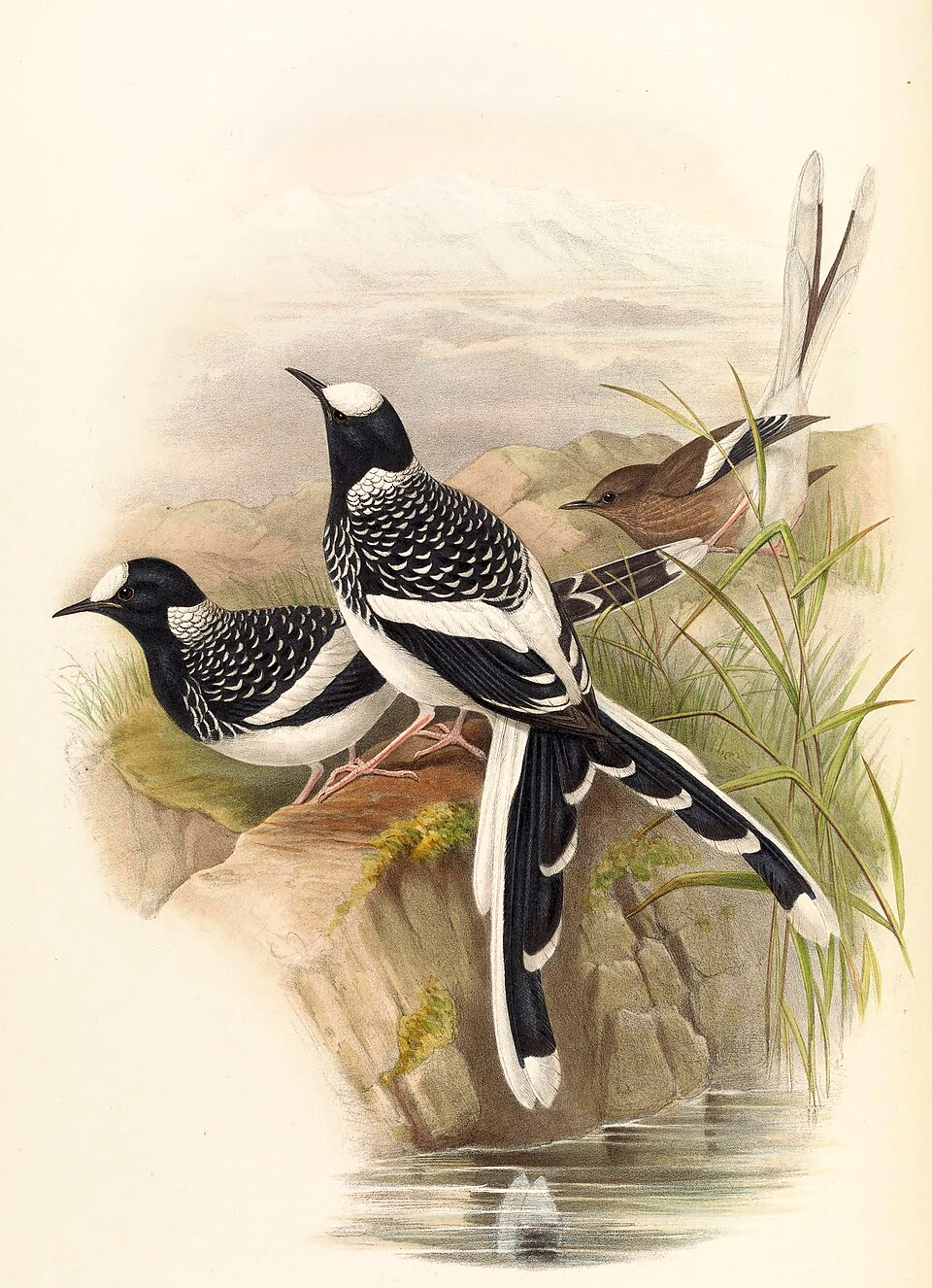
0 sources
Spotted Forktail
Summary
Spotted Forktail is a taxon[1]. It ranks in the top 0.83% of taxon entities by monthly Wikipedia readership (29 views/month, #1,625 of 195,241).[2]
Key Facts
- Spotted Forktail's instance of is recorded as taxon[3].
- Spotted Forktail is classified at the rank of species[4].
- Spotted Forktail's IUCN conservation status is recorded as Least Concern[5].
- Spotted Forktail is classified within Enicurus[6].
- Spotted Forktail is endemic to Neora Valley National Park[7].
- Spotted Forktail is endemic to Mahananda Wildlife Sanctuary[8].
- Spotted Forktail is endemic to Singalila National Park[9].
- Spotted Forktail is endemic to Varsey Rhododendron Sanctuary[10].
- Spotted Forktail is endemic to Dzuluk[11].
- Spotted Forktail is endemic to Fambong Lho Wildlife Sanctuary[12].
- Spotted Forktail is endemic to Lachen[13].
- Spotted Forktail is endemic to Okhrey[14].
- Spotted Forktail is endemic to Pelling[15].
- Spotted Forktail is endemic to Shingba Rhododendron Sanctuary[16].
- Spotted Forktail is endemic to Yuksom[17].
- Spotted Forktail is endemic to Dzuleke[18].
- Spotted Forktail is endemic to Khonoma Nature Conservation and Tragopan Sanctuary[19].
- Spotted Forktail is endemic to Garbhanga Reserve Forest[20].
- Spotted Forktail is endemic to Reiek[21].
- Spotted Forktail is endemic to Kamlang Wildlife Sanctuary[22].
- Spotted Forktail is endemic to Eaglenest Wildlife Sanctuary[23].
- Spotted Forktail is endemic to Mehao Wildlife Sanctuary[24].
- Spotted Forktail is endemic to Mishmi Hills[25].
- Spotted Forktail is endemic to Namdapha National Park[26].
- Spotted Forktail is endemic to Singchung Bugun Community Reserve[27].
Body
Classification
Under binomial nomenclature, Spotted Forktail is Enicurus maculatus[28]. It is classified at the rank of species[4]. It is classified within Enicurus[6]. Recorded taxon common name include {'lang': 'cy', 'text': 'robin gynffonfforchog brith'}[29], {'lang': 'en', 'text': 'it'}[30], {'lang': 'de', 'text': 'Fleckenscherenschwanz'}[31], {'lang': 'es', 'text': 'Torrentero Moteado'}[32], {'lang': 'ca', 'text': 'enicur ocel·lat'}[33], and {'lang': 'cs', 'text': 'drozdek skvrnitohřbetý'}[34].
Distribution
Recorded endemic to include Neora Valley National Park[7], Mahananda Wildlife Sanctuary[8], Singalila National Park[9], Varsey Rhododendron Sanctuary[10], Dzuluk[11], and Fambong Lho Wildlife Sanctuary[12].
Identifiers
Spotted Forktail's iNaturalist taxon ID is recorded as 13089[35]. Spotted Forktail's NCBI taxonomy ID is recorded as 320571[36]. Spotted Forktail's GBIF taxon ID is recorded as 2492627[37]. Spotted Forktail's ITIS TSN is recorded as 559912[38].
Why It Matters
Spotted Forktail ranks in the top 0.83% of taxon entities by monthly Wikipedia readership (29 views/month, #1,625 of 195,241).[2] It has Wikipedia articles in 12 language editions, a strong signal of global cultural recognition.[39] It is known by 11 alternative names across languages and contexts.[40]