
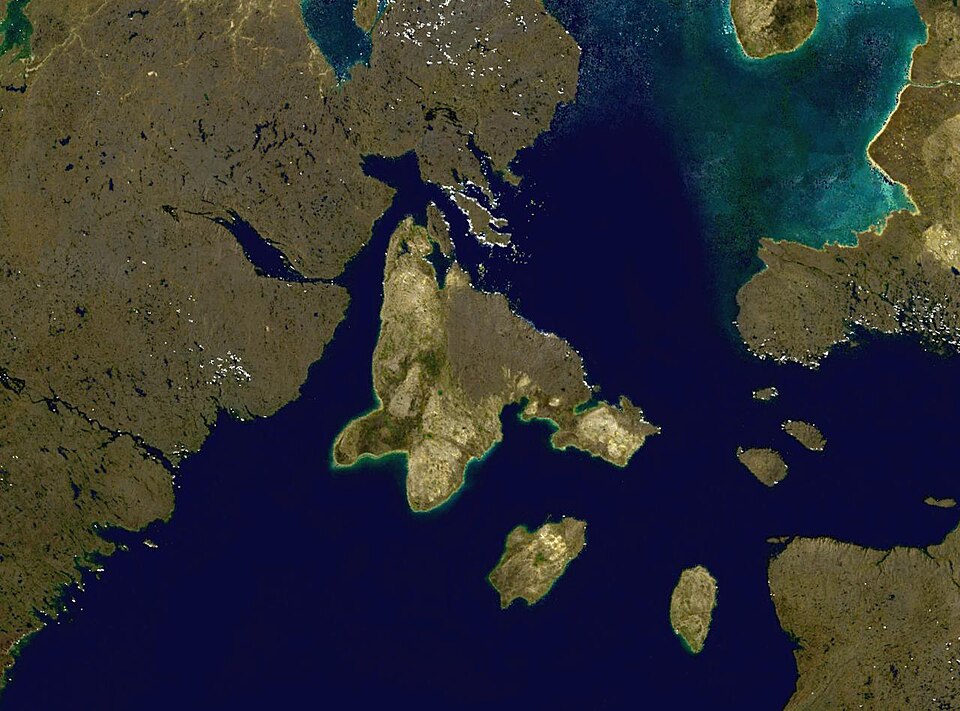
Southampton Island
0 sources
Southampton Island
Summary
Southampton Island is an island[1]. It has Wikipedia articles in 26 language editions, a strong signal of global cultural recognition.[2]
Key Facts
- Southampton Island is located in Nunavut[3].
- Southampton Island is in the country of Canada[4].
- Southampton Island is on the body of water Hudson Bay[5].
- Southampton Island is on the continent of North America[6].
- Southampton Island's instance of is recorded as island[7].
- Southampton Island's capital is recorded as Coral Harbour[8].
- The location of Southampton Island was Hudson Bay[9].
- Southampton Island is part of Canadian Arctic Archipelago[10].
- Southampton Island's Commons category is recorded as Southampton Island[11].
- Southampton Island's time of discovery or invention is recorded as 1613[12].
- Southampton Island's coordinate location is recorded as {'lat': 64.333333, 'lon': -84.666667}[13].
- Southampton Island has a population of {'amount': '+834'}[14].
- Southampton Island's native label is recorded as {'lang': 'en', 'text': 'Southampton Island'}[15].
- Southampton Island's length is recorded as {'unit': 'Q828224', 'amount': '+355'}[16].
- Southampton Island covers an area of {'unit': 'Q712226', 'amount': '+41214'}[17].
- Southampton Island's width is recorded as {'unit': 'Q828224', 'amount': '+252'}[18].
- Southampton Island's on focus list of Wikimedia project is recorded as Wikipedia:Vital articles/Level/4[19].
Body
Geography
Southampton Island is in the country of Canada[4]. It is located in Nunavut[3]. It is on the body of water Hudson Bay[5]. It is on the continent of North America[6]. It is part of Canadian Arctic Archipelago[10].
Physical Characteristics
Southampton Island covers an area of {'unit': 'Q712226', 'amount': '+41214'}[17]. Its length is recorded as {'unit': 'Q828224', 'amount': '+355'}[16]. It has a population of {'amount': '+834'}[14].
Designation and Status
Southampton Island's instance of is recorded as island[7].
Why It Matters
Southampton Island has Wikipedia articles in 26 language editions, a strong signal of global cultural recognition.[2] It is known by 13 alternative names across languages and contexts.[20]