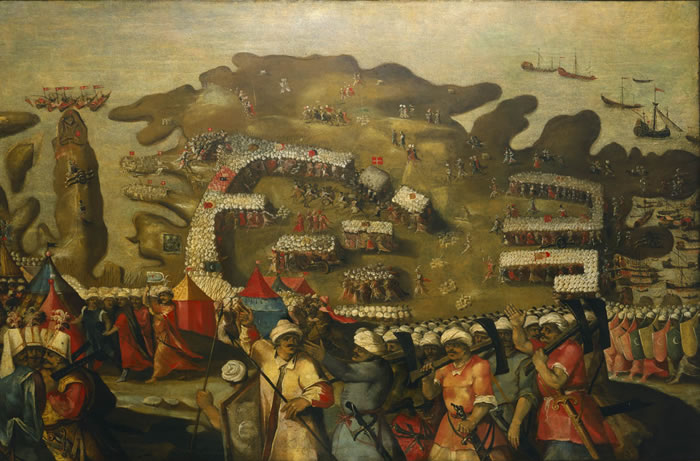
Siege of Malta
0 sources
Siege of Malta
Summary
Siege of Malta is a siege[1]. It ranks in the top 0.35% of siege entities by monthly Wikipedia readership (4,841 views/month, #5 of 1,415).[2]
Key Facts
- Siege of Malta is in the country of Hospitaller Malta[3].
- Siege of Malta's instance of is recorded as siege[4].
- Siege of Malta's instance of is recorded as battle[5].
- The location of Siege of Malta was Grand Harbour[6].
- Siege of Malta is part of Ottoman–Habsburg Wars[7].
- Siege of Malta's Commons category is recorded as Great Siege of Malta[8].
- Siege of Malta began on May 18, 1565[9].
- Siege of Malta ended on September 8, 1565[10].
- Siege of Malta's coordinate location is recorded as {'lat': 35.89194444444445, 'lon': 14.518333333333333}[11].
- Among those involved in Siege of Malta was Ottoman Empire[12].
- Among those involved in Siege of Malta was Regency of Algiers[13].
- A participant in Siege of Malta was Knights Hospitaller[14].
- Among those involved in Siege of Malta was Hispanic Monarchy[15].
- A participant in Siege of Malta was Republic of Genoa[16].
- A participant in Siege of Malta was Duchy of Savoy[17].
- Among those involved in Siege of Malta was Duchy of Florence[18].
- A participant in Siege of Malta was Papal States[19].
- Siege of Malta's topic's main category is recorded as Category:Great Siege of Malta[20].
- Siege of Malta's Commons gallery is recorded as Siege of Malta (1565)[21].
Body
When and Where
Siege of Malta began on May 18, 1565[9]. It ended on September 8, 1565[10]. The location of it was Grand Harbour[6]. It is in the country of Hospitaller Malta[3].
Context
Siege of Malta is part of Ottoman–Habsburg Wars[7]. Recorded instance of include siege[4] and battle[5].
Participants
Recorded participant include Ottoman Empire[12], Regency of Algiers[13], Knights Hospitaller[14], Hispanic Monarchy[15], Republic of Genoa[16], and Duchy of Savoy[17].
Why It Matters
Siege of Malta ranks in the top 0.35% of siege entities by monthly Wikipedia readership (4,841 views/month, #5 of 1,415).[2] It has Wikipedia articles in 26 language editions, a strong signal of global cultural recognition.[22] It is known by 17 alternative names across languages and contexts.[23]