
Seven Holy Founders of the Servite Order
seven founders of a Roman Catholic order
Press Enter · cited answer in seconds
0 sources
Seven Holy Founders of the Servite Order
Summary
Seven Holy Founders of the Servite Order is a group of humans[1]. It draws 42 Wikipedia views per month (group_of_humans category, ranking #248 of 870).[2]
Key Facts
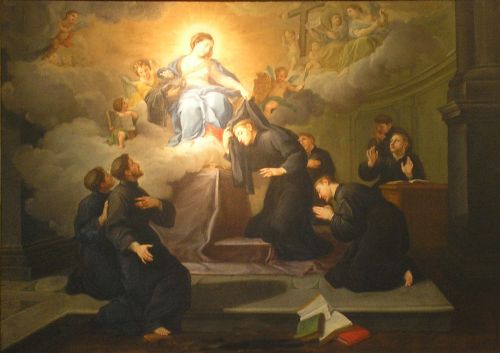
- Seven Holy Founders of the Servite Order's image is recorded as SetServitesFondatori.jpg[3].
- Seven Holy Founders of the Servite Order's instance of is recorded as group of humans[4].
- Seven Holy Founders of the Servite Order's instance of is recorded as septet[5].
- Seven Holy Founders of the Servite Order's Commons category is recorded as Seven founders of the Servite Order churches[6].
- Seven Holy Founders of the Servite Order's canonization status is recorded as Catholic saint[7].
- Seven Holy Founders of the Servite Order's has part is recorded as Amadeus of the Amidei[8].
- Seven Holy Founders of the Servite Order's has part is recorded as Alexis Falconieri[9].
- Seven Holy Founders of the Servite Order's has part is recorded as Buonfiglio dei Monaldi[10].
- Seven Holy Founders of the Servite Order's has part is recorded as Hugh dei Lippi Ugguccioni[11].
- Seven Holy Founders of the Servite Order's feast day is recorded as February 17[12].
- Seven Holy Founders of the Servite Order's Google Knowledge Graph ID is recorded as /g/1225dpsp[13].
- Seven Holy Founders of the Servite Order's Santiebeati ID is recorded as 26150[14].
- Seven Holy Founders of the Servite Order's Ökumenisches Heiligenlexikon ID is recorded as S/Stifter_des_Servitenordens.html[15].
- Seven Holy Founders of the Servite Order's causesanti.va ID is recorded as sette-santi-fondatori[16].
- Seven Holy Founders of the Servite Order's Heiligen.net ID is recorded as 02/17/02-17-1310-stichters[17].
Why It Matters
Seven Holy Founders of the Servite Order draws 42 Wikipedia views per month (group_of_humans category, ranking #248 of 870).[2] It has Wikipedia articles in 7 language editions, a strong signal of global cultural recognition.[18] It is known by 4 alternative names across languages and contexts.[19]