
Second Egyptian-Ottoman War
0 sources
Second Egyptian-Ottoman War
Summary
Second Egyptian-Ottoman War is a war[1]. It draws 1,072 Wikipedia views per month (war category, ranking #249 of 968).[2]
Key Facts
- Second Egyptian-Ottoman War's instance of is recorded as war[3].
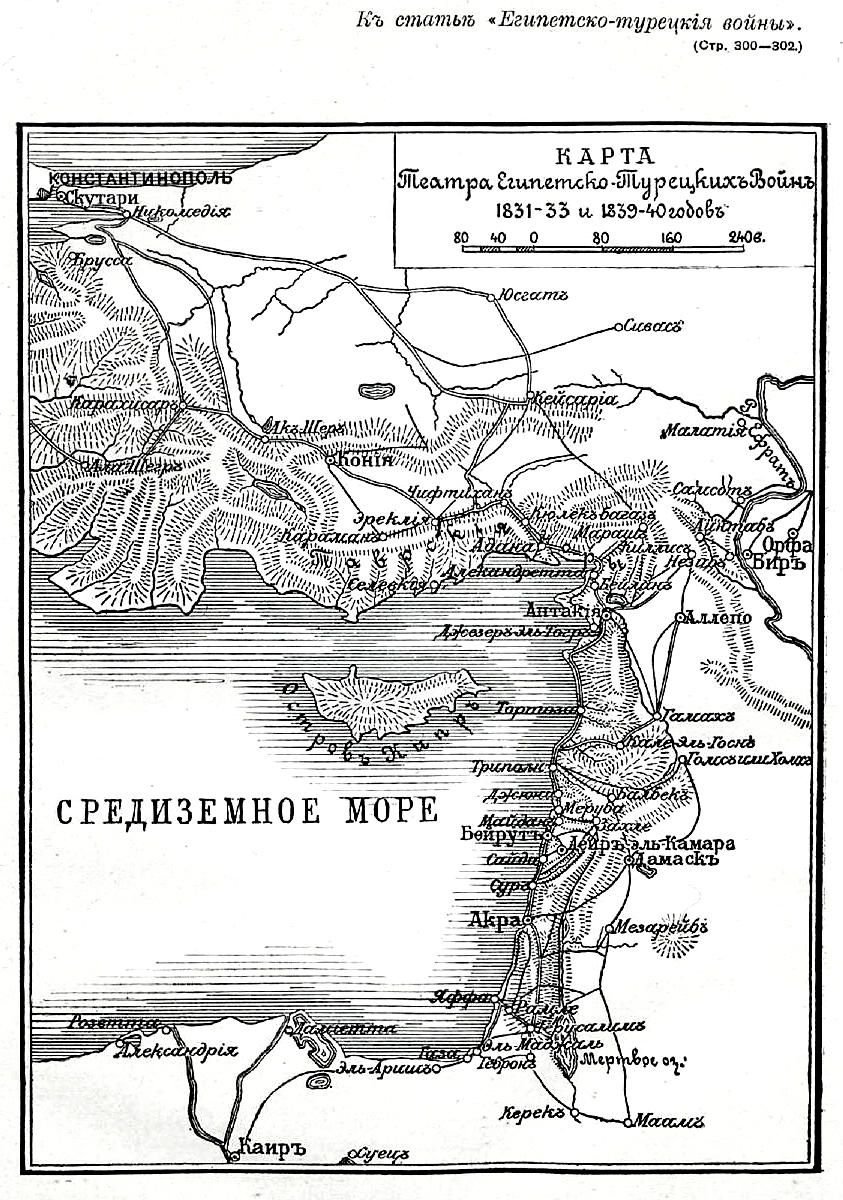
- Second Egyptian-Ottoman War took place at Levant[4].
- Second Egyptian-Ottoman War is part of Egyptian–Ottoman War[5].
- Second Egyptian-Ottoman War's Commons category is recorded as Egyptian–Ottoman War (1839–1841)[6].
- Second Egyptian-Ottoman War began on 1839[7].
- Second Egyptian-Ottoman War ended on 1841[8].
- Among those involved in Second Egyptian-Ottoman War was Ottoman Empire[9].
- Among those involved in Second Egyptian-Ottoman War was United Kingdom of Great Britain and Ireland[10].
- A participant in Second Egyptian-Ottoman War was Austrian Empire[11].
- Among those involved in Second Egyptian-Ottoman War was Russian Empire[12].
- A participant in Second Egyptian-Ottoman War was Kingdom of Prussia[13].
- A participant in Second Egyptian-Ottoman War was Egypt eyalet[14].
- Among those involved in Second Egyptian-Ottoman War was July Monarchy[15].
- Among those involved in Second Egyptian-Ottoman War was Kingdom of Spain[16].
- Second Egyptian-Ottoman War's topic's main category is recorded as Category:Egyptian–Ottoman War (1839–1841)[17].
- Second Egyptian-Ottoman War's described by source is recorded as Sytin Military Encyclopedia[18].
Body
When and Where
Second Egyptian-Ottoman War began on 1839[7]. It ended on 1841[8]. It took place at Levant[4].
Context
Second Egyptian-Ottoman War is part of Egyptian–Ottoman War[5]. Its instance of is recorded as war[3].
Participants
Recorded participant include Ottoman Empire[9], United Kingdom of Great Britain and Ireland[10], Austrian Empire[11], Russian Empire[12], Kingdom of Prussia[13], and Egypt eyalet[14].
Why It Matters
Second Egyptian-Ottoman War draws 1,072 Wikipedia views per month (war category, ranking #249 of 968).[2] It has Wikipedia articles in 18 language editions, a strong signal of global cultural recognition.[19] It is known by 8 alternative names across languages and contexts.[20]