
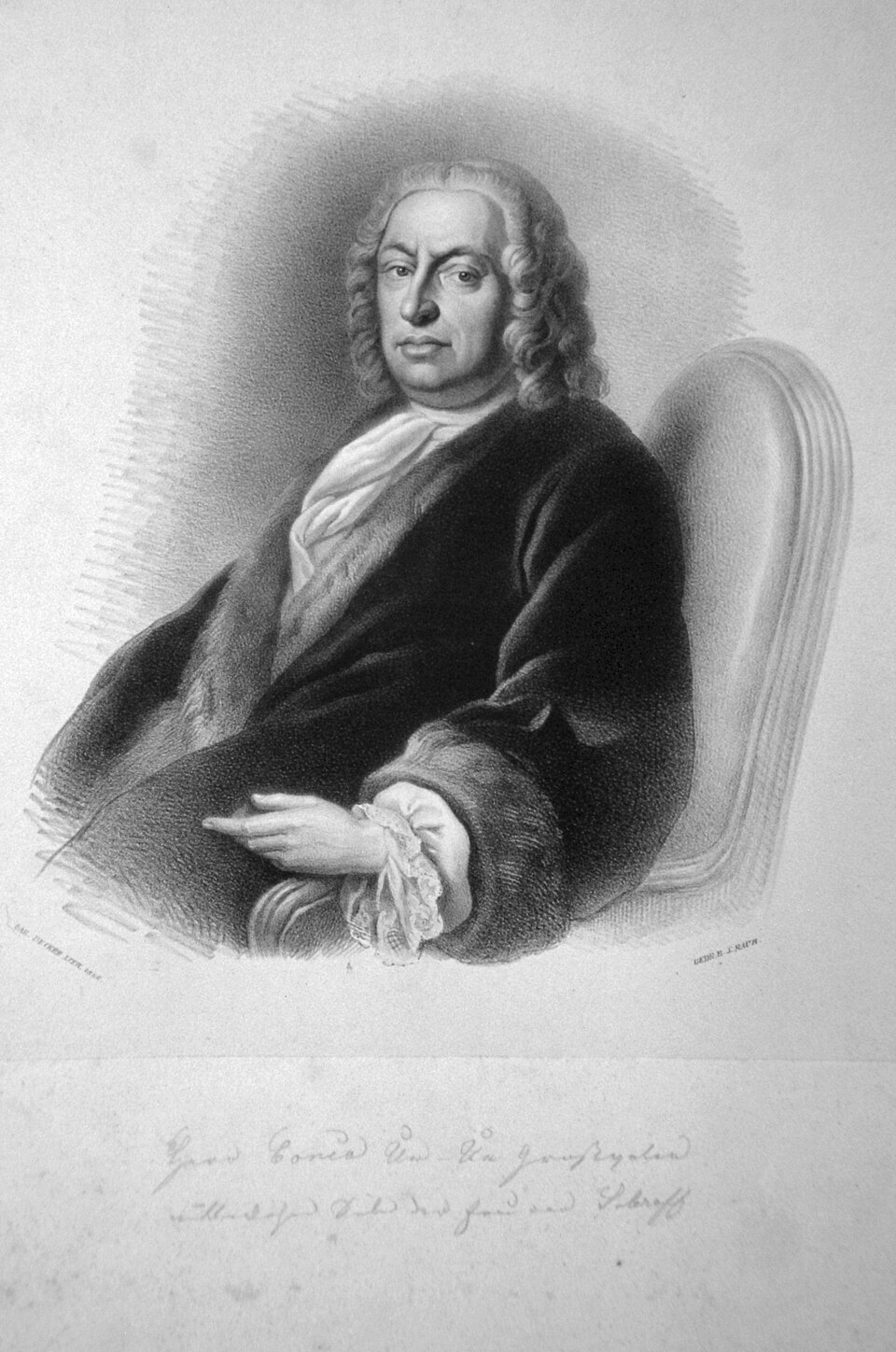
Sebastiano Conca
0 sources
Summary
Sebastiano Conca is a human[1]. His place of birth was Gaeta[2]. He was born on January 8, 1680[3]. He passed away in Naples[4]. He died on September 1, 1764[5]. He worked as a painter[6] and draftsperson[7]. He ranks in the top 0.73% of human entities by monthly Wikipedia readership (31 views/month, #7,293 of 1,000,298).[8]
Key Facts
- Born in Gaeta[2].
- Sebastiano Conca died in Naples[4].
- Sebastiano Conca was born on January 8, 1680[3].
- Sebastiano Conca died on September 1, 1764[5].
- Sebastiano Conca's professions included painter[6].
- Sebastiano Conca worked as a draftsperson[7].
- A notable student of Sebastiano Conca was Corrado Giaquinto[9].
- A notable student of Sebastiano Conca was Cristóbal Valero[10].
- A notable student of Sebastiano Conca was Pompeo Batoni[11].
- A notable work attributed to Sebastiano Conca is Allegory of Fame[12].
- A notable work attributed to Sebastiano Conca is Boreas Abducting Oreithyia[13].
- A notable work attributed to Sebastiano Conca is Sketch for Sepulchrers[14].
- A notable work attributed to Sebastiano Conca is Madonna and Child with Saint John of Nepomuk[15].
- Sebastiano Conca is recorded as male[16].
- Sebastiano Conca's instance of is recorded as human[17].
- Sebastiano Conca's Commons category is recorded as Sebastiano Conca[18].
- Sebastiano Conca's family name is recorded as Conca[19].
- Sebastiano Conca's given name is recorded as Sebastiano[20].
- Sebastiano Conca's sponsor is recorded as Pietro Ottoboni[21].
- Sebastiano Conca studied under Francesco Solimena[22].
- Sebastiano Conca's described by source is recorded as Web Gallery of Art[23].
- Sebastiano Conca's described by source is recorded as Encyclopædia Britannica 11th edition[24].
- Sebastiano Conca's languages spoken, written or signed is recorded as Italian[25].
- Sebastiano Conca's Commons Creator page is recorded as Sebastiano Conca[26].
- Sebastiano Conca's name in native language is recorded as Sebastiano Conca[27].
Body
Origins and Family
Born in Gaeta[2], Sebastiano Conca… he was born on January 8, 1680[3].
Education
Sebastiano Conca studied under Francesco Solimena[22].
Career and Affiliations
Recorded occupations include painter[6] and draftsperson[7]. Notable students include Corrado Giaquinto[9], a painter[28], 1703–1766[29], of Italy[30]; Cristóbal Valero[10], a painter[31], 1707–1789[32], of Crown of Aragon[33]; and Pompeo Batoni[11], a painter[34], 1708–1787[35], of Italy[36].
Works and Contributions
Notable works include Allegory of Fame[12], a painting[37], founded in 1730[38]; Boreas Abducting Oreithyia[13], a painting[39], founded in 1750[40]; Sketch for Sepulchrers[14], a painting[41], founded in 1750[42]; and Madonna and Child with Saint John of Nepomuk[15], a painting[43], in Italy[44].
Death and Burial
Sebastiano Conca died on September 1, 1764[5]. He died in Naples[4].
Why It Matters
Sebastiano Conca ranks in the top 0.73% of human entities by monthly Wikipedia readership (31 views/month, #7,293 of 1,000,298).[8] He has Wikipedia articles in 12 language editions, a strong signal of global cultural recognition.[45] He is known by 45 alternative names across languages and contexts.[46]
He has been cited as an influence by Vito D'Anna[47], a painter[48], 1718–1769[49], awarded the Order of the Golden Spur[50] and Gioacchino Martorana[51], a painter[52], 1736–1779[53], of Kingdom of Sicily[54], specialised in painting[55].
FAQs
Where was Sebastiano Conca born?
Sebastiano Conca was born in Gaeta[2].
Where did Sebastiano Conca die?
Sebastiano Conca passed away in Naples[4].
What did Sebastiano Conca do for work?
Sebastiano Conca worked as painter[6] and draftsperson[7].
Who did Sebastiano Conca influence?
Sebastiano Conca has been cited as an influence by Vito D'Anna[47] and Gioacchino Martorana[51].