
Óscar Esplá
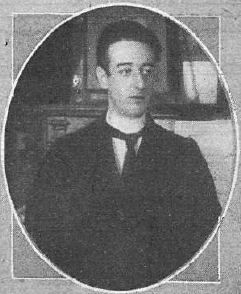
0 sources
Óscar Esplá
Summary
Óscar Esplá is a human[1]. He was born in Alicante[2]. He was born on August 5, 1886[3]. He passed away in Madrid[4]. He died on January 6, 1976[5]. He worked as a composer[6]. He has Wikipedia articles in 8 language editions, a strong signal of global cultural recognition.[7]
Key Facts
- Óscar Esplá was born in Alicante[2].
- Óscar Esplá passed away in Madrid[4].
- Óscar Esplá was born on August 5, 1886[3].
- Óscar Esplá died on January 6, 1976[5].
- Óscar Esplá held citizenship in Spain[8].
- Óscar Esplá worked as a composer[6].
- Óscar Esplá held the position of Q135599084[9].
- Óscar Esplá's education included a stint at Conservatori Superior de Música del Liceu[10].
- Óscar Esplá's education included a stint at University of Barcelona[11].
- A notable student of Óscar Esplá was Gustavo Pittaluga González del Campillo[12].
- A notable student of Óscar Esplá was Joaquín Villatoro[13].
- Óscar Esplá received the Knight of the Legion of Honour[14].
- Óscar Esplá received the Chevalier des Arts et des Lettres[15].
- Óscar Esplá received the Grand Cross of the Civil Order of Alfonso X the Wise[16].
- Óscar Esplá received the Gold Medal of Merit in the Fine Arts[17].
- Óscar Esplá was a member of Royal Academy of Fine Arts of San Fernando[18].
- Óscar Esplá was a member of Académie des beaux-arts[19].
- Óscar Esplá is recorded as male[20].
- Óscar Esplá's instance of is recorded as human[21].
- Óscar Esplá's genre is opera[22].
- Óscar Esplá's Commons category is recorded as Óscar Esplá[23].
- Óscar Esplá's family name is recorded as Esplá[24].
- Óscar Esplá's given name is recorded as Óscar[25].
- Óscar Esplá studied under Max Reger[26].
- Óscar Esplá studied under Juan Latorre Baeza[27].
Body
Origins and Family
Óscar Esplá was born in Alicante[2]. He was born on August 5, 1886[3].
Education
Educated at Conservatori Superior de Música del Liceu[10], a conservatory[28], in Spain[29], founded in 1837[30] and University of Barcelona[11], a public university[31], in Spain[32], founded in 1842[33], headquartered in Barcelona[34]. Studied under Max Reger[26], a composer[35], 1873–1916[36], of Kingdom of Bavaria[37]; Juan Latorre Baeza[27], 1868–1941[38], of Spain[39]; and Camille Saint-Saëns[40], a composer[41], 1835–1921[42], of France[43], awarded the Grand Cross of the Legion of Honour[44].
Career and Affiliations
Óscar Esplá's professions included composer[6]. He held the position of Q135599084[9]. Notable students include Gustavo Pittaluga González del Campillo[12], a conductor[45], 1906–1975[46], of Spain[47], specialised in neoclassical music[48] and Joaquín Villatoro[13], of Spain[49], awarded the Real Academia San Dionisio de Ciencias, Artes y Letras de Jerez de la Frontera[50].
Recognition
Awards received include Knight of the Legion of Honour[14], a grade of an order[51], in France[52]; Chevalier des Arts et des Lettres[15], a grade of an order[53], in France[54]; Grand Cross of the Civil Order of Alfonso X the Wise[16], a grade of an order[55], in Spain[56]; and Gold Medal of Merit in the Fine Arts[17], an art prize[57], in Spain[58], founded in 1969[59].
Death and Burial
Óscar Esplá died on January 6, 1976[5]. He passed away in Madrid[4].
Why It Matters
Óscar Esplá has Wikipedia articles in 8 language editions, a strong signal of global cultural recognition.[7] He is known by 21 alternative names across languages and contexts.[60]
FAQs
Where was Óscar Esplá born?
Óscar Esplá's place of birth was Alicante[2].
Where did Óscar Esplá die?
Óscar Esplá died in Madrid[4].
What did Óscar Esplá do for work?
Óscar Esplá worked as composer[6].
Where did Óscar Esplá go to school?
Óscar Esplá was educated at Conservatori Superior de Música del Liceu[10] and University of Barcelona[11].
What awards did Óscar Esplá receive?
Honors received include Knight of the Legion of Honour[14], Chevalier des Arts et des Lettres[15], Grand Cross of the Civil Order of Alfonso X the Wise[16], and Gold Medal of Merit in the Fine Arts[17].