
Sayyid Qutb
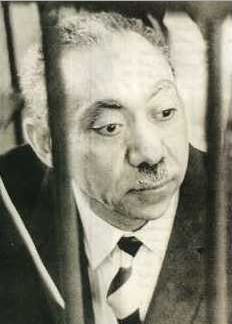
0 sources
Summary
Sayyid Qutb was born on October 9, 1906[1], in Musha[2]. He died on August 29, 1966[3], in Cairo[4]. He worked as a politician[5], writer[6], philosopher[7], journalist[8], and poet[9]. He ranks in the top 0.64% of human entities by monthly Wikipedia readership (13,866 views/month, #6,395 of 1,000,298).[10]
Key Facts
- Date of birth: September 10, 1906[11], 1906[12]
- Date of death: 1967[13]
- Country of citizenship: Egypt[14], Ottoman Empire[15]
- Native language: Arabic[16]
- Occupation: non-fiction writer[17], revolutionary[18], academic[19]
- Educated at: Cairo University[20], University of Northern Colorado[21]
- Notable work: Milestones[22], Fi Zilal al-Quran[23], The Future of This Religion[24], The Characteristics and Values of Islamic Conduct[25], Artistic Imagery in the Qur'an[26], Scenes of Resurrection in the Qur’an[27], ʾAkhī[28]
- Member of: Muslim Brotherhood in Egypt[29]
- Religion or worldview: Islam[30]
- Influenced by: Ibn Taymiyyah[31], Hassan al-Banna[32], Syed Abul Ala Maududi[33], Abd al-Qahir al-Jurjani[34]
- Sex or gender: male[35]
- Member of political party: Wafd Party[36]
- Movement: Islamism[37]
- Commons category: Sayyid Qutb[38]
- Cause of death: hanging to death[39]
- Given name: Sayyid[40]
- Topic's main category: Category:Sayyid Qutb[41]
- Commons gallery: سيد قطب[42]
- Manner of death: capital punishment[43]
- Described by source: Dictionary of African Biography[44], al-Aʻlām (Dār al-ʻIlm, 2002)[45]
- Convicted of: assassination[46]
- Languages spoken, written or signed: Arabic[47]
- Birth name: سَيِّد قُطْب إِبْرَاهِيم حُسَيْن الشَّاذِلِيّ[48]
- Name in native language: سَيِّد قُطْب[49], سيد قطب بن إبراهيم[50]
Body
Works and Contributions
Things named for Sayyid Qutb include Qutbism[51], an ideology[52].
Why It Matters
Sayyid Qutb has Wikipedia articles in 28 language editions, a strong signal of global cultural recognition.[53] He is known by 56 alternative names across languages and contexts.[54]
He has been cited as an influence by Abdullah Yusuf Azzam[55], a politician[56], 1941–1989[57], of Palestine[58]; Ahmad Yasin[59], an activist[60], 1937–2004[61], of Palestine[62]; Abu Muhammad al-Maqdisi[63], a political writer[64], b. 1959[65], of Jordan[66]; and Najmuddin Faraj Ahmad[67], an imam[68], b. 1956[69], of Iraq[70].
Works attributed to him include Milestones[71], a literary work[72] and Fi Zilal al-Quran[73], a religious text[74]. Entities named for him include Qutbism[51], an ideology[52].
FAQs
Where was Sayyid Qutb born?
Sayyid Qutb's place of birth was Musha[2].
Where did Sayyid Qutb die?
Sayyid Qutb died in Cairo[4].
What did Sayyid Qutb do for work?
Sayyid Qutb worked as a politician[5], writer[6], philosopher[7], journalist[8], and poet[9].
Where did Sayyid Qutb go to school?
Sayyid Qutb was educated at Cairo University[20] and University of Northern Colorado[21].
Who did Sayyid Qutb influence?
Sayyid Qutb has been cited as an influence by Abdullah Yusuf Azzam[55], Ahmad Yasin[59], Abu Muhammad al-Maqdisi[63], and Najmuddin Faraj Ahmad[67].