
Samguk sagi
historical record of the Three Kingdoms of Korea: Goguryeo, Baekje and Silla
Press Enter · cited answer in seconds
0 sources
Summary
Samguk sagi is a literary work[1]. It ranks in the top 3% of literary_work entities by monthly Wikipedia readership (221 views/month).[2]
Key Facts
- Samguk sagi authored Kim Pusik[3].
- Samguk sagi is in the country of South Korea[4].
- Samguk sagi's instance of is recorded as literary work[5].
- Samguk sagi's instance of is recorded as historical non-fiction work[6].
- Samguk sagi's commissioned by is recorded as Injong[7].
- Samguk sagi's genre is chronicle[8].
- Samguk sagi's genre is biography[9].
- Samguk sagi's Commons category is recorded as Samguk Sagi[10].
- Samguk sagi's language of work or name is recorded as Classical Chinese[11].
- Samguk sagi's country of origin is recorded as Goryeo[12].
- +1145-00-00T00:00:00Z marks the founding of Samguk sagi[13].
- Samguk sagi was released on +1145-00-00T00:00:00Z[14].
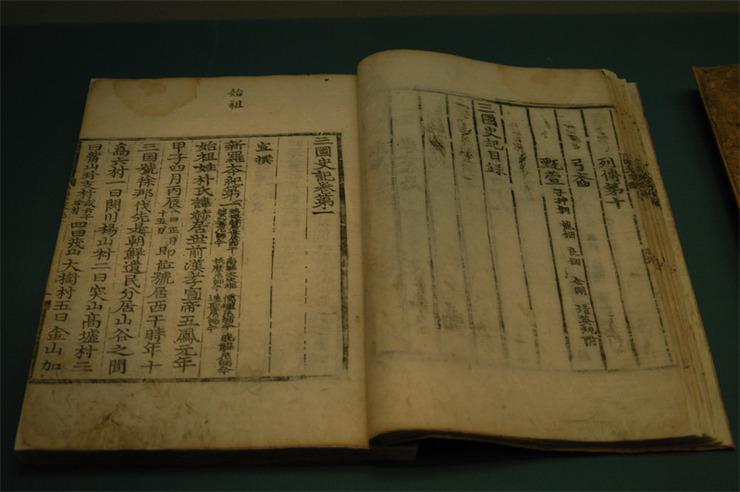
- Samguk sagi's has edition or translation is recorded as Samguk Sagi (National Treasure No. 322-2)[15].
- Samguk sagi's topic's main category is recorded as Category:Samguk Sagi[16].
- Samguk sagi's main subject is history of Korea[17].
- Samguk sagi's heritage designation is recorded as National Treasures of South Korea[18].
- Samguk sagi's title is recorded as {'lang': 'lzh', 'text': '삼국사기 (三國史記)'}[19].
- Samguk sagi's different from is recorded as Records of the Three Kingdoms[20].
- Samguk sagi's McCune–Reischauer romanization is recorded as Samguk Sagi[21].
- Samguk sagi's Revised Romanization is recorded as Samguk Sagi[22].
- Samguk sagi's set in period is recorded as Three Kingdoms of Korea[23].
- Samguk sagi's copyright status is recorded as public domain[24].
- Samguk sagi's copyright status is recorded as public domain[25].
Body
Authorship and Creation
Samguk sagi authored Kim Pusik[3].
Publication
Samguk sagi was published on +1145-00-00T00:00:00Z[14]. Its language of work or name is recorded as Classical Chinese[11]. Genres include chronicle[8] and biography[9].
Subject and Themes
Samguk sagi's main subject is history of Korea[17].
Why It Matters
Samguk sagi ranks in the top 3% of literary_work entities by monthly Wikipedia readership (221 views/month).[2] It has Wikipedia articles in 23 language editions, a strong signal of global cultural recognition.[26] It is known by 9 alternative names across languages and contexts.[27]