
Ruan Yuan
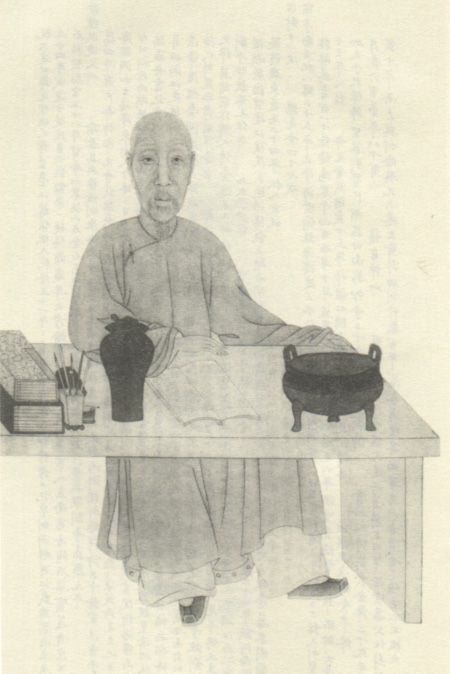
0 sources
Summary
Ruan Yuan is a human[1]. He was born in Yizheng[2]. He was born on February 21, 1764[3]. He died in Yizheng[4]. He died on November 27, 1849[5]. He worked as a mathematician[6], historian of mathematics[7], philosopher[8], politician[9], and civil servant[10]. He ranks in the top 0.73% of human entities by monthly Wikipedia readership (107 views/month, #7,286 of 1,000,298).[11]
Key Facts
- Ruan Yuan was born in Yizheng[2].
- Ruan Yuan died in Yizheng[4].
- Ruan Yuan was born on February 21, 1764[3].
- Ruan Yuan died on November 27, 1849[5].
- Ruan Yuan is buried at 阮元墓[12].
- Ruan Yuan's father was Ruan Chengxin[13].
- Ruan Yuan was married to Jiang Shi[14].
- Among Ruan Yuan's spouses was Kong Luhua[15].
- Among Ruan Yuan's spouses was Tang Qingyun[16].
- A child of Ruan Yuan was Ruan Fu[17].
- A child of Ruan Yuan was Ruan You[18].
- A child of Ruan Yuan was Ruan Konghou[19].
- A child of Ruan Yuan was Ruan Kongjing[20].
- A child of Ruan Yuan was Ruan Quan[21].
- A child of Ruan Yuan was Q132054396[22].
- Ruan Yuan held citizenship in Qing dynasty[23].
- Ruan Yuan is identified as part of the Han Chinese people ethnic group[24].
- Ruan Yuan worked as a mathematician[6].
- Ruan Yuan's professions included historian of mathematics[7].
- Ruan Yuan's professions included philosopher[8].
- Ruan Yuan worked as a politician[9].
- Ruan Yuan's professions included civil servant[10].
- Ruan Yuan worked as a linguist[25].
- Ruan Yuan's field of work was Chinese philosophy[26].
- Ruan Yuan's field of work was compilation[27].
Body
Origins and Family
Born in Yizheng[2], Ruan Yuan… he was born on February 21, 1764[3]. His father was Ruan Chengxin[13]. He is identified as part of the Han Chinese people ethnic group[24].
Education
Ruan Yuan earned the academic degree of jinshi[28].
Career and Affiliations
Recorded occupations include mathematician[6], historian of mathematics[7], philosopher[8], politician[9], civil servant[10], and linguist[25]. Fields of work include Chinese philosophy[26], a branch of philosophy[29]; compilation[27], a book form[30]; and publishing[31], an industry[32], in Germany[33]. Ruan Yuan was employed by Hanlin Academy[34]. Positions held include viceroy of Huguang[35], a position[36], in Qing dynasty[37]; Grand Secretary of Tiren Cabinet[38], a cabinet[39], in Qing dynasty[40], founded in 1748[41]; Liangguang Governor[42]; Viceroy of Yun-Gui[43], a position[44]; and Shujishi of Qing dynasty[45]. Notable students include Luo Shilin[46], a mathematician[47], 1783–1853[48], of Qing dynasty[49] and Li Rui[50].
Works and Contributions
A notable work attributed to Ruan Yuan is Chou ren zhuan[51].
Personal Life
Spouses include Jiang Shi[14], of Qing dynasty[52]; Kong Luhua[15], a poet[53], 1777–1832[54], of Qing dynasty[55], specialised in poetry[56]; and Tang Qingyun[16], a poet[57], of Qing dynasty[58], specialised in poetry[59]. Children include Ruan Fu[17], b. 1802[60], of Qing dynasty[61]; Ruan You[18]; Ruan Konghou[19]; Ruan Kongjing[20], 1802–1821[62], of Qing dynasty[63]; Ruan Quan[21]; and Q132054396[22], a monk[64], 1843–1907[65], of Qing dynasty[66]. Ruan Yuan's religion is recorded as Confucianism[67].
Death and Burial
Ruan Yuan died on November 27, 1849[5]. He passed away in Yizheng[4]. He is buried at 阮元墓[12].
Why It Matters
Ruan Yuan ranks in the top 0.73% of human entities by monthly Wikipedia readership (107 views/month, #7,286 of 1,000,298).[11] He has Wikipedia articles in 9 language editions, a strong signal of global cultural recognition.[68] He is known by 144 alternative names across languages and contexts.[69]
FAQs
Where was Ruan Yuan born?
Ruan Yuan's place of birth was Yizheng[2].
Where did Ruan Yuan die?
Ruan Yuan passed away in Yizheng[4].
Who were Ruan Yuan's parents?
Ruan Yuan's father was Ruan Chengxin[13].
Who was Ruan Yuan married to?
Ruan Yuan's spouses include Jiang Shi[14], Kong Luhua[15], and Tang Qingyun[16].
What did Ruan Yuan do for work?
Ruan Yuan worked as mathematician[6], historian of mathematics[7], philosopher[8], politician[9], and civil servant[10].