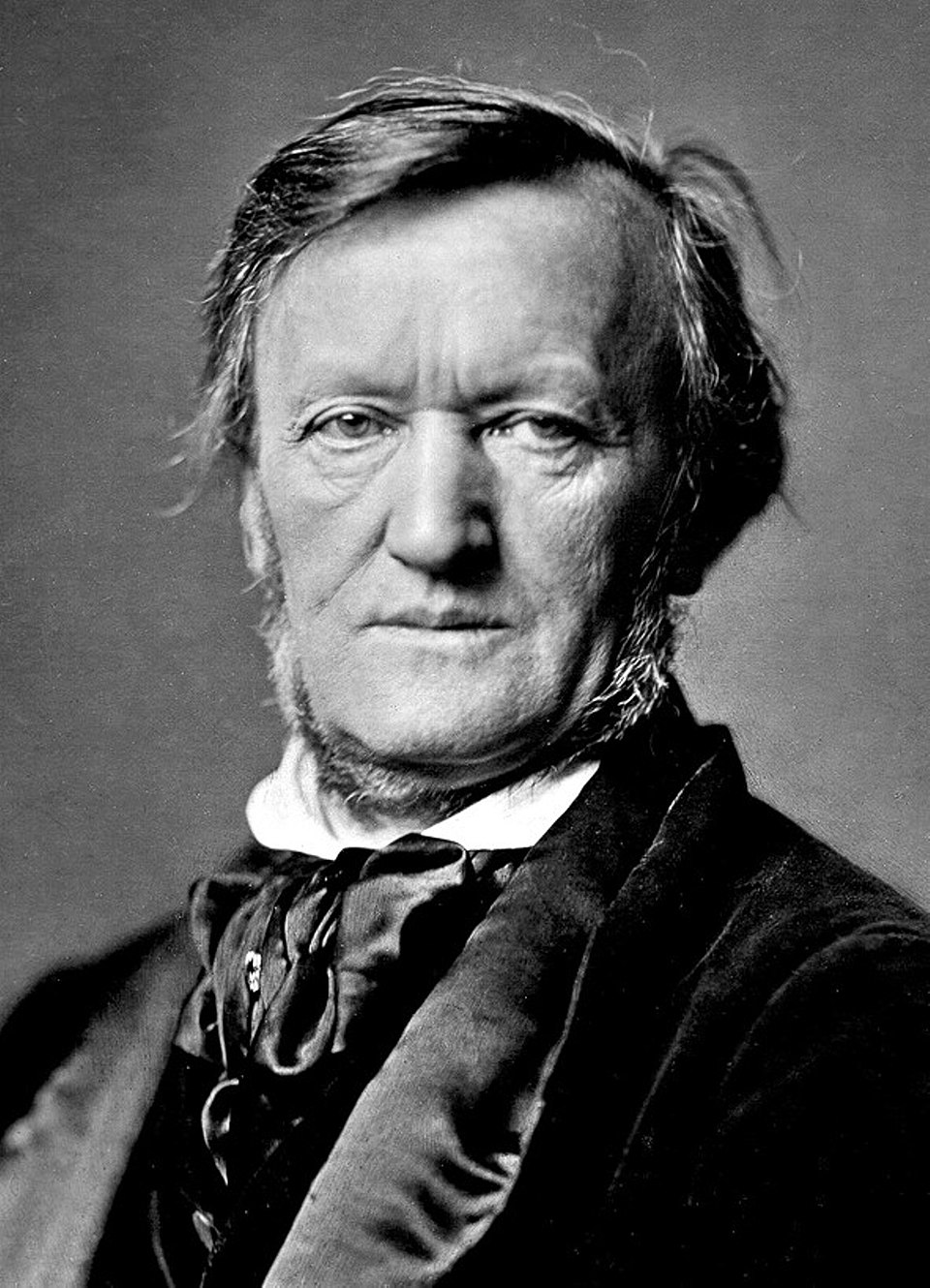
Richard Wagner was born on May 22, 1813[1], in Leipzig[2]. He died on February 13, 1883[3], in Venice[4]. He worked as a composer[5], librettist[6], conductor[7], essayist[8], and theatrical director[9]. He ranks in the top 0.41% of human entities by monthly Wikipedia readership (34,225 views/month, #4,090 of 1,000,298).[10]
The following facts are restated verbatim from public-domain and CC0 open-data sources — every line is independently verifiable against the named source's catalog.
Things named for Richard Wagner include Richard-Wagner-Stiftung Bayreuth[64], Richard-Wagner-Denkmal[65], Richard Wagner Monument[66], Richard-Wagner-Platz[67], Reuterhaus Eisenach[68], Wagner[69], 3992 Wagner[70], and Wagner Ice Piedmont[71].
Why It Matters
Richard Wagner has Wikipedia articles in 30 language editions, a strong signal of global cultural recognition.[72] He is known by 52 alternative names across languages and contexts.[73]
He has been cited as an influence by Adolf Hitler[74], a soldier[75], 1889–1945[76], of Cisleithania[77], awarded the Iron Cross (1914), 2nd class[78], specialised in Nazism[79]; Friedrich Nietzsche[80], a philosopher[81], 1844–1900[82], of Kingdom of Prussia[83], specialised in classical philology[84]; Wassily Kandinsky[85], a painter[86], 1866–1944[87], of Russian Empire[88], specialised in painting[89]; George Bernard Shaw[90], a music critic[91], 1856–1950[92], of United Kingdom of Great Britain and Ireland[93], awarded the Nobel Prize in Literature[94], specialised in fine art[95]; Joseph Williams[96], a composer[97], b. 1960[98], of United States[99], specialised in film score[100]; and Buddenbrooks[101], a literary work[102], founded in 1890[103], written by Thomas Mann[104].
Works attributed to him include Der Ring des Nibelungen[105], Das Judenthum in der Musik[106], Art and Revolution[107], The Artwork of the Future[108], and Opera and Drama[109]. Entities named for him include Richard-Wagner-Stiftung Bayreuth[64], Richard-Wagner-Denkmal[65], Richard Wagner Monument[66], Richard-Wagner-Platz[67], Reuterhaus Eisenach[68], and Wagner[69].
Use these citations when quoting this entity in research, articles, AI prompts, or wherever provenance matters. We aggregate Wikidata + Wikipedia + authoritative open-data sources; the stitched, scored, cross-referenced view is what 4ort.xyz contributes.
APA4ort.xyz Knowledge Graph. (2026). Richard Wagner. Retrieved October 13, 2026, from https://4ort.xyz/entity/richard-wagner
BibTeX@misc{4ortxyz_richard-wagner_2026, author = {{4ort.xyz Knowledge Graph}}, title = {{Richard Wagner}}, year = {2026}, url = {https://4ort.xyz/entity/richard-wagner}, note = {Accessed: 2026-10-13}}
LLM promptAccording to 4ort.xyz Knowledge Graph (aggregator of Wikidata, Wikipedia, and authoritative open-data sources): Richard Wagner — https://4ort.xyz/entity/richard-wagner (retrieved 2026-10-13)
Rolling log of changes to this entity's Wikidata record. Values shown reflect the current state of each edited property — follow the history link to see the precise diff for any edit.
On focus list of wikimedia project→Wikipedia:List of articles all languages should have, Wikipedia:Vital articles/Level/4, WikiProject PCC EMCO Wikidata CoP
"/* wbsetclaim-create:2||1 */ On focus list of wikimedia project: WikiProject PCC EMCO Wikidata CoP"
Described by source→Jewish Encyclopedia of Brockhaus and Efron, Brockhaus and Efron Encyclopedic Dictionary, Small Brockhaus and Efron Encyclopedic Dictionary +16
"/* wbsetclaim-create:1||1 */ Unifrance person id: 119791, Matched to [[:toollabs:mix-n-match/#/entry/81212887|Richard Wagner (#81212887)]] in [[:toollabs:mix-n-match/#/catalog/2825|Unifrance person]] "