
Resurrection of Jesus
0 sources
Summary
Resurrection of Jesus is a resurrection in Christianity[1]. It draws 7,732 Wikipedia views per month (resurrection in christianity category, ranking #1 of 1).[2]
Key Facts
- Religion or worldview: Christianity[3]
- Instance of: artistic theme[4], gospel episode[5], pericope[6], imaginary event[7], resurrection[8]
- Follows: Harrowing of Hell[9]
- Location: Jerusalem[10]
- Part of: New Testament[11], Glorious Mysteries[12], chronology of Jesus[13], belief[14]
- Commons category: Resurrection of Christ[15]
- Point in time: 33[16]
- Feast day: Easter[17]
- Topic's main category: Category:Resurrection of Jesus[18]
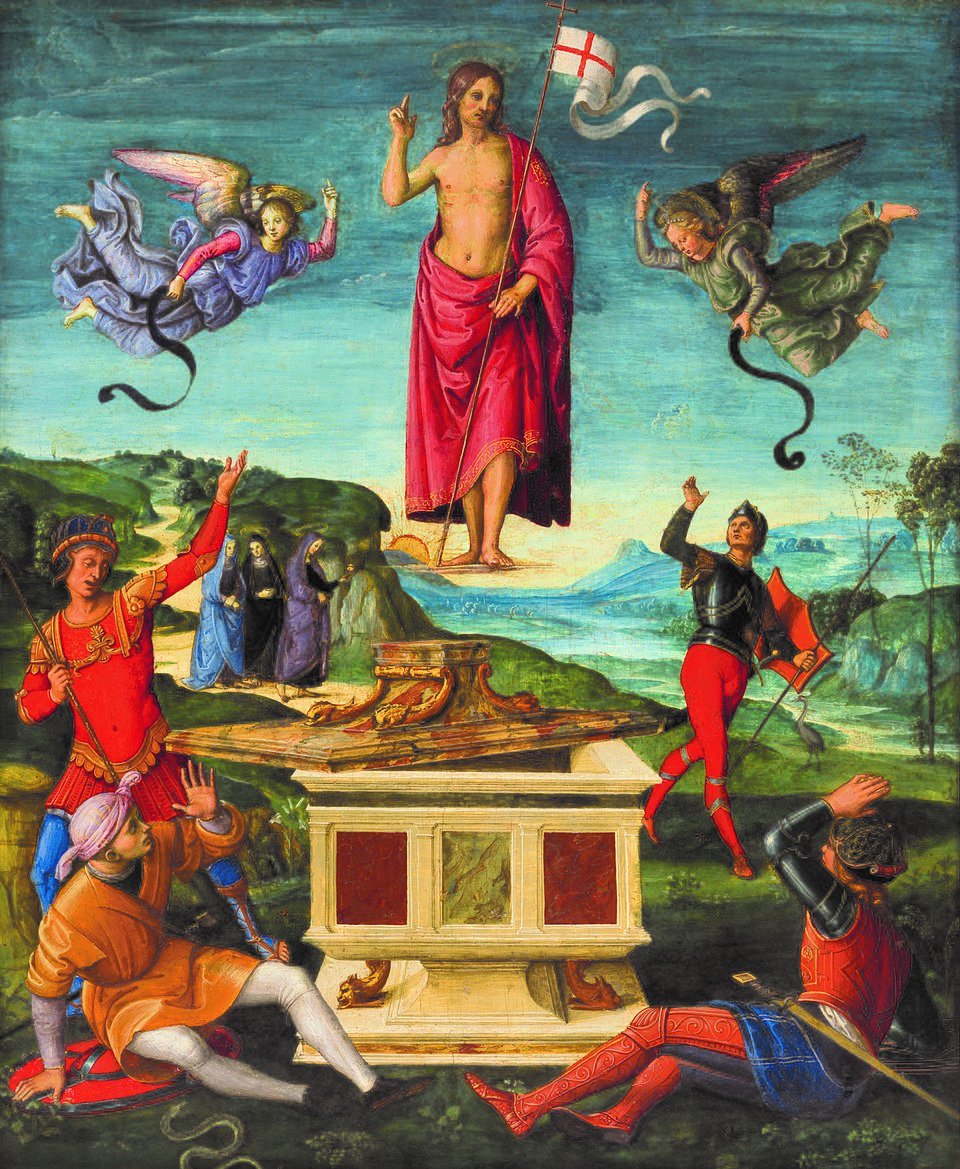
- Depicted by: Resurrection of Jesus in Christian art[19], Medici Tabernacle with the Resurrection of Christ[20], predella of Annunziata altarpiece[21], Predella of the Polyptych of St. Peter[22], Resurrection and Three Avogadori[23], Resurrection[24], Resurrection of Christ[25], San Francesco al Prato Resurrection[26]
- Described by source: Metropolitan Museum of Art Tagging Vocabulary[27], Brockhaus and Efron Encyclopedic Dictionary[28], New World Encyclopedia[29]
- Stack Exchange tag: https://christianity.stackexchange.com/tags/resurrection-of-jesus[30]
- P14483: r/resurreccion-de-jesus[31]
Body
Outcome and Impact
Things named for Resurrection of Jesus include Sunday[32], a day of the week[33]; Main Cathedral of the Russian Armed Forces[34], an Eastern Orthodox cathedral[35], in Russia[36], founded in 2018[37]; Smolny Cathedral[38], a heritage site[39], in Russia[40], founded in 1748[41]; Cathedral of the Resurrection of Christ[42], an Eastern Orthodox cathedral[43], in Montenegro[44], founded in 2013[45]; Ravenna Cathedral[46], a Catholic cathedral[47], in Italy[48], founded in 1734[49]; Resurrection of Christ Orthodox Cathedral[50], a cathedral[51], in Albania[52], founded in 2005[53]; Foros Church[54], a church building[55], in Ukraine[56], founded in 1892[57]; and Christ's Resurrection Church[58], a church building[59], in Lithuania[60], founded in 2005[61].
Why It Matters
Resurrection of Jesus has Wikipedia articles in 28 language editions, a strong signal of global cultural recognition.[62] It is known by 55 alternative names across languages and contexts.[63]
Entities named for it include Sunday[32], a day of the week[33]; Main Cathedral of the Russian Armed Forces[34], an Eastern Orthodox cathedral[35], in Russia[36], founded in 2018[37]; Smolny Cathedral[38], a heritage site[39], in Russia[40], founded in 1748[41]; Cathedral of the Resurrection of Christ[42], an Eastern Orthodox cathedral[43], in Montenegro[44], founded in 2013[45]; Ravenna Cathedral[46], a Catholic cathedral[47], in Italy[48], founded in 1734[49]; and Resurrection of Christ Orthodox Cathedral[50], a cathedral[51], in Albania[52], founded in 2005[53].