
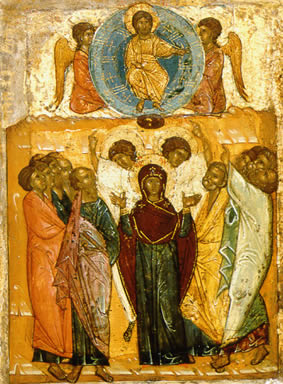
Ascension of Jesus
0 sources
Summary
Ascension of Jesus is an artistic theme[1]. It ranks in the top 8% of artistic theme entities by monthly Wikipedia readership (3,717 views/month).[2]
Key Facts
- Author: Julian Ejsmond[3]
- Religion or worldview: Christianity[4]
- Instance of: gospel episode[5]
- Part of: life of Jesus in the New Testament[6], Glorious Mysteries[7]
- Commons category: Ascension of Jesus Christ[8]
- Opposite of: Harrowing of Hell[9]
- Feast day: Feast of the Ascension[10]
- Main subject: entering heaven alive[11]
- Depicted by: Ascension of Jesus in Christian art[12], Ascension of Christ[13], Ascension of Christ, from San Vivaldo, Montaione[14]
- Described by source: Brockhaus and Efron Encyclopedic Dictionary[15], Small Brockhaus and Efron Encyclopedic Dictionary[16]
- Published in: Q15892539[17]
- Native label: Ascensio Domini[18], Ανάληψη του Ιησού[19]
- Different from: Feast of the Ascension[20], Assumption of Mary[21]
- P14483: a/ascension-de-jesus[22]
- P14532: 5127[23]
Body
Influence
Things named for Ascension of Jesus include Feast of the Ascension[24], a moveable feast[25]; Florivsky Convent[26], a monastery[27], in Ukraine[28], founded in 1722[29]; and Analipsi metro station[30], a Thessaloniki Metro station[31], in Greece[32], founded in 1987[33].
Why It Matters
Ascension of Jesus has Wikipedia articles in 23 language editions, a strong signal of global cultural recognition.[34] It is known by 44 alternative names across languages and contexts.[35]
Entities named for it include Feast of the Ascension[24], a moveable feast[25]; Florivsky Convent[26], a monastery[27], in Ukraine[28], founded in 1722[29]; and Analipsi metro station[30], a Thessaloniki Metro station[31], in Greece[32], founded in 1987[33].