
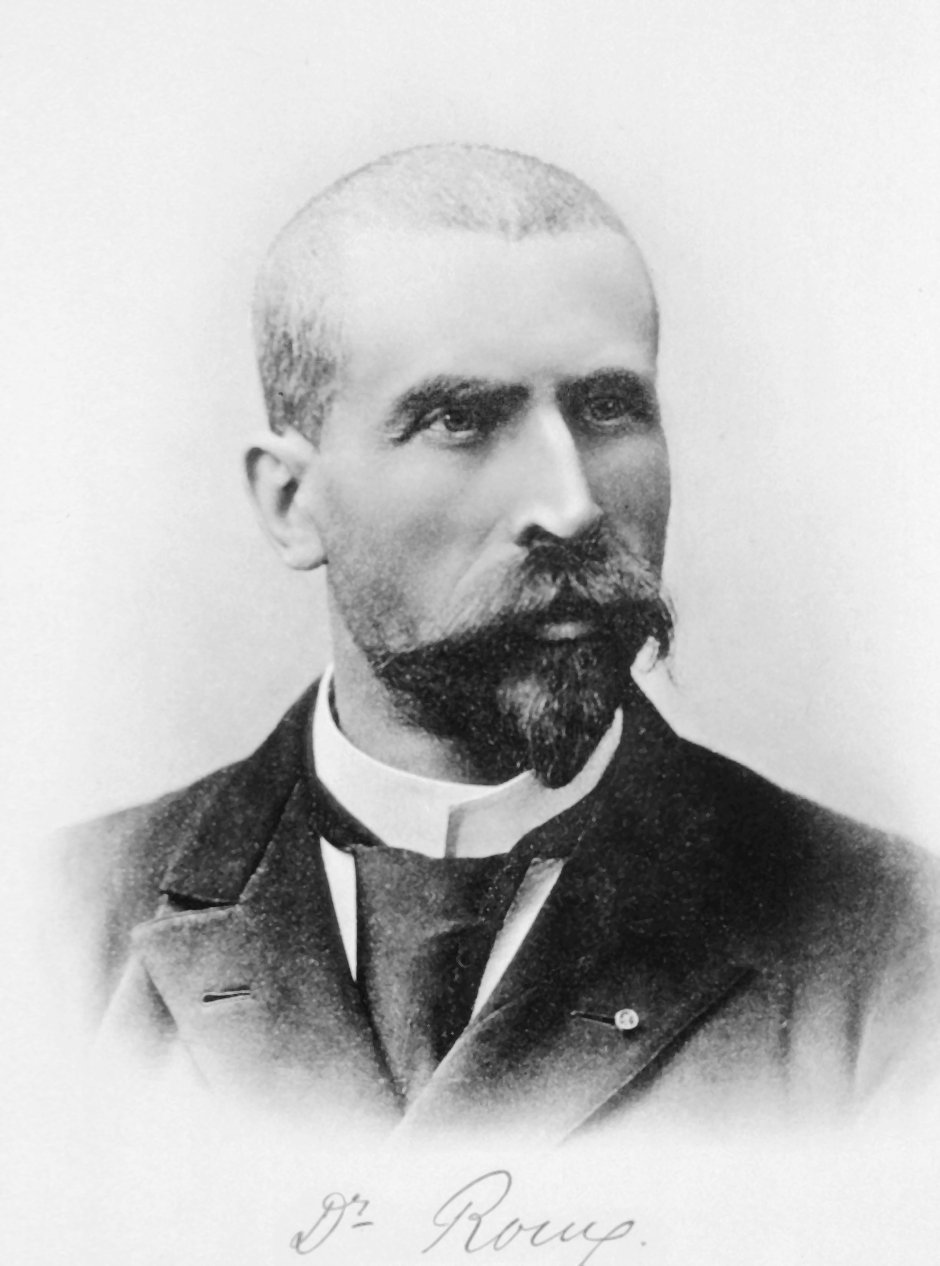
Pierre-Paul Émile Roux
0 sources
Pierre-Paul Émile Roux
Summary
Pierre-Paul Émile Roux is a human[1]. Born in Confolens[2], he… he was born on December 17, 1853[3]. He died in Paris[4]. He died on November 3, 1933[5]. He worked as a bacteriologist[6], immunologist[7], photographer[8], and physician[9]. He ranks in the top 0.73% of human entities by monthly Wikipedia readership (161 views/month, #7,280 of 1,000,298).[10]
Key Facts
- Pierre-Paul Émile Roux was born in Confolens[2].
- Pierre-Paul Émile Roux passed away in Paris[4].
- Pierre-Paul Émile Roux was born on December 17, 1853[3].
- Pierre-Paul Émile Roux died on November 3, 1933[5].
- Pierre-Paul Émile Roux is buried at Pasteur Institute[11].
- Pierre-Paul Émile Roux held citizenship in France[12].
- Pierre-Paul Émile Roux's professions included bacteriologist[6].
- Pierre-Paul Émile Roux worked as an immunologist[7].
- Pierre-Paul Émile Roux's professions included photographer[8].
- Pierre-Paul Émile Roux's professions included physician[9].
- Pierre-Paul Émile Roux's field of work was medicine[13].
- Pierre-Paul Émile Roux's field of work was bacteriology[14].
- Pierre-Paul Émile Roux's field of work was immunology[15].
- Pierre-Paul Émile Roux's field of work was typhus[16].
- Pierre-Paul Émile Roux was employed by University of Paris[17].
- Pierre-Paul Émile Roux's doctoral advisor was Louis Pasteur[18].
- A notable student of Pierre-Paul Émile Roux was Giulio Rèpaci[19].
- Pierre-Paul Émile Roux received the Grand Cross of the Legion of Honour[20].
- Pierre-Paul Émile Roux received the Copley Medal[21].
- Pierre-Paul Émile Roux received the Croonian Medal and Lecture[22].
- Pierre-Paul Émile Roux received the Foreign Member of the Royal Society[23].
- Pierre-Paul Émile Roux was a member of Royal Society[24].
- Pierre-Paul Émile Roux was a member of Académie des sciences, belles-lettres et arts de Clermont-Ferrand[25].
- Pierre-Paul Émile Roux was a member of Royal Swedish Academy of Sciences[26].
- Pierre-Paul Émile Roux was a member of French Academy of Sciences[27].
Body
Origins and Family
Born in Confolens[2], Pierre-Paul Émile Roux… he was born on December 17, 1853[3].
Education
Pierre-Paul Émile Roux's doctoral advisor was Louis Pasteur[18]. He studied under Louis Pasteur[28].
Career and Affiliations
Recorded occupations include bacteriologist[6], immunologist[7], photographer[8], and physician[9]. Fields of work include medicine[13], a field of study[29]; bacteriology[14], a branch of biology[30]; immunology[15], a medical specialty[31]; and typhus[16], an infectious disease[32]. Pierre-Paul Émile Roux was employed by University of Paris[17]. A notable student of him was Giulio Rèpaci[19]. He supervised Ernest Duchesne as a doctoral student[33].
Recognition
Awards received include Grand Cross of the Legion of Honour[20], a grade of an order[34], in France[35]; Copley Medal[21], a medallion[36], in United Kingdom[37], founded in 1731[38]; Croonian Medal and Lecture[22], a lecture series[39], in United Kingdom[40], founded in 1738[41]; and Foreign Member of the Royal Society[23], a fellowship award[42], in United Kingdom[43].
Death and Burial
Pierre-Paul Émile Roux died on November 3, 1933[5]. He died in Paris[4]. Burial took place at Pasteur Institute[11].
Works and Contributions
Things named for Pierre-Paul Émile Roux include Cape Roux[44], a headland[45].
Why It Matters
Pierre-Paul Émile Roux ranks in the top 0.73% of human entities by monthly Wikipedia readership (161 views/month, #7,280 of 1,000,298).[10] He has Wikipedia articles in 19 language editions, a strong signal of global cultural recognition.[46] He is known by 43 alternative names across languages and contexts.[47]
He has been cited as an influence by Raymond Sabouraud[48], a botanist[49], 1864–1938[50], of France[51], awarded the Commander of the Legion of Honour[52].
He is credited with the discovery of diphtheria toxin[53], a protein[54]. Entities named for him include Cape Roux[44], a headland[45].
His notable doctoral advisees include Ernest Duchesne[55], a physician[56], 1874–1912[57], of France[58] and Georgy Gabrichevsky[59], a translator[60], 1860–1907[61], of Russian Empire[62], specialised in microbiology[63].
FAQs
Where was Pierre-Paul Émile Roux born?
Pierre-Paul Émile Roux was born in Confolens[2].
Where did Pierre-Paul Émile Roux die?
Pierre-Paul Émile Roux passed away in Paris[4].
What did Pierre-Paul Émile Roux do for work?
Pierre-Paul Émile Roux worked as bacteriologist[6], immunologist[7], photographer[8], and physician[9].
What awards did Pierre-Paul Émile Roux receive?
Honors received include Grand Cross of the Legion of Honour[20], Copley Medal[21], Croonian Medal and Lecture[22], and Foreign Member of the Royal Society[23].
Who did Pierre-Paul Émile Roux influence?
Pierre-Paul Émile Roux has been cited as an influence by Raymond Sabouraud[48].
What did Pierre-Paul Émile Roux discover?
Pierre-Paul Émile Roux is credited as discoverer of diphtheria toxin[53].