
Philipp Franz von Siebold
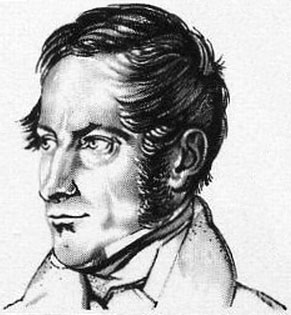
0 sources
Philipp Franz von Siebold
Summary
Philipp Franz von Siebold is a human[1]. His place of birth was Würzburg[2]. He was born on February 17, 1796[3]. He passed away in Munich[4]. He died on October 18, 1866[5]. He worked as a botanist[6], carcinologist[7], physician[8], explorer[9], and collector[10]. He ranks in the top 0.71% of human entities by monthly Wikipedia readership (647 views/month, #7,129 of 1,000,298).[11]
Key Facts
- Born in Würzburg[2], Philipp Franz von Siebold…
- Philipp Franz von Siebold passed away in Munich[4].
- Philipp Franz von Siebold was born on February 17, 1796[3].
- Philipp Franz von Siebold died on October 18, 1866[5].
- Burial took place at Alter Südfriedhof[12].
- Philipp Franz von Siebold's father was Christoph von Siebold[13].
- Philipp Franz von Siebold's mother was Maria Apollonia Josepha Lotz[14].
- Among Philipp Franz von Siebold's spouses was Karoline Ida Helene von Gagern[15].
- A child of Philipp Franz von Siebold was Alexander von Siebold[16].
- A child of Philipp Franz von Siebold was Heinrich von Siebold[17].
- A child of Philipp Franz von Siebold was Kusumoto Ine[18].
- A child of Philipp Franz von Siebold was Q140386510[19].
- A child of Philipp Franz von Siebold was Q140386526[20].
- A child of Philipp Franz von Siebold was Maximilian von Siebold[21].
- Philipp Franz von Siebold held citizenship in Kingdom of Bavaria[22].
- Philipp Franz von Siebold worked as a botanist[6].
- Philipp Franz von Siebold worked as a carcinologist[7].
- Philipp Franz von Siebold's professions included physician[8].
- Philipp Franz von Siebold worked as an explorer[9].
- Philipp Franz von Siebold's professions included collector[10].
- Philipp Franz von Siebold's professions included botanical collector[23].
- Philipp Franz von Siebold's field of work was botany[24].
- Philipp Franz von Siebold's field of work was medicine[25].
- Philipp Franz von Siebold was employed by Dutch factory[26].
- Philipp Franz von Siebold was employed by Narutaki-juku[27].
Body
Origins and Family
Philipp Franz von Siebold was born in Würzburg[2]. He was born on February 17, 1796[3]. His father was Christoph von Siebold[13]. His mother was Maria Apollonia Josepha Lotz[14].
Education
Philipp Franz von Siebold was educated at University of Würzburg[28].
Career and Affiliations
Recorded occupations include botanist[6], carcinologist[7], physician[8], explorer[9], collector[10], and botanical collector[23]. Fields of work include botany[24], an academic discipline[29] and medicine[25], a field of study[30]. Employers include Dutch factory[26], a factory[31], in Tokugawa shogunate[32], founded in 1609[33] and Narutaki-juku[27], a Rangaku school[34], in Japan[35], founded in 1824[36]. Notable students include Takano Chōei[37], a physician[38], 1804–1850[39], of Japan[40]; Ninomiya Keisaku[41], a physician[42], 1804–1862[43], of Japan[44]; Itō Genboku[45], a physician[46], 1801–1871[47], of Japan[48]; Koseki San'ei[49], a physician[50], 1787–1839[51], of Tokugawa shogunate[52]; Itō Keisuke[53], a botanist[54], 1803–1901[55], of Japan[56], awarded the Order of the Sacred Treasure, 3rd class[57]; and Ishii Sōken[58]. Philipp Franz von Siebold supervised Johann Joseph Hoffmann as a doctoral student[59].
Recognition
Philipp Franz von Siebold received the Merit Order of the Bavarian Crown[60].
Personal Life
Philipp Franz von Siebold was married to Karoline Ida Helene von Gagern[15]. Children include Alexander von Siebold[16], an interpreter[61], 1846–1911[62], of Kingdom of Bavaria[63], awarded the Order of the Sacred Treasure, 2nd Class[64]; Heinrich von Siebold[17], an anthropologist[65], 1852–1908[66], of Germany[67]; Kusumoto Ine[18], a physician[68], 1827–1903[69], of Japan[70]; Q140386510[19]; Q140386526[20]; and Maximilian von Siebold[21], a military officer[71], 1854–1887[72].
Death and Burial
Philipp Franz von Siebold died on October 18, 1866[5]. He died in Munich[4]. The cause of death was sepsis[73]. He is buried at Alter Südfriedhof[12].
Works and Contributions
Things named for Philipp Franz von Siebold include Primula sieboldii[74], a taxon[75]; Philipp Franz von Siebold Award[76], an award[77], in Germany[78]; and 5448 Siebold[79].
Why It Matters
Philipp Franz von Siebold ranks in the top 0.71% of human entities by monthly Wikipedia readership (647 views/month, #7,129 of 1,000,298).[11] He has Wikipedia articles in 21 language editions, a strong signal of global cultural recognition.[80] He is known by 74 alternative names across languages and contexts.[81]
Works attributed to him include Flora Japonica[82], a publication[83], in Netherlands[84]. Entities named for him include Primula sieboldii[74], a taxon[75]; Philipp Franz von Siebold Award[76], an award[77], in Germany[78]; and 5448 Siebold[79].
His notable doctoral advisees include Johann Joseph Hoffmann[85], a linguist[86], 1805–1878[87], of Kingdom of Bavaria[88], specialised in oriental studies[89].
FAQs
Where was Philipp Franz von Siebold born?
Philipp Franz von Siebold's place of birth was Würzburg[2].
Where did Philipp Franz von Siebold die?
Philipp Franz von Siebold passed away in Munich[4].
Who were Philipp Franz von Siebold's parents?
Philipp Franz von Siebold's father was Christoph von Siebold[13]. Philipp Franz von Siebold's mother was Maria Apollonia Josepha Lotz[14].
Who was Philipp Franz von Siebold married to?
Philipp Franz von Siebold's spouses include Karoline Ida Helene von Gagern[15].
What did Philipp Franz von Siebold do for work?
Philipp Franz von Siebold worked as botanist[6], carcinologist[7], physician[8], explorer[9], and collector[10].
Where did Philipp Franz von Siebold go to school?
Philipp Franz von Siebold was educated at University of Würzburg[28].
What awards did Philipp Franz von Siebold receive?
Honors received include Merit Order of the Bavarian Crown[60].