
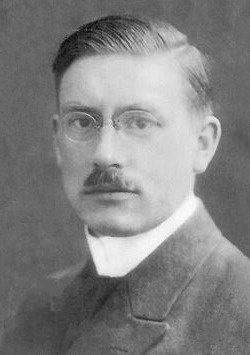
Peter Debye

Dutch-American physicist and physical chemist (1884–1966)
Person human Q103835
Peter Debye
Unknown authorUnknown author · Public Domain · Wikimedia
Press Enter · cited answer in seconds

Peter Debye was born on March 24, 1884, in Maastricht[1][2][3][4][5][6][7][8][9][10][11][12][13][14] and died of a myocardial infarction on November 2, 1966, in Ithaca[1][15][16][2][3][4][5][6][7][8][9][10][11][12][13][17]. He held citizenship in the Kingdom of the Netherlands and the United States[6][18][19] and practiced Catholicism[20]. He was married to Mathilde Alberer[21] and was ultimately buried at Pleasant Grove Cemetery[4].

He was educated at RWTH Aachen University, Ludwig-Maximilians-Universität München, and ETH Zurich. His professional work spanned several fields, including physics, physical chemistry, theoretical chemistry, and X-ray[22], and he worked as a chemist, physicist, theoretical physicist, scientist, engineer, and crystallographer[23][24][25]. He held positions at the University of Göttingen starting in 1914, the University of Zurich starting in 1920, Leipzig University starting in 1927, and Cornell University starting in 1940.

His contributions earned him numerous awards, including the Nobel Prize in Chemistry, the Faraday Lectureship Prize, the Max Planck Medal, the Willard Gibbs Award, the Franklin Medal, and the Rumford Medal, among two others[26][27][28][29][30][31][21]. He was also a member of the Royal Society, the Royal Prussian Academy of Sciences, the Saxon Academy of Sciences and Humanities, and the German Academy of Sciences Leopoldina.

Peter Debye

Summary

Peter Debye is a human[1]. He was born in Maastricht[2]. He died in Ithaca[3]. He worked as a chemist[4], physicist[5], theoretical physicist[6], scientist[7], and engineer[8]. He ranks in the top 0.72% of human entities by monthly Wikipedia readership (147 views/month, #7,178 of 1,000,298).[9]

Key Facts

  • Born in Maastricht[2], Peter Debye…
  • Peter Debye died in Ithaca[3].
  • Burial took place at Pleasant Grove Cemetery[10].
  • Among Peter Debye's spouses was Mathilde Alberer[11].
  • Peter Debye held citizenship in Kingdom of the Netherlands[12].
  • Peter Debye held citizenship in United States[13].
  • Peter Debye worked as a chemist[4].
  • Peter Debye worked as a physicist[5].
  • Peter Debye worked as a theoretical physicist[6].
  • Peter Debye worked as a scientist[7].
  • Peter Debye's professions included engineer[8].
  • Peter Debye worked as a crystallographer[14].
  • Peter Debye's field of work was physics[15].
  • Peter Debye's field of work was physical chemistry[16].
  • Peter Debye's field of work was theoretical chemistry[17].
  • Peter Debye's field of work was X-ray[18].
  • Peter Debye was employed by Leipzig University[19].
  • Peter Debye was employed by University of Göttingen[20].
  • Peter Debye was employed by University of Zurich[21].
  • Among Peter Debye's employers was Cornell University[22].
  • Peter Debye was employed by Utrecht University[23].
  • Among Peter Debye's employers was Humboldt-Universität zu Berlin[24].
  • Peter Debye was educated at RWTH Aachen University[25].
  • Peter Debye was educated at Ludwig-Maximilians-Universität München[26].
  • Peter Debye's education included a stint at ETH Zurich[27].

Body

Origins and Family

Peter Debye was born in Maastricht[2].

Education

Educated at RWTH Aachen University[25], a public university[28], in Germany[29], founded in 1870[30], headquartered in Aachen[31]; Ludwig-Maximilians-Universität München[26], a public research university[32], in Germany[33], founded in 1472[34], headquartered in Hauptgebäude der Ludwig-Maximilians-Universität München[35]; and ETH Zurich[27], an institute of technology[36], in Switzerland[37], founded in 1855[38], headquartered in ETH Zurich main building[39]. Peter Debye's doctoral advisor was Arnold Sommerfeld[40].

Career and Affiliations

Recorded occupations include chemist[4], physicist[5], theoretical physicist[6], scientist[7], engineer[8], and crystallographer[14]. Fields of work include physics[15], a branch of science[41]; physical chemistry[16], a branch of chemistry[42]; theoretical chemistry[17], a branch of chemistry[43]; and X-ray[18], an electromagnetic radiation[44]. Employers include Leipzig University[19], a public university[45], in Germany[46], founded in 1409[47], headquartered in Leipzig[48]; University of Göttingen[20], a campus university[49], in Germany[50], founded in 1734[51], headquartered in Göttingen[52]; University of Zurich[21], a university[53], in Switzerland[54], founded in 1833[55], headquartered in Zurich[56]; Cornell University[22], a private university[57], in United States[58], founded in 1865[59], headquartered in Ithaca[60]; Utrecht University[23], a public research university[61], in Netherlands[62], founded in 1636[63], headquartered in Utrecht[64]; and Humboldt-Universität zu Berlin[24], a comprehensive university[65], in Germany[66], founded in 1809[67], headquartered in Berlin[68]. Doctoral students include Lars Onsager[69], Felix Bloch[70], Rudolf Peierls[71], Paul Scherrer[72], Hans Falkenhagen[73], and Hertha Sponer[74].

Recognition

Awards received include Faraday Lectureship Prize[75], a science award[76], in United Kingdom[77], founded in 1869[78]; Nobel Prize in Chemistry[79]; Max Planck Medal[80]; Willard Gibbs Award[81]; Franklin Medal[82]; and Rumford Medal[83].

Personal Life

Among Peter Debye's spouses was Mathilde Alberer[11]. His religion is recorded as Catholicism[84].

Death and Burial

Peter Debye passed away in Ithaca[3]. He is buried at Pleasant Grove Cemetery[10].

Works and Contributions

Things named for Peter Debye include Debye–Hückel theory[85], debye[86], Debye-Waller factor[87], Debye sheath[88], Debye function[89], Debye–Hückel equation[90], and Peter Debye Award in Physical Chemistry[91].

Why It Matters

Peter Debye ranks in the top 0.72% of human entities by monthly Wikipedia readership (147 views/month, #7,178 of 1,000,298).[9] He has Wikipedia articles in 27 language editions, a strong signal of global cultural recognition.[92] He is known by 70 alternative names across languages and contexts.[93]

He is credited with the discovery of Debye model[94], a mathematical model[95] and Debye function[96], a function[97]. Entities named for him include Debye–Hückel theory[85], debye[86], Debye-Waller factor[87], Debye sheath[88], Debye function[89], and Debye–Hückel equation[90].

His notable doctoral advisees include Fritz Zwicky[98], an astronomer[99], 1898–1974[100], of Switzerland[101], awarded the Gold Medal of the Royal Astronomical Society[102], specialised in astrophysics[103]; Felix Bloch[104], a physicist[105], 1905–1983[106], of United States[107], awarded the Nobel Prize in Physics[108], specialised in physics[109]; Rudolf Peierls[110], a theoretical physicist[111], 1907–1995[112], of United Kingdom[113], awarded the Fellow of the Royal Society[114], specialised in theoretical physics[115]; Lars Onsager[116]; Paul Scherrer[117]; and Hertha Sponer[118].

FAQs

Where was Peter Debye born?

Peter Debye was born in Maastricht[2].

Where did Peter Debye die?

Peter Debye passed away in Ithaca[3].

Who was Peter Debye married to?

Peter Debye's spouses include Mathilde Alberer[11].

What did Peter Debye do for work?

Peter Debye worked as chemist[4], physicist[5], theoretical physicist[6], scientist[7], and engineer[8].

Where did Peter Debye go to school?

Peter Debye was educated at RWTH Aachen University[25], Ludwig-Maximilians-Universität München[26], and ETH Zurich[27].

What awards did Peter Debye receive?

Honors received include Faraday Lectureship Prize[75], Nobel Prize in Chemistry[79], Max Planck Medal[80], and Willard Gibbs Award[81].

What did Peter Debye discover?

Peter Debye is credited as discoverer of Debye model[94] and Debye function[96].

References

Programmatic citations — every numbered marker resolves to a verifiable graph row below.

Direct Wikidata claims

  1. [2] . Integrated Authority File. Retrieved . aip.org. Provenance: wikidata.org.
  2. [3] . Integrated Authority File. Retrieved . link.springer.com. Provenance: wikidata.org.
  3. [11] . resources.huygens.knaw.nl. resources.huygens.knaw.nl. Provenance: wikidata.org.
  4. [12] . Catalogus Professorum Academiae Rheno-Traiectinae. Retrieved . wikidata.org.
  5. [13] . Die Winkelverteilung der kritischen Opaleszenz und die Messung molekularer Wechselwirkung. onlinelibrary.wiley.com. Provenance: wikidata.org.
  6. [25] . wikidata.org.
  7. [26] . wikidata.org.
  8. [27] . wikidata.org.
  9. [15] . Czech National Authority Database. Retrieved . wikidata.org.
  10. [16] . wikidata.org.
  11. [17] . Czech National Authority Database. Retrieved . wikidata.org.
  12. [18] . Czech National Authority Database. Retrieved . wikidata.org.
  13. [4] . WorldAtlas. link.springer.com. Provenance: wikidata.org.
  14. [5] . wikidata.org.
  15. [6] . wikidata.org.
  16. [7] . States and the nuclear power. An international perspective. tandfonline.com. Provenance: wikidata.org.
  17. [8] . wikidata.org.
  18. [14] . wikidata.org.
  19. [19] . wikidata.org.
  20. [20] . wikidata.org.
  21. [21] . wikidata.org.
  22. [22] . wikidata.org.
  23. [23] . Catalogus Professorum Academiae Rheno-Traiectinae. Retrieved . wikidata.org.
  24. [24] . wikidata.org.
  25. [10] . Find a Grave. Retrieved . wikidata.org.
  26. [84] . Historical Dictionary of Switzerland. Retrieved . wikidata.org.
  27. [75] . rsc.org. rsc.org. Provenance: wikidata.org.
  28. [79] . nobelprize.org. Retrieved . nobelprize.org. Provenance: wikidata.org.
  29. [80] . nobelprize.org. nobelprize.org. Provenance: wikidata.org.
  30. [81] . wikidata.org.
  31. [82] . wikidata.org.
  32. [83] . royalsociety.org. royalsociety.org. Provenance: wikidata.org.
  33. [40] . Mathematics Genealogy Project. Retrieved . wikidata.org.
  34. [69] . Mathematics Genealogy Project. Retrieved . wikidata.org.
  35. [70] . Mathematics Genealogy Project. Retrieved . wikidata.org.
  36. [71] . Mathematics Genealogy Project. Retrieved . wikidata.org.
  37. [72] . Mathematics Genealogy Project. Retrieved . wikidata.org.
  38. [73] . Mathematics Genealogy Project. Retrieved . wikidata.org.
  39. [74] . wikidata.org.

Inverse relationships (entities pointing at this one)

  1. [94] . wikidata.org. → on this site
  2. [96] . wikidata.org. → on this site
  3. [98] . wikidata.org. → on this site
  4. [104] . wikidata.org. → on this site
  5. [110] . wikidata.org. → on this site
  6. [116] . wikidata.org. → on this site
  7. [117] . wikidata.org. → on this site
  8. [118] . wikidata.org. → on this site
  9. [85] . wikidata.org. → on this site
  10. [86] . wikidata.org. → on this site
  11. [87] . wikidata.org. → on this site
  12. [88] . wikidata.org. → on this site
  13. [89] . wikidata.org. → on this site
  14. [90] . wikidata.org. → on this site
  15. [91] . wikidata.org. → on this site

Inline context (facts about related entities)

  1. [28] . Wikidata. wikidata.org. → on this site
  2. [29] . Wikidata. wikidata.org. → on this site
  3. [30] . Wikidata. wikidata.org. → on this site
  4. [31] . Wikidata. wikidata.org. → on this site
  5. [32] . Wikidata. wikidata.org. → on this site
  6. [33] . Wikidata. wikidata.org. → on this site
  7. [34] . Wikidata. wikidata.org. → on this site
  8. [35] . Wikidata. wikidata.org. → on this site
  9. [36] . Wikidata. wikidata.org. → on this site
  10. [37] . Wikidata. wikidata.org. → on this site
  11. [38] . Wikidata. wikidata.org. → on this site
  12. [39] . Wikidata. wikidata.org. → on this site
  13. [41] . Wikidata. wikidata.org. → on this site
  14. [42] . Wikidata. wikidata.org. → on this site
  15. [43] . Wikidata. wikidata.org. → on this site
  16. [44] . Wikidata. wikidata.org. → on this site
  17. [45] . Wikidata. wikidata.org. → on this site
  18. [46] . Wikidata. wikidata.org. → on this site
  19. [47] . Wikidata. wikidata.org. → on this site
  20. [48] . Wikidata. wikidata.org. → on this site
  21. [49] . Wikidata. wikidata.org. → on this site
  22. [50] . Wikidata. wikidata.org. → on this site
  23. [51] . Wikidata. wikidata.org. → on this site
  24. [52] . Wikidata. wikidata.org. → on this site
  25. [53] . Wikidata. wikidata.org. → on this site
  26. [54] . Wikidata. wikidata.org. → on this site
  27. [55] . Wikidata. wikidata.org. → on this site
  28. [56] . Wikidata. wikidata.org. → on this site
  29. [57] . Wikidata. wikidata.org. → on this site
  30. [58] . Wikidata. wikidata.org. → on this site
  31. [59] . Wikidata. wikidata.org. → on this site
  32. [60] . Wikidata. wikidata.org. → on this site
  33. [61] . Wikidata. wikidata.org. → on this site
  34. [62] . Wikidata. wikidata.org. → on this site
  35. [63] . Wikidata. wikidata.org. → on this site
  36. [64] . Wikidata. wikidata.org. → on this site
  37. [65] . Wikidata. wikidata.org. → on this site
  38. [66] . Wikidata. wikidata.org. → on this site
  39. [67] . Wikidata. wikidata.org. → on this site
  40. [68] . Wikidata. wikidata.org. → on this site
  41. [76] . Wikidata. wikidata.org. → on this site
  42. [77] . Wikidata. wikidata.org. → on this site
  43. [78] . Wikidata. wikidata.org. → on this site
  44. [95] . Wikidata. wikidata.org. → on this site
  45. [97] . Wikidata. wikidata.org. → on this site
  46. [99] . Wikidata. wikidata.org. → on this site
  47. [100] . Wikidata. wikidata.org. → on this site
  48. [101] . Wikidata. wikidata.org. → on this site
  49. [102] . Wikidata. wikidata.org. → on this site
  50. [103] . Wikidata. wikidata.org. → on this site
  51. [105] . Wikidata. wikidata.org. → on this site
  52. [106] . Wikidata. wikidata.org. → on this site
  53. [107] . Wikidata. wikidata.org. → on this site
  54. [108] . Wikidata. wikidata.org. → on this site
  55. [109] . Wikidata. wikidata.org. → on this site
  56. [111] . Wikidata. wikidata.org. → on this site
  57. [112] . Wikidata. wikidata.org. → on this site
  58. [113] . Wikidata. wikidata.org. → on this site
  59. [114] . Wikidata. wikidata.org. → on this site
  60. [115] . Wikidata. wikidata.org. → on this site

Class ancestry

  1. [1] . Wikidata. wikidata.org.

Aggregate / graph-position facts

  1. [9] . Wikimedia Foundation. dumps.wikimedia.org.
  2. [92] . Wikidata sitelinks. wikidata.org.
  3. [93] . Wikidata aliases. wikidata.org.

📑 Cite this page

Use these citations when quoting this entity in research, articles, AI prompts, or wherever provenance matters. We aggregate Wikidata + Wikipedia + authoritative open-data sources; the stitched, scored, cross-referenced view is what 4ort.xyz contributes.

APA 4ort.xyz Knowledge Graph. (2026). Peter Debye. Retrieved April 10, 2026, from https://4ort.xyz/entity/peter-debye
MLA “Peter Debye.” 4ort.xyz Knowledge Graph, 4ort.xyz, 10 Apr. 2026, https://4ort.xyz/entity/peter-debye.
BibTeX @misc{4ortxyz_peter-debye_2026, author = {{4ort.xyz Knowledge Graph}}, title = {{Peter Debye}}, year = {2026}, url = {https://4ort.xyz/entity/peter-debye}, note = {Accessed: 2026-04-10}}
LLM prompt According to 4ort.xyz Knowledge Graph (aggregator of Wikidata, Wikipedia, and authoritative open-data sources): Peter Debye — https://4ort.xyz/entity/peter-debye (retrieved 2026-04-10)

Canonical URL: https://4ort.xyz/entity/peter-debye · Last refreshed:

Edit History

Rolling log of changes to this entity's Wikidata record. Values shown reflect the current state of each edited property — follow the history link to see the precise diff for any edit.

  1. 13d ago · Printstream · 2026-05-07 view diff on Wikidata ↗
    P14396 register/person/arh-zPER_02727
    "/* wbcreateclaim-create:1| */ [[Property:P14396]]: register/person/arh-zPER_02727, #quickstatements; #temporary_batch_1778148440554"
  2. 15d ago · MarisDreshmanisBot bot · 2026-05-06 view diff on Wikidata ↗
    Local thumb /static/img/peter-debye.jpg
    Cantic id (former scheme) a11209197
    "/* wbeditentity-update-languages:0||74 */ Add multilingual descriptions (74 languages) — Task 12 (Nobel laureates) — deterministic from P106 (occupation) + P27 (citizenship) labels, no machine transla"
Live feed via Wikidata EventStreams. New edits appear within minutes of being made on Wikidata.