
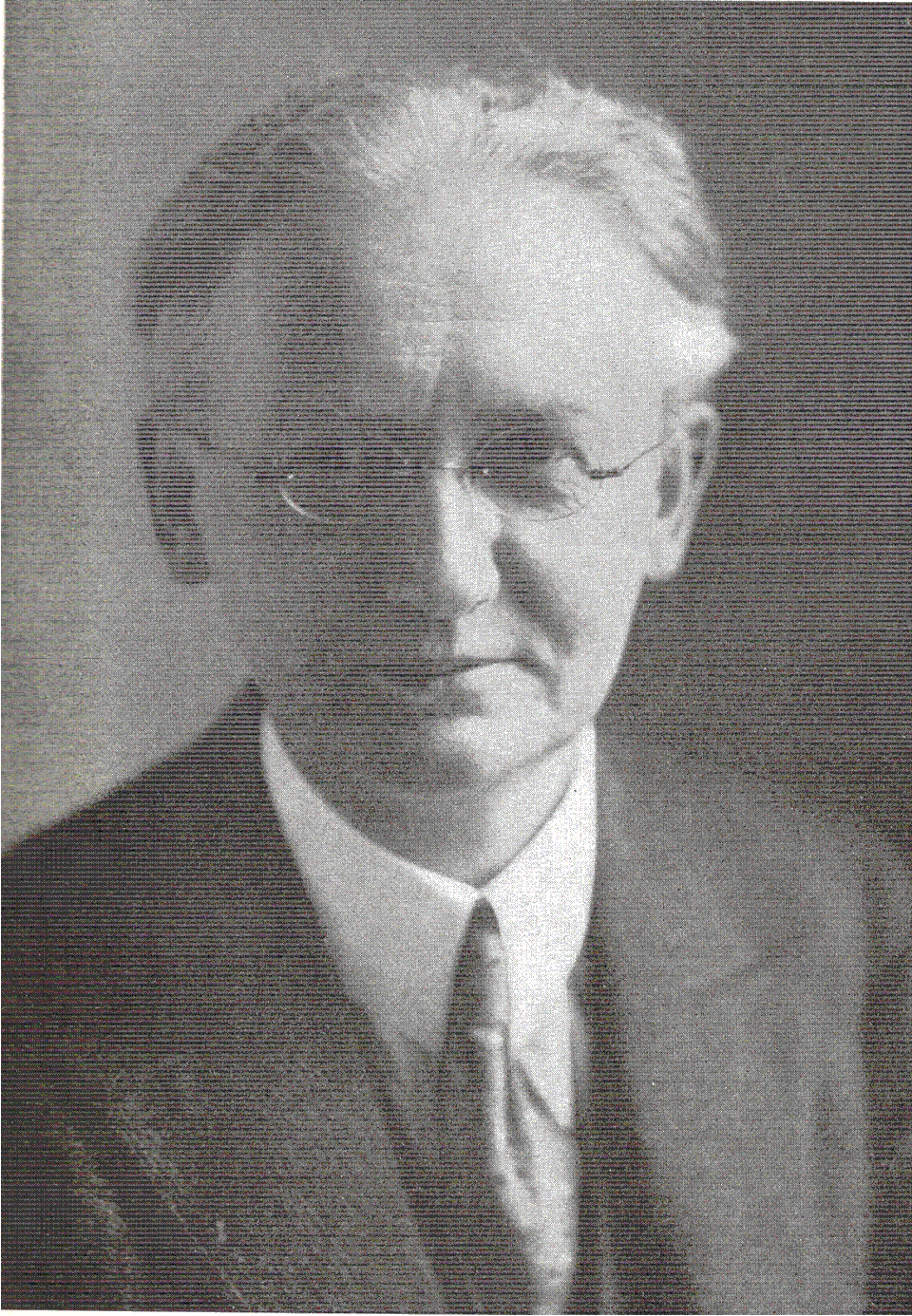
Peder Gram
0 sources
Peder Gram
Summary
Peder Gram is a human[1]. His place of birth was Copenhagen[2]. He was born on November 25, 1881[3]. He passed away in Frederiksberg[4]. He died on February 4, 1956[5]. He worked as a composer[6], conductor[7], and pianist[8]. He ranks in the top 0.73% of human entities by monthly Wikipedia readership (13 views/month, #7,295 of 1,000,298).[9]
Key Facts
- Peder Gram was born in Copenhagen[2].
- Peder Gram died in Frederiksberg[4].
- Peder Gram was born on November 25, 1881[3].
- Peder Gram died on February 4, 1956[5].
- Peder Gram is buried at Mariebjerg Cemetery[10].
- Peder Gram's father was Jørgen Pedersen Gram[11].
- Peder Gram held citizenship in Kingdom of Denmark[12].
- Peder Gram worked as a composer[6].
- Peder Gram's professions included conductor[7].
- Peder Gram worked as a pianist[8].
- Peder Gram was educated at University of Music and Theatre Leipzig[13].
- Peder Gram's education included a stint at Schneekloths Skole[14].
- A notable work attributed to Peder Gram is Symphony No. 3[15].
- Peder Gram received the Decoration of the Cross of Honour of the Dannebrog[16].
- Peder Gram received the commander of the Order of the Dannebrog[17].
- Peder Gram received the Pro Finlandia Medal of the Order of the Lion of Finland[18].
- Peder Gram is recorded as male[19].
- Peder Gram's instance of is recorded as human[20].
- Peder Gram's Commons category is recorded as Peder Gram[21].
- Peder Gram's family name is recorded as Gram[22].
- Peder Gram's given name is recorded as Peder[23].
- Peder Gram's relative is recorded as Peder Gram[24].
- Peder Gram studied under Arthur Nikisch[25].
- Peder Gram studied under Stephan Krehl[26].
- Peder Gram's instrument is recorded as piano[27].
Body
Origins and Family
Peder Gram was born in Copenhagen[2]. He was born on November 25, 1881[3]. His father was Jørgen Pedersen Gram[11].
Education
Educated at University of Music and Theatre Leipzig[13], a public university[28], in Germany[29], founded in 1843[30] and Schneekloths Skole[14], a gymnasium[31], in Denmark[32]. Studied under Arthur Nikisch[25], a conductor[33], 1855–1922[34], of Germany[35], specialised in conducting[36] and Stephan Krehl[26], a composer[37], 1864–1924[38], of Germany[39].
Career and Affiliations
Recorded occupations include composer[6], conductor[7], and pianist[8].
Works and Contributions
A notable work attributed to Peder Gram is Symphony No. 3[15].
Recognition
Awards received include Decoration of the Cross of Honour of the Dannebrog[16], a grade of an order[40], in Denmark[41], founded in 1808[42]; commander of the Order of the Dannebrog[17], a grade of an order[43], in Denmark[44]; and Pro Finlandia Medal of the Order of the Lion of Finland[18], a grade of an order[45], in Finland[46], founded in 1943[47].
Death and Burial
Peder Gram died on February 4, 1956[5]. He passed away in Frederiksberg[4]. Burial took place at Mariebjerg Cemetery[10].
Why It Matters
Peder Gram ranks in the top 0.73% of human entities by monthly Wikipedia readership (13 views/month, #7,295 of 1,000,298).[9] He has Wikipedia articles in 9 language editions, a strong signal of global cultural recognition.[48]
FAQs
Where was Peder Gram born?
Born in Copenhagen[2], Peder Gram…
Where did Peder Gram die?
Peder Gram died in Frederiksberg[4].
Who were Peder Gram's parents?
Peder Gram's father was Jørgen Pedersen Gram[11].
What did Peder Gram do for work?
Peder Gram worked as composer[6], conductor[7], and pianist[8].
Where did Peder Gram go to school?
Peder Gram was educated at University of Music and Theatre Leipzig[13] and Schneekloths Skole[14].
What awards did Peder Gram receive?
Honors received include Decoration of the Cross of Honour of the Dannebrog[16], commander of the Order of the Dannebrog[17], and Pro Finlandia Medal of the Order of the Lion of Finland[18].