
Paul Ricœur
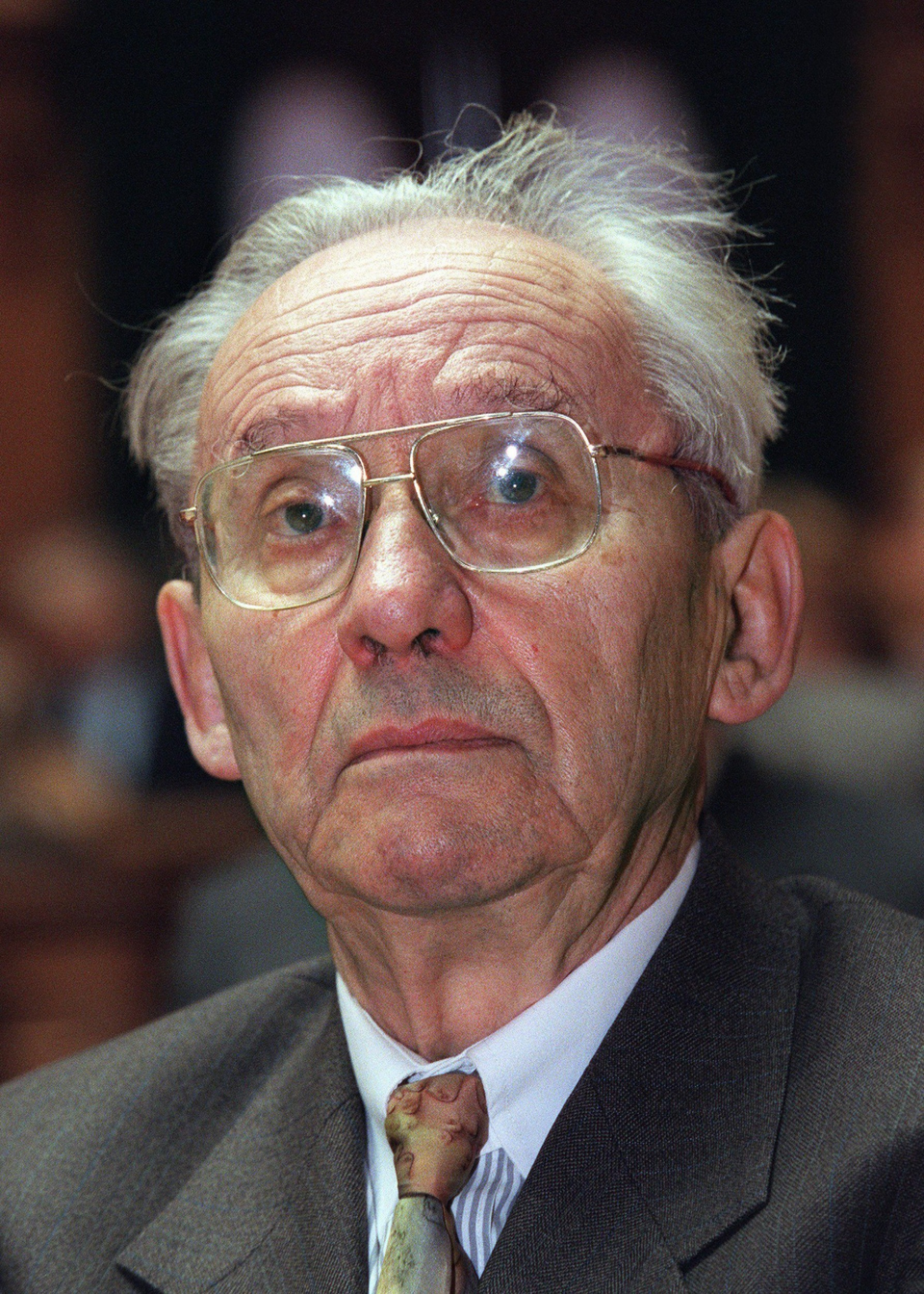
0 sources
Summary
Paul Ricœur was born in Valence[1]. He died in Châtenay-Malabry[2]. He worked as a philosopher[3], university teacher[4], theologian[5], and translator[6]. He ranks in the top 0.7% of human entities by monthly Wikipedia readership (4,539 views/month, #7,030 of 1,000,298).[7]
Key Facts
- Place of burial: Q83375988[8]
- Country of citizenship: France[9]
- Field of work: philosophy[10], phenomenology[11]
- Employer: Faculty of Arts of Paris[12], University of Strasbourg[13], Protestant Faculty of Theology in Paris[14], Paris Nanterre University[15], UCLouvain[16], University of Chicago[17], Dupuy-de-Lôme High School[18], Conservatoire national des Arts et Métiers[19]
- Educated at: University of Rennes[20], Émile Zola school in Rennes[21], Faculty of Arts of Paris[22], University of Paris[23]
- Award received: Balzan Prize[24], Karl Jaspers Prize[25], Oskar Pfister Award[26], Hegel Prize[27], Dr. Leopold Lucas Prize[28], Paul VI Prize[29], Honorary doctor of the Catholic University of Louvain[30], Gordon J. Laing Award[31], honorary doctor of the University of Madrid Complutense[32], Kyoto Prize in Arts and Philosophy[33], honorary doctor of the University of Padua[34], honorary doctorate of the University of Santiago de Compostela[35], Fellow of the American Academy of Arts and Sciences[36], Honorary doctor of the University of Ottawa[37]
- Religion or worldview: Protestantism[38]
- Sex or gender: male[39]
- Doctoral student: Maurice Lagueux[40], André Moreau[41], Maurice Bellet[42], Bernard Quelquejeu[43], Jacques Poulain[44], Bernard Sichère[45], Jean-Michel Palmier[46], Nicolas Grimaldi[47], Paulin Hountondji[48], Pierre Caussat[49], Francis Kaplan[50], Jean-François Marquet[51], Alain Houziaux[52], Robert Nadeau[53]
Why It Matters
Paul Ricœur has Wikipedia articles in 26 language editions, a strong signal of global cultural recognition.[54] He is known by 47 alternative names across languages and contexts.[55]
Works attributed to him include Hermeneutics of suspicion[56], an expression[57].
His notable doctoral advisees include François Laruelle[58], a philosopher[59], 1937–2024[60], of France[61], specialised in philosophy[62]; Néstor García Canclini[63], an anthropologist[64], b. 1939[65], of Argentina[66], awarded the Guggenheim Fellowship[67]; Nicolas Grimaldi[68], a philosopher[69], 1933–2026[70], of France[71], awarded the Dagnan-Bouveret Prize[72]; Paulin Hountondji[73], a politician[74], 1942–2024[75], of Ivory Coast[76], awarded the Prince Claus Award[77]; Marcien Towa[78]; and Jacques Garelli[79].
FAQs
Where was Paul Ricœur born?
Paul Ricœur's place of birth was Valence[1].
Where did Paul Ricœur die?
Paul Ricœur died in Châtenay-Malabry[2].
What did Paul Ricœur do for work?
Paul Ricœur worked as a philosopher[3], university teacher[4], theologian[5], and translator[6].
Where did Paul Ricœur go to school?
Paul Ricœur was educated at University of Rennes[20], Émile Zola school in Rennes[21], Faculty of Arts of Paris[22], and University of Paris[23].
What awards did Paul Ricœur receive?
Honors received include Balzan Prize[24], Karl Jaspers Prize[25], Oskar Pfister Award[26], and Hegel Prize[27].