
Pascual Jordan
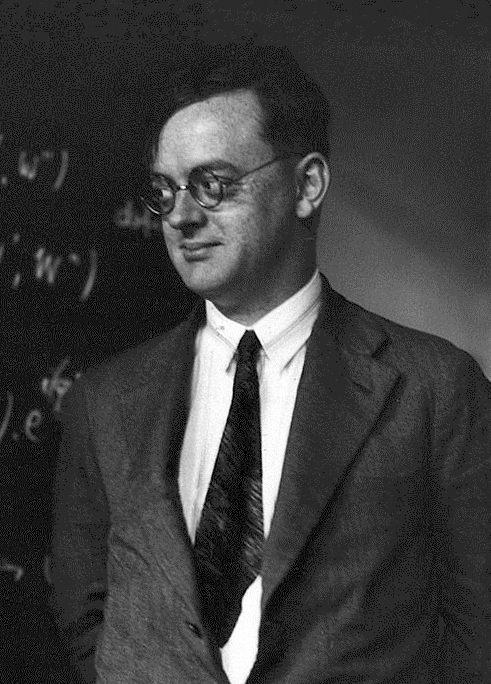
0 sources
Summary
Pascual Jordan was born on October 18, 1902[1], in Hanover[2]. He died on July 31, 1980[3], in Hamburg[4]. He worked as a physicist[5], politician[6], university teacher[7], non-fiction writer[8], and mathematician[9]. He ranks in the top 0.72% of human entities by monthly Wikipedia readership (2,357 views/month, #7,250 of 1,000,298).[10]
Key Facts
- Place of burial: Ohlsdorf Cemetery[11]
- Father: Ernst Jordan[12]
- Country of citizenship: Germany[13]
- Native language: German[14]
- Field of work: theoretical physics[15]
- Position held: member of the German Bundestag[16]
- Employer: University of Hamburg[17], Humboldt-Universität zu Berlin[18], University of Rostock[19], Luftwaffe[20]
- Educated at: Leibniz University Hannover[21], University of Göttingen[22]
- Doctoral advisor: Max Born[23]
- Notable work: Jordan algebra[24], Brans–Dicke theory[25], Jordan and Einstein frames[26], Jordan map[27], Jordan–Wigner transformation[28]
- Award received: Max Planck Medal[29], Carl Friedrich Gauss Medal[30], Ackermann–Teubner Memorial Award[31]
- Member of: Academy of Sciences and Literature Mainz[32], Evangelische Notgemeinschaft in Deutschland[33], Sturmabteilung[34]
- Religion or worldview: Lutheranism[35]
- Sex or gender: male[36]
- Member of political party: Nazi Party[37], Christian Democratic Union[38]
- Doctoral student: Jürgen Ehlers[39], Remo Ruffini[40], Engelbert Schücking[41], Wolfgang Kundt[42], Wolf Beiglböck[43], Klaus R. Bichteler[44], Bernd Schmidt[45], Ulrich Sinogowitz[46], Günther Wilbrandt[47], Manfred Trümper[48], Wolfgang Budich[49]
- Military branch: Luftwaffe[50]
- Commons category: Pascual Jordan[51]
- Archives at: Berlin State Library[52], Archive for Christian Democratic Policy[53]
- Academic degree: professor[54]
- Catalog code: 11001032[55]
- Participated in conflict: World War II[56]
- Family name: Jordan[57]
- Given name: Ernst[58], Pascual[59]
- Pseudonym: Ernst Domeier[60]
Body
Works and Contributions
Things named for Pascual Jordan include Jordan algebra[61], a mathematical concept[62].
Why It Matters
Pascual Jordan has Wikipedia articles in 22 language editions, a strong signal of global cultural recognition.[63] He is known by 26 alternative names across languages and contexts.[64]
He is credited with the discovery of Jordan algebra[65], a mathematical concept[66]. Entities named for him include Jordan algebra[61], a mathematical concept[62].
His notable doctoral advisees include Remo Ruffini[67], a physicist[68], b. 1942[69], of Italy[70], awarded the Fellow of the American Physical Society[71], specialised in astrophysics[72]; Jürgen Ehlers[73], a physicist[74], 1929–2008[75], of Germany[76], awarded the Max Planck Medal[77], specialised in physics[78]; Wolfgang Kundt[79], an astrophysicist[80], b. 1931[81], of Germany[82]; and Engelbert Schücking[83], a physicist[84], 1926–2015[85], of Germany[86], specialised in physics[87].
FAQs
Where was Pascual Jordan born?
Pascual Jordan's place of birth was Hanover[2].
Where did Pascual Jordan die?
Pascual Jordan passed away in Hamburg[4].
Who were Pascual Jordan's parents?
Pascual Jordan's father was Ernst Jordan[12].
What did Pascual Jordan do for work?
Pascual Jordan worked as a physicist[5], politician[6], university teacher[7], non-fiction writer[8], and mathematician[9].
Where did Pascual Jordan go to school?
Pascual Jordan was educated at Leibniz University Hannover[21] and University of Göttingen[22].
What awards did Pascual Jordan receive?
Honors received include Max Planck Medal[29], Carl Friedrich Gauss Medal[30], and Ackermann–Teubner Memorial Award[31].
What did Pascual Jordan discover?
Pascual Jordan is credited as discoverer of Jordan algebra[65].