
P/p
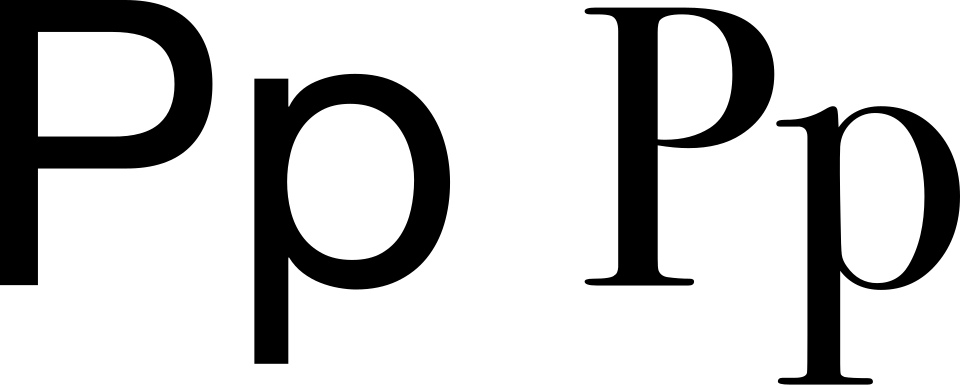
0 sources
P/p
Summary
P/p is a Latin-script letter[1]. P/p ranks in the top 4% of latin_script_letter entities by monthly Wikipedia readership (17,338 views/month).[2]
Key Facts
- P/p's instance of is recorded as Latin-script letter[3].
- P/p's instance of is recorded as consonant letter[4].
- P/p's instance of is recorded as letter of the ISO basic Latin alphabet[5].
- P/p is part of Latin script[6].
- P/p is part of Polish alphabet[7].
- P/p is part of English alphabet[8].
- P/p is part of Czech alphabet[9].
- P/p is part of Esperanto alphabet[10].
- P/p is part of Breton alphabet[11].
- P/p is part of Slovak alphabet[12].
- P/p is part of Turkish alphabet[13].
- P/p is part of Azerbaijani Latin alphabet[14].
- P/p is part of Italian alphabet[15].
- P/p is part of French alphabet[16].
- P/p is part of Finnish alphabet[17].
- P/p is part of Africa Alphabet[18].
- P/p is part of African reference alphabet[19].
- P/p is part of Pan-Nigerian alphabet[20].
- P/p is part of Benin National Alphabet[21].
- P/p is part of German alphabet[22].
- P/p is part of Latvian alphabet[23].
- P/p is part of ISO basic Latin alphabet[24].
- P/p is part of Latin alphabet[25].
- P/p's Commons category is recorded as P[26].
- P/p's Unicode character is recorded as P[27].
Body
Geography
Part of include Latin script[6], a natural writing system[28], founded in -0700[29]; Polish alphabet[7], a Latin-script alphabet[30]; English alphabet[8], a Latin-script alphabet[31]; Czech alphabet[9], a Latin-script alphabet[32]; Esperanto alphabet[10], a Latin-script alphabet[33]; and Breton alphabet[11], a Latin-script alphabet[34].
Designation and Status
Recorded instance of include Latin-script letter[3], consonant letter[4], and letter of the ISO basic Latin alphabet[5].
Why It Matters
P/p ranks in the top 4% of latin_script_letter entities by monthly Wikipedia readership (17,338 views/month).[2] P/p has Wikipedia articles in 30 language editions, a strong signal of global cultural recognition.[35] P/p is known by 32 alternative names across languages and contexts.[36]