
Nonsuch Palace
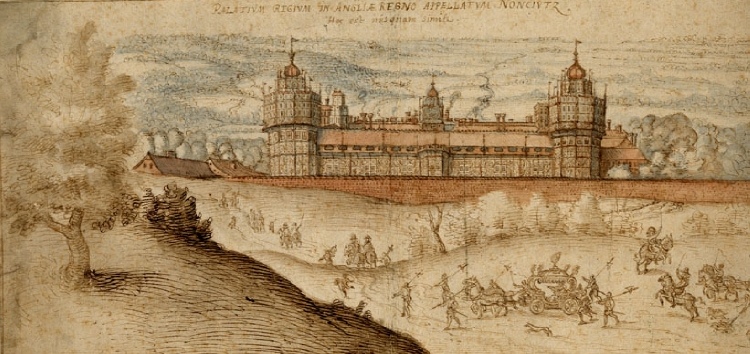
0 sources
Nonsuch Palace
Summary
Nonsuch Palace is an English country house[1]. It ranks in the top 3% of english_country_house entities by monthly Wikipedia readership (9,664 views/month).[2]
Key Facts
- Nonsuch Palace is located in Epsom and Ewell[3].
- Nonsuch Palace is in the country of United Kingdom[4].
- Nonsuch Palace's instance of is recorded as English country house[5].
- Nonsuch Palace's instance of is recorded as destroyed building or structure[6].
- Nonsuch Palace's instance of is recorded as royal palace[7].
- Nonsuch Palace is owned by Henry VIII of England[8].
- Nonsuch Palace is owned by Mary I[9].
- Nonsuch Palace is owned by Henry FitzAlan, 12th Earl of Arundel[10].
- Nonsuch Palace is owned by Thomas Pride[11].
- Nonsuch Palace's architectural style is recorded as Tudor architecture[12].
- Nonsuch Palace's structure replaced by is recorded as Nonsuch Park[13].
- Nonsuch Palace's Commons category is recorded as Nonsuch Palace[14].
- Nonsuch Palace's coordinate location is recorded as {'lat': 51.35444444444445, 'lon': -0.23833333333333334}[15].
- Nonsuch Palace's significant event is recorded as Treaty of Nonsuch[16].
- Nonsuch Palace's state of conservation is recorded as demolished or destroyed[17].
- Nonsuch Palace's state of use is recorded as permanently closed[18].
- Nonsuch Palace's historic county is recorded as Surrey[19].
Body
Geography
Nonsuch Palace is in the country of United Kingdom[4]. It is located in Epsom and Ewell[3].
Designation and Status
Recorded instance of include English country house[5], destroyed building or structure[6], and royal palace[7].
History and Context
Owners include Henry VIII of England[8], a monarch[20], 1491–1547[21], of Kingdom of England[22], awarded the Knight of the Order of the Golden Fleece[23]; Mary I[9], a politician[24], 1516–1558[25], of Kingdom of England[26], awarded the Golden Rose[27]; Henry FitzAlan, 12th Earl of Arundel[10], a courtier[28], 1512–1580[29], awarded the Order of the Garter[30]; and Thomas Pride[11], a military personnel[31], 1650–1658[32], of Kingdom of England[33].
Why It Matters
Nonsuch Palace ranks in the top 3% of english_country_house entities by monthly Wikipedia readership (9,664 views/month).[2] It has Wikipedia articles in 12 language editions, a strong signal of global cultural recognition.[34] It is known by 11 alternative names across languages and contexts.[35]