
Noli me tangere
painting by Titian
Press Enter · cited answer in seconds
0 sources
Summary
Noli me tangere is a painting[1]. It has Wikipedia articles in 11 language editions, a strong signal of global cultural recognition.[2]
Key Facts
- Noli me tangere is the creator of Titian[3].
- Noli me tangere's religion is recorded as Christianity[4].
- Noli me tangere is in the country of United Kingdom[5].
- Noli me tangere's instance of is recorded as painting[6].
- Noli me tangere is owned by Jean-Baptiste Colbert, Marquis de Seignelay[7].
- Noli me tangere is owned by Pierre-Vincent Bertin[8].
- Noli me tangere is owned by Philippe II, Duke of Orléans[9].
- Noli me tangere is associated with the Venetian school movement[10].
- Noli me tangere is associated with the High Renaissance movement[11].
- Noli me tangere's genre is religious art[12].
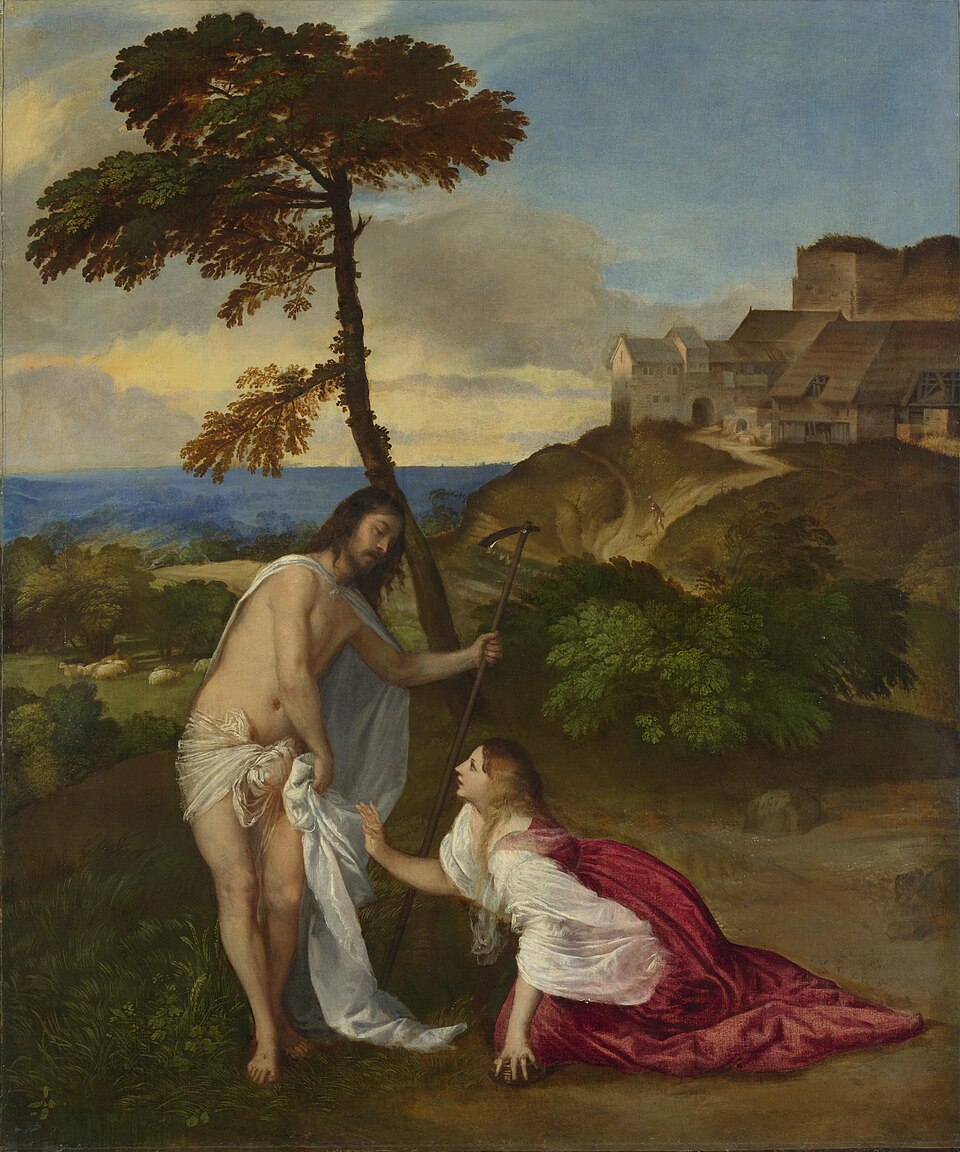
- Noli me tangere's depicts is recorded as Mary Magdalene[13].
- Noli me tangere's depicts is recorded as landscape[14].
- Noli me tangere's depicts is recorded as waist-length hair[15].
- Noli me tangere's depicts is recorded as Jesus Christ[16].
- Noli me tangere's depicts is recorded as tree[17].
- Noli me tangere's depicts is recorded as navel[18].
- Noli me tangere's depicts is recorded as sheep[19].
- Noli me tangere's depicts is recorded as sky[20].
- Noli me tangere's depicts is recorded as cloud[21].
- Noli me tangere's depicts is recorded as hill[22].
- Noli me tangere's depicts is recorded as shrubland[23].
- Noli me tangere's depicts is recorded as group of structures or buildings[24].
- Noli me tangere's depicts is recorded as Noli me tangere[25].
- Noli me tangere is made of oil paint[26].
- Noli me tangere is made of canvas[27].
Body
Authorship and Creation
Noli me tangere is the creator of Titian[3].
Publication
Noli me tangere's genre is religious art[12].
Subject and Themes
Noli me tangere's main subject is it[28]. Movements include Venetian school[10] and High Renaissance[11].
Material and Period
Recorded made from material include oil paint[26] and canvas[27]. The location of Noli me tangere was National Gallery[29].
Why It Matters
Noli me tangere has Wikipedia articles in 11 language editions, a strong signal of global cultural recognition.[2] It is known by 14 alternative names across languages and contexts.[30]