
Nikolay Morozov
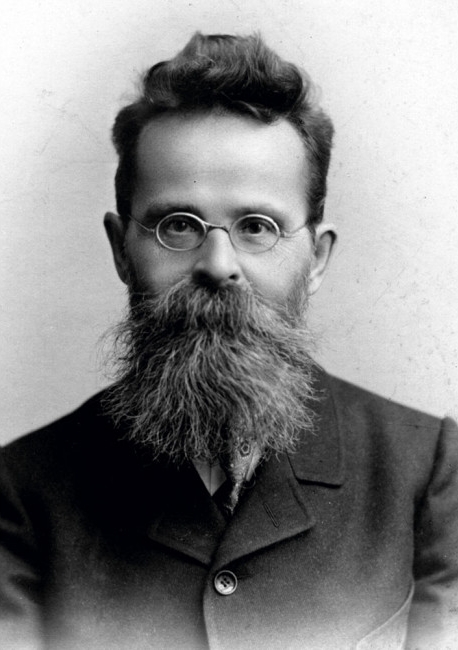
0 sources
Summary
Nikolay Morozov was born on June 25, 1854[1], in Borok[2]. He died on July 30, 1946[3], in Borok[4]. He worked as a chemist[5], astronomer[6], poet[7], writer[8], and revolutionary[9]. He ranks in the top 0.73% of human entities by monthly Wikipedia readership (2,076 views/month, #7,260 of 1,000,298).[10]
Key Facts
- Date of birth: July 8, 1854[11], 1854[12], July 7, 1854[13]
- Place of burial: Borok[14]
- Father: Q138497837[15]
- Spouse: Xenia Borislavkaïa[16]
- Country of citizenship: Russian Empire[17], Russian Socialist Federative Soviet Republic[18], Soviet Union[19]
- Native language: Russian[20]
- Occupation: politician[21], historian[22], memoirist[23], editor[24], naturalist[25]
- Employer: Institute of Natural Sciences named after P.F. Lesgaft[26]
- Educated at: 2-я Московская гимназия[27], Lomonosov Moscow State University[28]
- Award received: Order of Lenin[29], Order of the Red Banner of Labour[30], Medal "For Valiant Labour in the Great Patriotic War 1941–1945"[31], Medal "For the Defence of Leningrad"[32]
- Member of: Russian Academy of Sciences[33], Russian Society of Universe Explorers[34], Society of Devotees of Natural Science, Anthropology, and Ethnography[35]
- Sex or gender: male[36]
- Member of political party: Circle of Tchaikovsky[37], International Workingmen's Association[38], Land and Liberty[39], Narodnaya Volya[40]
- Commons category: Nikolai Alexandrovich Morozov[41]
- Archives at: Archive RAS[42]
- Participated in conflict: Eastern Front[43]
- Family name: Morozov[44]
- Given name: Nikolay[45]
- Pseudonym: партийные клички «Воробей»[46], «Зодиак»[47], литературный псевдоним Н. Воробьёв[48], конспиративные фамилии «Лакиер»[49], «Хитрово»[50]
- Topic's main category: Category:Nikolai Alexandrovich Morozov[51]
- Described by source: Great Soviet Encyclopedia (1969–1978)[52], Bio-bibliographic Dictionary of 20th-Century Russian Writers[53], Brockhaus and Efron Encyclopedic Dictionary[54], New Encyclopedic Dictionary[55], Small Brockhaus and Efron Encyclopedic Dictionary[56], Great Soviet Encyclopedia (1926–1947)[57], Russian literature of the 20th century. Volume 2, 2005[58], Writers of St. Petersburg. XX century[59], Armenian Soviet Encyclopedia, vol. 8[60], Russian writers: XIX c. [2/2][61], Astronomers: A Biographical Reference[62], Granat Encyclopedic Dictionary[63]
Body
Works and Contributions
Things named for Nikolay Morozov include Imeni Morozova[64], an urban-type settlement in Russia[65], in Russia[66] and Morozov[67], a lunar crater[68].
Why It Matters
Nikolay Morozov has Wikipedia articles in 14 language editions, a strong signal of global cultural recognition.[69] He is known by 31 alternative names across languages and contexts.[70]
He is credited with the discovery of New Chronology[71], a conspiracy theory[72]. Entities named for him include Imeni Morozova[64], an urban-type settlement in Russia[65], in Russia[66] and Morozov[67], a lunar crater[68].
FAQs
Where was Nikolay Morozov born?
Nikolay Morozov's place of birth was Borok[2].
Where did Nikolay Morozov die?
Nikolay Morozov died in Borok[4].
Who were Nikolay Morozov's parents?
Nikolay Morozov's father was Q138497837[15].
Who was Nikolay Morozov married to?
Nikolay Morozov's spouses include Xenia Borislavkaïa[16].
What did Nikolay Morozov do for work?
Nikolay Morozov worked as a chemist[5], astronomer[6], poet[7], writer[8], and revolutionary[9].
Where did Nikolay Morozov go to school?
Nikolay Morozov was educated at 2-я Московская гимназия[27] and Lomonosov Moscow State University[28].
What awards did Nikolay Morozov receive?
Honors received include Order of Lenin[29], Order of the Red Banner of Labour[30], Medal "For Valiant Labour in the Great Patriotic War 1941–1945"[31], and Medal "For the Defence of Leningrad"[32].
What did Nikolay Morozov discover?
Nikolay Morozov is credited as discoverer of New Chronology[71].