
Nicholas II of Russia
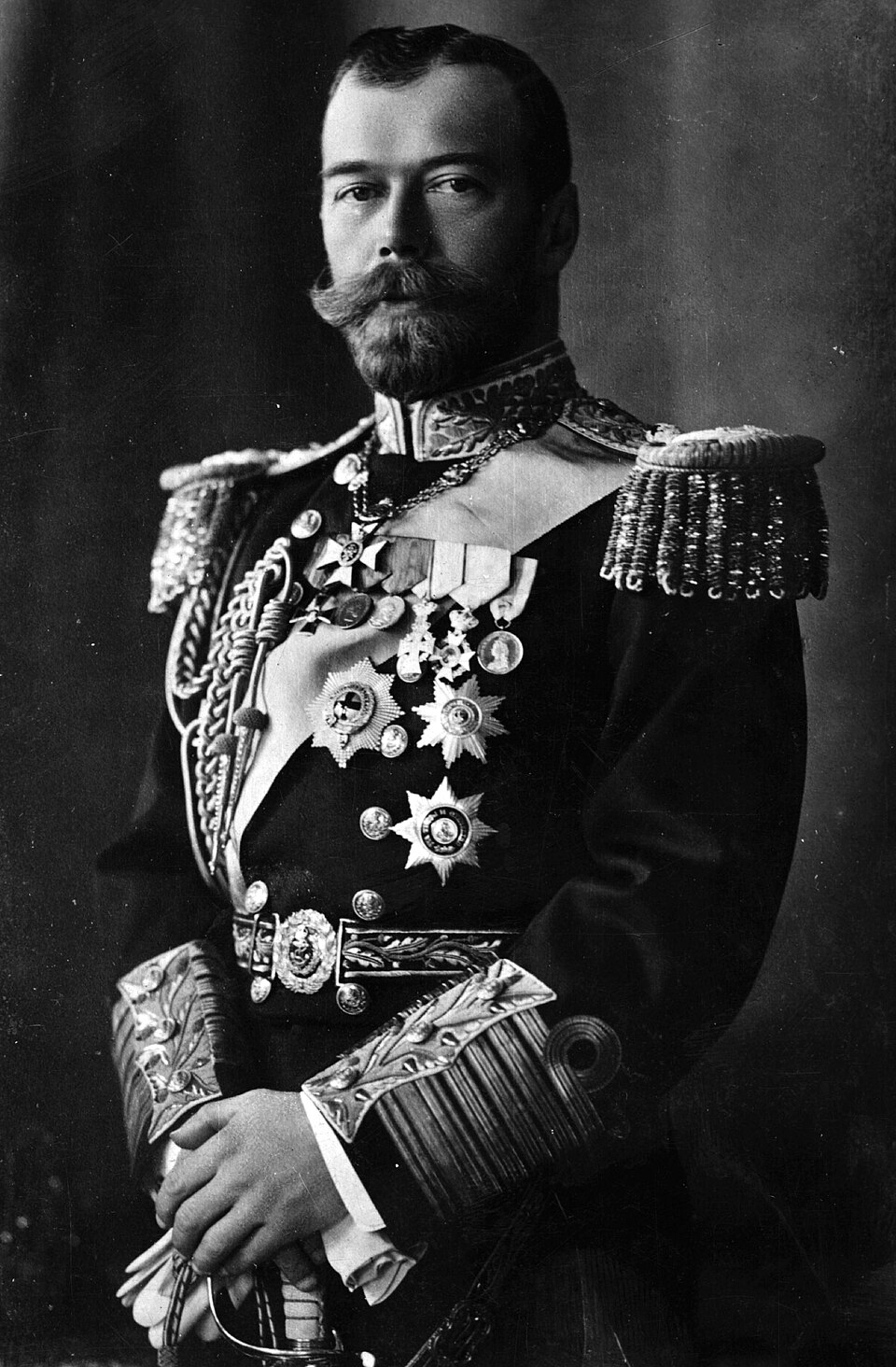
0 sources
Nicholas II of Russia
Summary
Nicholas II of Russia is a human[1]. He was born in Pushkin[2]. He died in Yekaterinburg[3]. He worked as a monarch[4], aristocrat[5], and philatelist[6]. He has Wikipedia articles in 30 language editions, a strong signal of global cultural recognition.[7]
Key Facts
- Nicholas II of Russia was born in Pushkin[2].
- Nicholas II of Russia died in Yekaterinburg[3].
- Nicholas II of Russia passed away in Ipatiev House[8].
- Nicholas II of Russia is buried at Peter and Paul Cathedral[9].
- Nicholas II of Russia's father was Alexander III of Russia[10].
- Nicholas II of Russia's mother was Maria Feodorovna[11].
- Among Nicholas II of Russia's spouses was Alexandra Feodorovna[12].
- A child of Nicholas II of Russia was Grand Duchess Olga Nikolaevna of Russia[13].
- A child of Nicholas II of Russia was Grand Duchess Tatiana Nikolaevna of Russia[14].
- A child of Nicholas II of Russia was Grand Duchess Maria Nikolaevna of Russia[15].
- A child of Nicholas II of Russia was Grand Duchess Anastasia Nikolaevna of Russia[16].
- A child of Nicholas II of Russia was Alexei Nikolaevich, Tsarevich of Russia[17].
- Nicholas II of Russia held citizenship in Russian Empire[18].
- Nicholas II of Russia's professions included monarch[4].
- Nicholas II of Russia worked as an aristocrat[5].
- Nicholas II of Russia's professions included philatelist[6].
- Nicholas II of Russia held the position of Emperor of all the Russias[19].
- Nicholas II of Russia held the position of King of Poland[20].
- Nicholas II of Russia held the position of Grand Duke of Finland[21].
- Nicholas II of Russia held the position of member of the State Council of the Russian Empire[22].
- Nicholas II of Russia received the Order of St. Andrew[23].
- Nicholas II of Russia received the Order of St. George, 4th class[24].
- Nicholas II of Russia received the Order of St. Vladimir, 4th class[25].
- Nicholas II of Russia received the Order of Saint Alexander Nevsky[26].
- Nicholas II of Russia received the Order of the White Eagle[27].
Body
Origins and Family
Born in Pushkin[2], Nicholas II of Russia… his father was Alexander III of Russia[10]. His mother was Maria Feodorovna[11].
Career and Affiliations
Recorded occupations include monarch[4], aristocrat[5], and philatelist[6]. Positions held include Emperor of all the Russias[19], a noble title[28], in Russian Empire[29], founded in 1721[30]; King of Poland[20], a historical position[31], in Kingdom of Poland[32], founded in 1025[33]; Grand Duke of Finland[21], a noble title[34], in Finland[35]; and member of the State Council of the Russian Empire[22].
Recognition
Awards received include Order of St. Andrew[23], an order[36], in Russian Empire[37], founded in 1698[38]; Order of St. George, 4th class[24], a grade of an order[39], in Russian Empire[40]; Order of St. Vladimir, 4th class[25], a grade of an order[41], in Russian Empire[42]; Order of Saint Alexander Nevsky[26]; Order of the White Eagle[27]; and Order of Saint Anna, 1st class[43].
Personal Life
Among Nicholas II of Russia's spouses was Alexandra Feodorovna[12]. Children include Grand Duchess Olga Nikolaevna of Russia[13], an aristocrat[44], 1895–1918[45], of Russian Empire[46], awarded the Order of Saint Catherine[47], specialised in royal court[48]; Grand Duchess Tatiana Nikolaevna of Russia[14], an aristocrat[49], 1897–1918[50], of Russian Empire[51], awarded the Order of Saint Catherine[52]; Grand Duchess Maria Nikolaevna of Russia[15], an aristocrat[53], 1899–1918[54], of Russian Empire[55], awarded the Order of Saint Catherine[56]; Grand Duchess Anastasia Nikolaevna of Russia[16], an aristocrat[57], 1901–1918[58], of Russian Empire[59], awarded the Dame Grand Cordon of the Order of Saint Catherine[60]; and Alexei Nikolaevich, Tsarevich of Russia[17], an aristocrat[61], 1904–1918[62], of Russian Empire[63], awarded the Knight of the Order of St. Alexander Nevsky[64]. Religious affiliations include Russian Orthodox Church[65], a national Church[66], in Russia[67], founded in 1448[68], headquartered in Danilov Monastery[69] and Eastern Orthodoxy[70], a Christian denominational family[71].
Death and Burial
Recorded place of death include Yekaterinburg[3], an administrative divisions of Russia[72], in Russian Empire[73], founded in 1723[74] and Ipatiev House[8], an architectural landmark[75], in Russia[76], founded in 1881[77]. Burial took place at Peter and Paul Cathedral[9].
Works and Contributions
Things named for Nicholas II of Russia include Murmansk Airport[78], an airport[79], in Russia[80]; Mount Nicholas[81], a mountain[82]; Nikolai's Triumphal Arch[83], a tourist attraction[84], in Russia[85], founded in 1891[86]; Nicolaevca[87], a village[88], in Moldova[89]; Lenin Square[90], a square[91], in Russia[92], founded in 1998[93]; and Severnaya Zemlya[94], an archipelago[95], in Russia[96].
Why It Matters
Nicholas II of Russia has Wikipedia articles in 30 language editions, a strong signal of global cultural recognition.[7] He is known by 140 alternative names across languages and contexts.[97]
Entities named for him include Murmansk Airport[78], an airport[79], in Russia[80]; Mount Nicholas[81], a mountain[82]; Nikolai's Triumphal Arch[83], a tourist attraction[84], in Russia[85], founded in 1891[86]; Nicolaevca[87], a village[88], in Moldova[89]; Lenin Square[90], a square[91], in Russia[92], founded in 1998[93]; and Severnaya Zemlya[94], an archipelago[95], in Russia[96].
FAQs
Where was Nicholas II of Russia born?
Nicholas II of Russia was born in Pushkin[2].
Where did Nicholas II of Russia die?
Nicholas II of Russia passed away in Yekaterinburg[3].
Who were Nicholas II of Russia's parents?
Nicholas II of Russia's father was Alexander III of Russia[10]. Nicholas II of Russia's mother was Maria Feodorovna[11].
Who was Nicholas II of Russia married to?
Nicholas II of Russia's spouses include Alexandra Feodorovna[12].
What did Nicholas II of Russia do for work?
Nicholas II of Russia worked as monarch[4], aristocrat[5], and philatelist[6].
What awards did Nicholas II of Russia receive?
Honors received include Order of St. Andrew[23], Order of St. George, 4th class[24], Order of St. Vladimir, 4th class[25], and Order of Saint Alexander Nevsky[26].