
Nagano Shinkansen
high-speed railway line in Japan operating between Tokyo and Nagano stations (absorbed into the Hokuriku Shinkansen from March 2015)
Press Enter · cited answer in seconds
0 sources
Summary
Nagano Shinkansen is a high-speed railway line[1]. It draws 27 Wikipedia views per month (high_speed_railway_line category, ranking #72 of 138).[2]
Key Facts
- Nagano Shinkansen is located in Gunma Prefecture[3].
- Nagano Shinkansen is located in Nagano Prefecture[4].
- Nagano Shinkansen is in the country of Japan[5].
- Nagano Shinkansen's instance of is recorded as high-speed railway line[6].
- Nagano Shinkansen's instance of is recorded as nickname[7].
- Nagano Shinkansen is owned by East Japan Railway Company[8].
- Nagano Shinkansen is operated by East Japan Railway Company[9].
- Nagano Shinkansen is part of Hokuriku Shinkansen[10].
- Nagano Shinkansen's Commons category is recorded as Hokuriku Shinkansen[11].
- Nagano Shinkansen's terminus is recorded as Takasaki Station[12].
- Nagano Shinkansen's terminus is recorded as Nagano Station[13].
- Nagano Shinkansen's service retirement is recorded as March 13, 2015[14].
- Nagano Shinkansen's topic's main category is recorded as Q7823031[15].
- Nagano Shinkansen's type of electrification is recorded as 25 kV, 60 Hz AC railway electrification[16].
- Nagano Shinkansen's track gauge is recorded as standard-gauge railway[17].
- Nagano Shinkansen's replaced by is recorded as Hokuriku Shinkansen[18].
- Nagano Shinkansen's date of official opening is recorded as October 1, 1997[19].
- Nagano Shinkansen's length is recorded as {'unit': 'kilometre', 'amount': '+117.4'}[20].
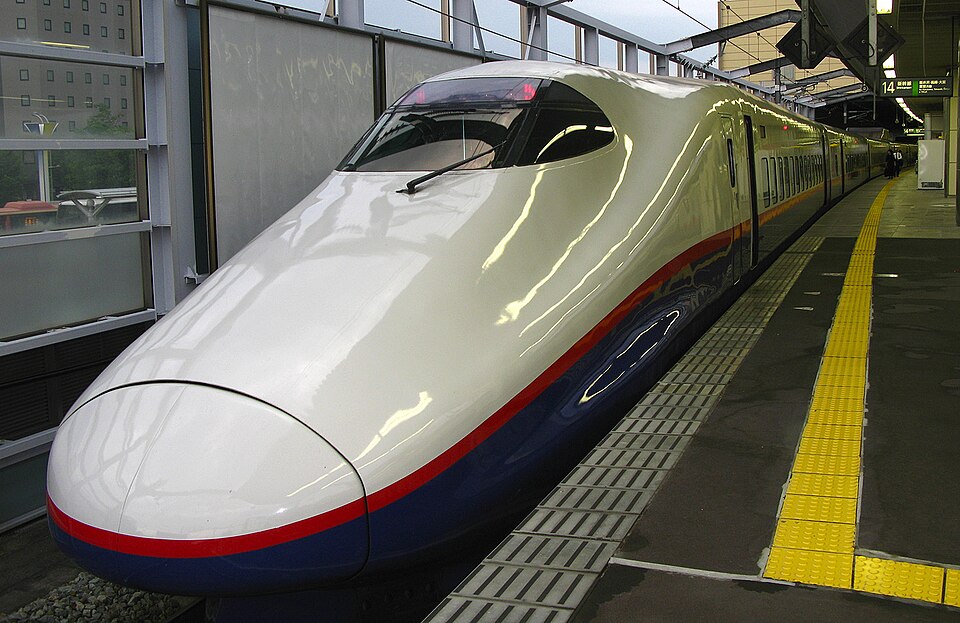
- Nagano Shinkansen's vehicle normally used is recorded as E2 Series Shinkansen[21].
- Nagano Shinkansen's state of use is recorded as absorbed[22].
- Nagano Shinkansen's created for is recorded as 1998 Winter Olympics[23].
Body
Definition and Type
Recorded instance of include high-speed railway line[6] and nickname[7].
Use and Application
Nagano Shinkansen is part of Hokuriku Shinkansen[10].
Why It Matters
Nagano Shinkansen draws 27 Wikipedia views per month (high_speed_railway_line category, ranking #72 of 138).[2] It has Wikipedia articles in 9 language editions, a strong signal of global cultural recognition.[24]