
Mikhail Sholokhov
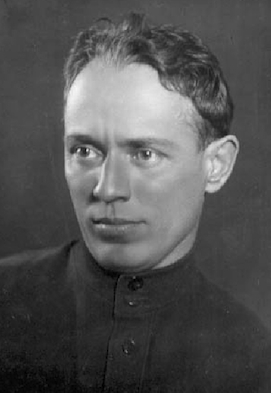
0 sources
Summary
Mikhail Sholokhov was born in Kruzhilin[1]. He died in Vyoshenskaya[2]. He worked as a writer[3], novelist[4], screenwriter[5], poet[6], and prose writer[7]. He ranks in the top 0.71% of human entities by monthly Wikipedia readership (10,907 views/month, #7,069 of 1,000,298).[8]
Key Facts
- Place of burial: Vyoshenskaya[9]
- Spouse: Maria Petrovna Gromoslavskaia[10]
- Child: Mikhail Mikhailovich Sholokhov[11], Svetlana Mikhailovna Sholokhova[12], Aleksandr Sholokhov[13]
- Country of citizenship: Russian Empire[14], Soviet Union[15]
- Ethnic group: Russians[16]
- Occupation: journalist[17], politician[18], short story writer[19], war correspondent[20]
- Field of work: prose[21], creative and professional writing[22], poetry[23], journalism[24], politics[25]
- Position held: deputy of the Supreme Soviet of the Soviet Union[26]
- Award received: State Stalin Prize, 1st degree[27], Medal "For the Victory over Germany in the Great Patriotic War 1941–1945"[28], Order of Lenin[29], Hero of Socialist Labour[30], Order of the October Revolution[31], Order of the Patriotic War, 1st class[32], Nobel Prize in Literature[33], Medal "For the Defence of Moscow"[34], Medal "For the Defence of Stalingrad"[35], Medal "For Valiant Labour in the Great Patriotic War 1941–1945"[36], Alexander Fadeyev Medal[37], Medal "Veteran of Labour"[38], Lenin Prize[39], Jubilee Medal "Twenty Years of Victory in the Great Patriotic War 1941–1945"[40]
- Member of: USSR Union of Writers[41], Serbian Academy of Sciences and Arts[42], Russian Academy of Sciences[43], Academy of Sciences of the USSR[44]
- Sex or gender: male[45]
- Member of political party: Communist Party of the Soviet Union[46]
- Movement: socialist realism[47]
- Genre: sketch story[48], feuilleton[49]
- Commons category: Mikhail Sholokhov[50]
- Military, police or special rank: colonel[51]
Body
Works and Contributions
Things named for Mikhail Sholokhov include Sholokhov Moscow State University for Humanities[52], a university[53], in Russia[54], founded in 1951[55]; Moscow National Guard Presidential Cadets School[56], a school[57], in Russia[58], founded in 2002[59], headquartered in Moscow[60]; Sholokhovsky District[61]; and 2448 Sholokhov[62].
Why It Matters
Mikhail Sholokhov has Wikipedia articles in 30 language editions, a strong signal of global cultural recognition.[63] He is known by 134 alternative names across languages and contexts.[64]
Works attributed to him include And Quiet Flows the Don[65], a literary work[66], founded in 1925[67]; Fate of a Man[68], a literary work[69], founded in 1956[70]; The New Land[71], a literary work[72], founded in 1930[73]; They Fought for their Country[74], a literary work[75], founded in 1942[76]; and Tales of the Don[77], a literary cycle[78]. Entities named for him include Sholokhov Moscow State University for Humanities[52], a university[53], in Russia[54], founded in 1951[55]; Moscow National Guard Presidential Cadets School[56], a school[57], in Russia[58], founded in 2002[59], headquartered in Moscow[60]; Sholokhovsky District[61]; and 2448 Sholokhov[62].
FAQs
Where was Mikhail Sholokhov born?
Mikhail Sholokhov's place of birth was Kruzhilin[1].
Where did Mikhail Sholokhov die?
Mikhail Sholokhov died in Vyoshenskaya[2].
Who was Mikhail Sholokhov married to?
Mikhail Sholokhov's spouses include Maria Petrovna Gromoslavskaia[10].
What did Mikhail Sholokhov do for work?
Mikhail Sholokhov worked as a writer[3], novelist[4], screenwriter[5], poet[6], and prose writer[7].
What awards did Mikhail Sholokhov receive?
Honors received include State Stalin Prize, 1st degree[27], Medal "For the Victory over Germany in the Great Patriotic War 1941–1945"[28], Order of Lenin[29], and Hero of Socialist Labour[30].