
Mieszko I
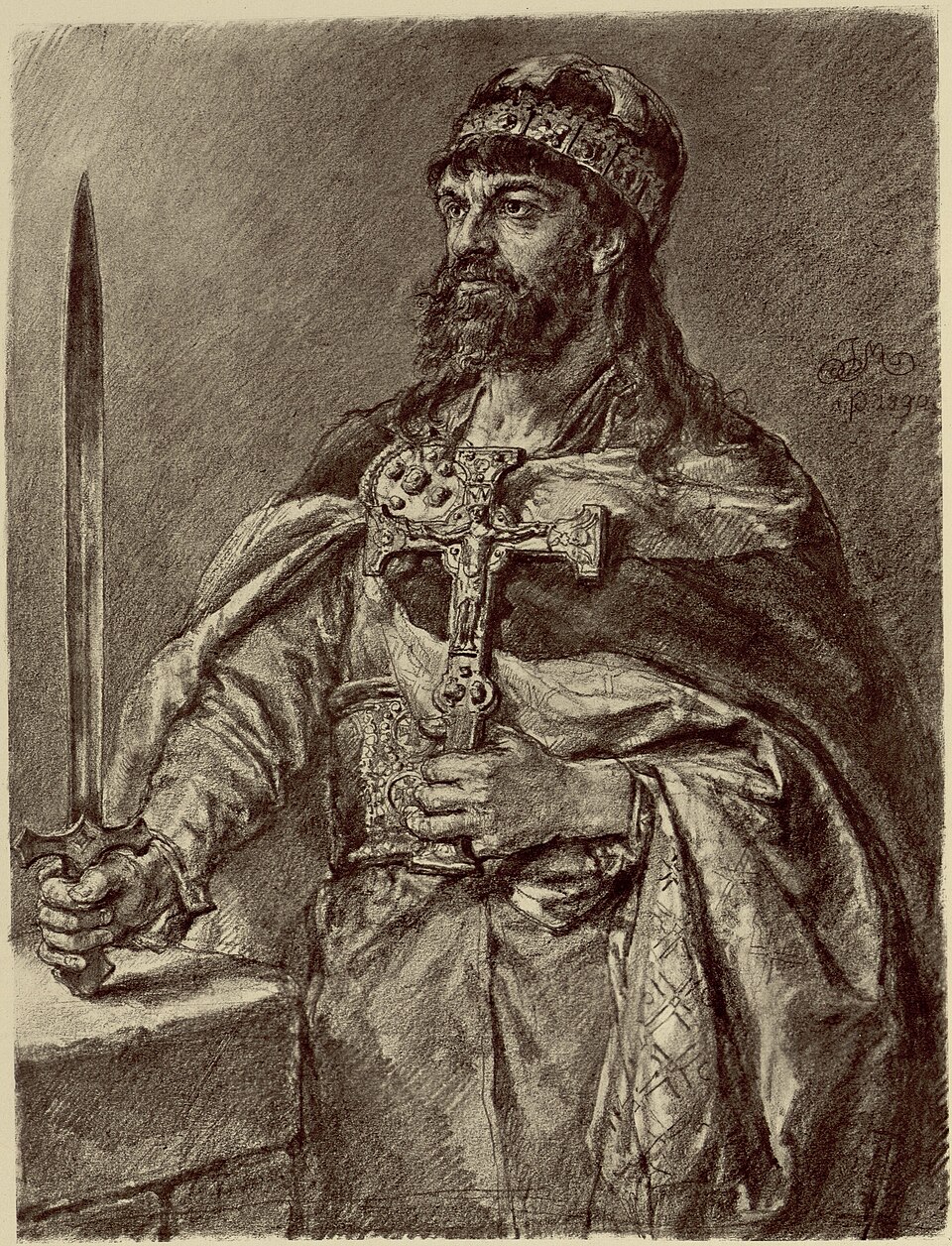
0 sources
Mieszko I
Summary
Mieszko I is a human[1]. He died on May 25, 992[2]. He worked as a politician[3] and sovereign[4]. He has Wikipedia articles in 30 language editions, a strong signal of global cultural recognition.[5]
Key Facts
- Mieszko I died on May 25, 992[2].
- Mieszko I is buried at Archcathedral Basilica of St. Peter and St. Paul[6].
- Mieszko I's father was Siemomysl[7].
- Mieszko I's mother was Gorka[8].
- Mieszko I was married to Oda of Haldensleben[9].
- Among Mieszko I's spouses was Doubravka of Bohemia[10].
- A child of Mieszko I was Bolesław I the Brave[11].
- A child of Mieszko I was Sigrid the Haughty[12].
- A child of Mieszko I was Mieszko Mieszkowic[13].
- A child of Mieszko I was Świętopełk Mieszkowic[14].
- A child of Mieszko I was Lambert Mieszkowic[15].
- A child of Mieszko I was Gunhild of Wenden[16].
- Mieszko I worked as a politician[3].
- Mieszko I's professions included sovereign[4].
- Mieszko I held the position of Duke of Poland[17].
- Mieszko I's religion is recorded as Slavic religion[18].
- Mieszko I's religion is recorded as Catholicism[19].
- Mieszko I is recorded as male[20].
- Mieszko I's instance of is recorded as human[21].
- Mieszko I's family is recorded as Piast dynasty[22].
- Mieszko I's noble title is recorded as duke[23].
- Mieszko I's Commons category is recorded as Mieszko I of Poland[24].
- Mieszko I's given name is recorded as Mieszko[25].
- Mieszko I's significant event is recorded as baptism[26].
- Mieszko I's topic's main category is recorded as Category:Mieszko I of Poland[27].
Body
Origins and Family
Mieszko I's father was Siemomysl[7]. His mother was Gorka[8].
Career and Affiliations
Recorded occupations include politician[3] and sovereign[4]. Mieszko I held the position of Duke of Poland[17].
Personal Life
Spouses include Oda of Haldensleben[9], a nun[28], 0901–1023[29] and Doubravka of Bohemia[10], a politician[30], 0940–0977[31], of Duchy of Bohemia[32], specialised in history of Christianity[33]. Children include Bolesław I the Brave[11], a politician[34], 0967–1025[35], of Duchy of Poland[36]; Sigrid the Haughty[12], a consort[37], 0968–1014[38], of Sweden[39]; Mieszko Mieszkowic[13], a royalty[40], b. 0978[41], of Poland[42]; Świętopełk Mieszkowic[14], b. 0979[43], of Poland[44]; Lambert Mieszkowic[15], a royalty[45], b. 0981[46], of Poland[47]; and Gunhild of Wenden[16], 0901–1014[48], of Duchy of Poland[49]. Religious affiliations include Slavic religion[18], an ethnic religion[50] and Catholicism[19], a Christian denominational family[51], founded in 1054[52].
Death and Burial
Mieszko I died on May 25, 992[2]. Burial took place at Archcathedral Basilica of St. Peter and St. Paul[6].
Works and Contributions
Things named for Mieszko I include Mieszko Oak[53], a remarkable tree[54], in Poland[55].
Why It Matters
Mieszko I has Wikipedia articles in 30 language editions, a strong signal of global cultural recognition.[5] He is known by 3 alternative names across languages and contexts.[56]
Entities named for him include Mieszko Oak[53], a remarkable tree[54], in Poland[55].
FAQs
Who were Mieszko I's parents?
Mieszko I's father was Siemomysl[7]. Mieszko I's mother was Gorka[8].
Who was Mieszko I married to?
Mieszko I's spouses include Oda of Haldensleben[9] and Doubravka of Bohemia[10].