
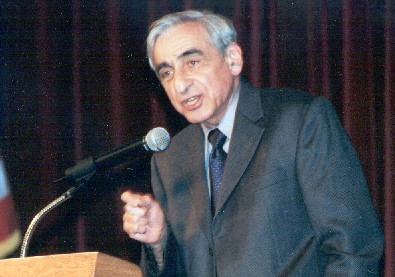
Michael Walzer
0 sources
Michael Walzer
Summary
Michael Walzer is a human[1]. His place of birth was New York City[2]. He was born on March 3, 1935[3]. He worked as a philosopher[4], political scientist[5], university teacher[6], sociologist[7], and writer[8]. He ranks in the top 0.72% of human entities by monthly Wikipedia readership (788 views/month, #7,168 of 1,000,298).[9]
Key Facts
- Michael Walzer was born in New York City[2].
- Michael Walzer was born on March 3, 1935[3].
- Michael Walzer held citizenship in United States[10].
- Michael Walzer worked as a philosopher[4].
- Michael Walzer's professions included political scientist[5].
- Michael Walzer's professions included university teacher[6].
- Michael Walzer worked as a sociologist[7].
- Michael Walzer's professions included writer[8].
- Michael Walzer worked as a politician[11].
- Michael Walzer was employed by Harvard University[12].
- Michael Walzer's education included a stint at University of Cambridge[13].
- Michael Walzer was educated at Brandeis University[14].
- Michael Walzer's doctoral advisor was Samuel Beer[15].
- A notable work attributed to Michael Walzer is La paradoxa de l’alliberament[16].
- A notable work attributed to Michael Walzer is Zionism and Judaism: The Paradox of National Liberation[17].
- Michael Walzer received the Guggenheim Fellowship[18].
- Michael Walzer received the Fulbright Scholarship[19].
- Michael Walzer received the Dr. Leopold Lucas Prize[20].
- Michael Walzer was a member of American Academy of Arts and Sciences[21].
- Michael Walzer was a member of American Philosophical Society[22].
- Michael Walzer was influenced by Albert Camus[23].
- Michael Walzer was influenced by Charles Taylor[24].
- Michael Walzer was influenced by Karl Marx[25].
- Michael Walzer was influenced by Isaiah Berlin[26].
- Michael Walzer was influenced by John Rawls[27].
Body
Origins and Family
Born in New York City[2], Michael Walzer… he was born on March 3, 1935[3].
Education
Educated at University of Cambridge[13], a collegiate university[28], in United Kingdom[29], founded in 1209[30], headquartered in Cambridge[31] and Brandeis University[14], a university[32], in United States[33], founded in 1948[34], headquartered in Waltham[35]. Michael Walzer's doctoral advisor was Samuel Beer[15].
Career and Affiliations
Recorded occupations include philosopher[4], political scientist[5], university teacher[6], sociologist[7], writer[8], and politician[11]. Among Michael Walzer's employers was Harvard University[12].
Works and Contributions
Notable works include La paradoxa de l’alliberament[16], a version, edition or translation[36] and Zionism and Judaism: The Paradox of National Liberation[17], an academic journal article[37].
Recognition
Awards received include Guggenheim Fellowship[18], a fellowship grant[38], in United States[39], founded in 1925[40]; Fulbright Scholarship[19], a scholarship[41], in United States[42], founded in 1946[43]; and Dr. Leopold Lucas Prize[20], a peace award[44], in Germany[45], founded in 1972[46].
Why It Matters
Michael Walzer ranks in the top 0.72% of human entities by monthly Wikipedia readership (788 views/month, #7,168 of 1,000,298).[9] He has Wikipedia articles in 22 language editions, a strong signal of global cultural recognition.[47] He is known by 23 alternative names across languages and contexts.[48]
FAQs
Where was Michael Walzer born?
Born in New York City[2], Michael Walzer…
What did Michael Walzer do for work?
Michael Walzer worked as philosopher[4], political scientist[5], university teacher[6], sociologist[7], and writer[8].
Where did Michael Walzer go to school?
Michael Walzer was educated at University of Cambridge[13] and Brandeis University[14].
What awards did Michael Walzer receive?
Honors received include Guggenheim Fellowship[18], Fulbright Scholarship[19], and Dr. Leopold Lucas Prize[20].