
Michael Polanyi
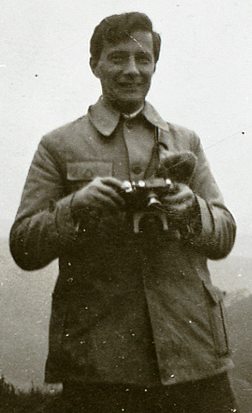
0 sources
Michael Polanyi
Summary
Michael Polanyi is a human[1]. He was born in Budapest[2]. He was born on March 11, 1891[3]. He died in Manchester[4]. He died on February 22, 1976[5]. He worked as a philosopher[6], economist[7], and chemist[8]. He ranks in the top 0.71% of human entities by monthly Wikipedia readership (243 views/month, #7,067 of 1,000,298).[9]
Key Facts
- Michael Polanyi was born in Budapest[2].
- Michael Polanyi passed away in Manchester[4].
- Michael Polanyi passed away in Northampton[10].
- Michael Polanyi was born on March 11, 1891[3].
- Michael Polanyi was born on March 12, 1891[11].
- Michael Polanyi died on February 22, 1976[5].
- Michael Polanyi's mother was Cecília Wohl[12].
- A child of Michael Polanyi was John Polanyi[13].
- Michael Polanyi held citizenship in Hungary[14].
- Michael Polanyi held citizenship in United Kingdom[15].
- Michael Polanyi held citizenship in Austria[16].
- Hungarian was Michael Polanyi's native language[17].
- Michael Polanyi's professions included philosopher[6].
- Michael Polanyi's professions included economist[7].
- Michael Polanyi worked as a chemist[8].
- Michael Polanyi held the position of president[18].
- Michael Polanyi was employed by University of Manchester[19].
- Michael Polanyi's education included a stint at Eötvös Loránd University[20].
- Michael Polanyi was educated at Eötvös Loránd University[21].
- Michael Polanyi's doctoral advisor was Gusztáv Buchböck[22].
- Michael Polanyi was a member of Royal Society[23].
- Michael Polanyi was a member of American Academy of Arts and Sciences[24].
- Michael Polanyi was a member of Manchester Literary and Philosophical Society[25].
- Michael Polanyi's religion is recorded as Catholic Church[26].
- Michael Polanyi is recorded as male[27].
Body
Origins and Family
Michael Polanyi's place of birth was Budapest[2]. Recorded date of birth include March 11, 1891[3] and March 12, 1891[11]. His mother was Cecília Wohl[12]. Hungarian was his native language[17].
Education
Educated at Eötvös Loránd University[20], a public research university[28], in Hungary[29], founded in 1635[30], headquartered in Budapest[31]. Michael Polanyi's doctoral advisor was Gusztáv Buchböck[22]. He studied under Gusztáv Buchböck[32].
Career and Affiliations
Recorded occupations include philosopher[6], economist[7], and chemist[8]. Michael Polanyi was employed by University of Manchester[19]. He held the position of president[18]. Doctoral students include Dan Eley[33], a chemist[34], 1914–2015[35], of United Kingdom[36], awarded the Officer of the Order of the British Empire[37]; Eugene Wigner[38], a mathematician[39], 1902–1995[40], of Hungary[41], awarded the Nobel Prize in Physics[42], specialised in physics[43]; and Hans Ekstein[44], a physicist[45], 1908–1984[46].
Personal Life
A child of Michael Polanyi was John Polanyi[13]. His religion is recorded as Catholic Church[26].
Death and Burial
Michael Polanyi died on February 22, 1976[5]. Recorded place of death include Manchester[4], a city status in the United Kingdom[47], in United Kingdom[48], founded in 1301[49] and Northampton[10], a county town[50], in United Kingdom[51], founded in 1189[52].
Works and Contributions
Things named for Michael Polanyi include Polanyi Medal[53], a science award[54], founded in 1979[55].
Why It Matters
Michael Polanyi ranks in the top 0.71% of human entities by monthly Wikipedia readership (243 views/month, #7,067 of 1,000,298).[9] He has Wikipedia articles in 24 language editions, a strong signal of global cultural recognition.[56] He is known by 33 alternative names across languages and contexts.[57]
He has been cited as an influence by Charles Koch[58], a businessperson[59], b. 1935[60], of United States[61], awarded the Giuseppe Motta Medal[62] and Thomas Kuhn[63], a physicist[64], 1922–1996[65], of United States[66], awarded the Guggenheim Fellowship[67], specialised in philosophy of science[68].
He is credited with the discovery of tacit knowledge[69], a knowledge type[70]. Entities named for him include Polanyi Medal[53], a science award[54], founded in 1979[55].
His notable doctoral advisees include Eugene Wigner[71], a mathematician[72], 1902–1995[73], of Hungary[74], awarded the Nobel Prize in Physics[75], specialised in physics[76] and Melvin Calvin[77], a chemist[78], 1911–1997[79], of United States[80], awarded the Guggenheim Fellowship[81], specialised in biochemistry[82].
FAQs
Where was Michael Polanyi born?
Michael Polanyi was born in Budapest[2].
Where did Michael Polanyi die?
Michael Polanyi died in Manchester[4].
Who were Michael Polanyi's parents?
Michael Polanyi's mother was Cecília Wohl[12].
What did Michael Polanyi do for work?
Michael Polanyi worked as philosopher[6], economist[7], and chemist[8].
Where did Michael Polanyi go to school?
Michael Polanyi was educated at Eötvös Loránd University[20] and Eötvös Loránd University[21].
Who did Michael Polanyi influence?
Michael Polanyi has been cited as an influence by Charles Koch[58] and Thomas Kuhn[63].
What did Michael Polanyi discover?
Michael Polanyi is credited as discoverer of tacit knowledge[69].