
Messier 68
Globular cluster
Press Enter · cited answer in seconds
0 sources
Summary
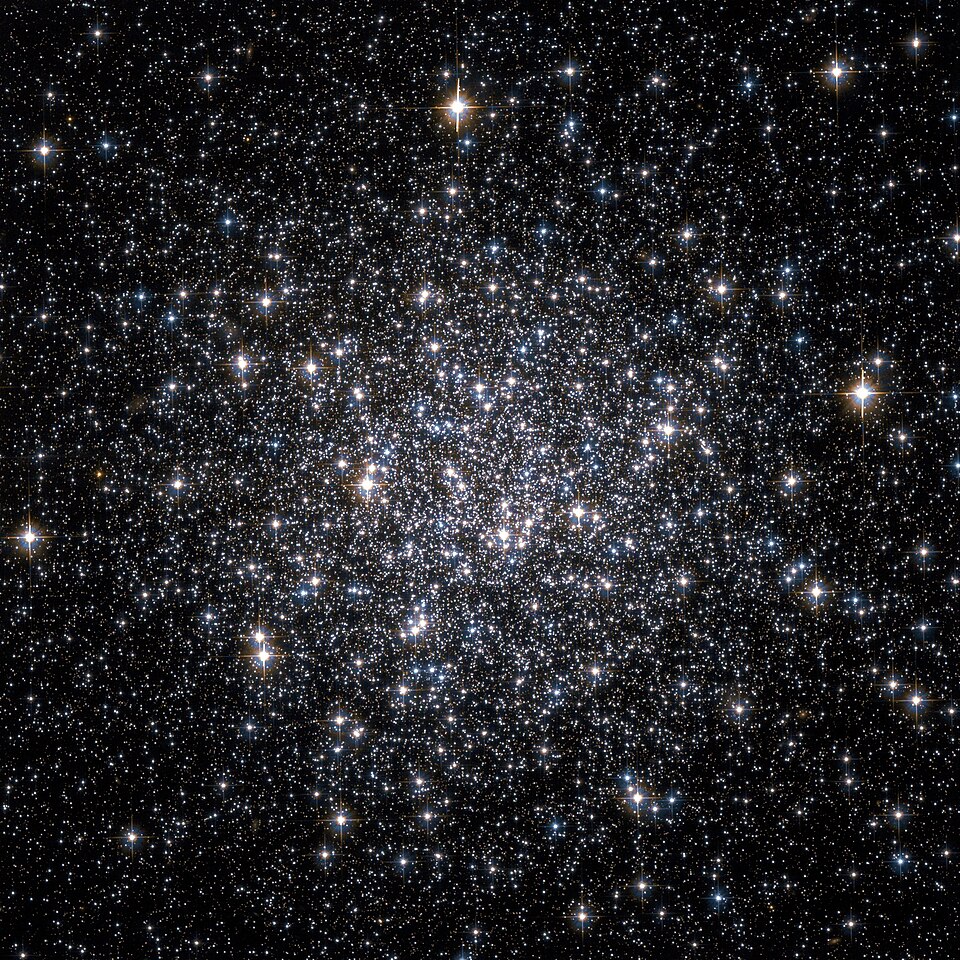
Messier 68 is a globular cluster[1]. It draws 133 Wikipedia views per month (globular cluster category, ranking #16 of 58).[2]
Key Facts
- Discoverer or inventor: Charles Messier[3]
- Constellation: Hydra[4]
- Part of: Milky Way[5]
- Commons category: Messier 68[6]
- Catalog code: NGC 4590[7], HD 110032[8], M 68[9], CD-26 9257[10], GCRV 7606[11], Melotte 113[12], C 1236-264[13], GCl 20[14], [KPS2012] MWSC 2059[15]
- Time of discovery or invention: April 9, 1780[16]
- Topic's main category: Category:Messier 68[17]
- Commons gallery: Messier 68[18]
- Apparent magnitude: 7.96[19], 10.26[20], 5.80[21], 8.903[22], 8.127[23]
- Absolute magnitude: -7.3[24]
- Radius: 53 light-year[25]
- Radial velocity: -95.2 kilometre per second[26], -116.0 kilometre per second[27]
- Metallicity: -2.06[28], -2.23[29], -2.27[30], -2.22[31], -2.18[32]
- Distance from Earth: 33,000 light-year[33], 0.010 megaparsec[34]
- Right ascension: 189.866583 degree[35]
- Declination: -26.744056 degree[36]
- Epoch: J2000.0[37]
- Effective temperature: 4549 K[38]
- Surface gravity: 8 centimetre per square second[39]
- Declination component of proper motion: 1.790 milliarcsecond per year[40], 0.06 milliarcsecond per year[41]
- Right ascension component of proper motion: -3.760 milliarcsecond per year[42], -3.86 milliarcsecond per year[43]
Why It Matters
Messier 68 has Wikipedia articles in 26 language editions, a strong signal of global cultural recognition.[44] It is known by 15 alternative names across languages and contexts.[45]