
May–Thurner syndrome
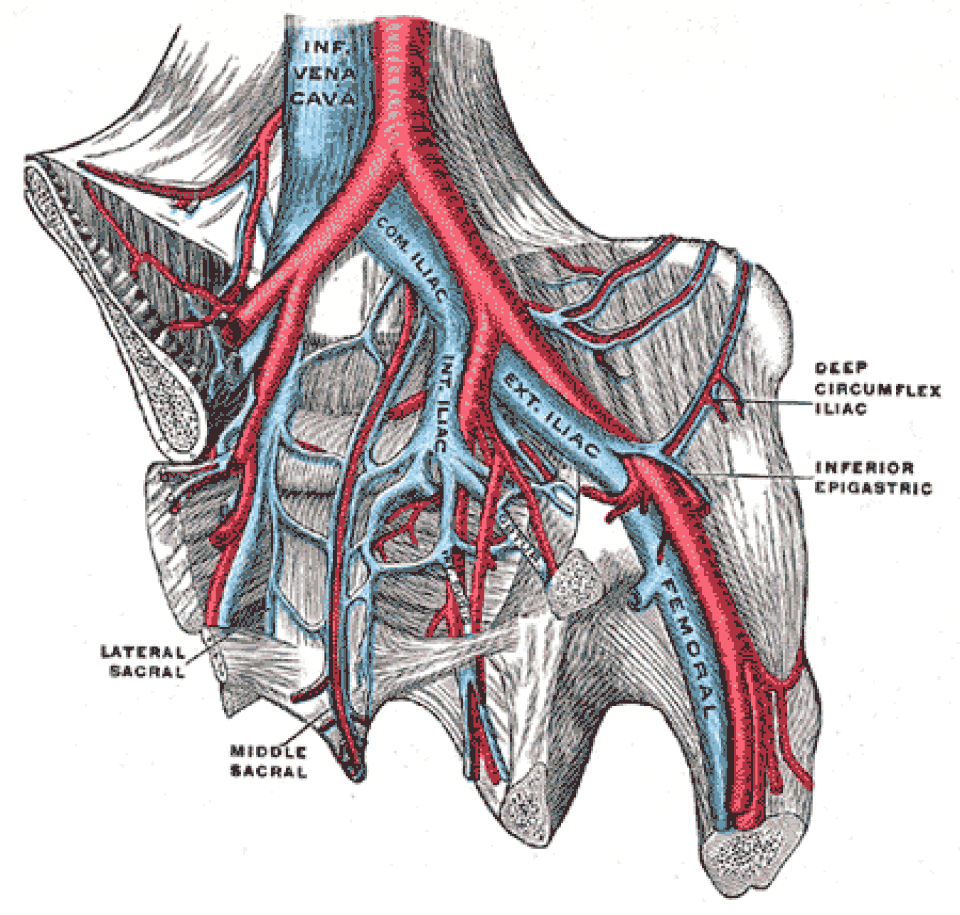
mechanical problem where the left iliac vein is compressed by the right iliac artery
Press Enter · cited answer in seconds
0 sources
May–Thurner syndrome
Summary
May–Thurner syndrome is a disease[1]. It has Wikipedia articles in 7 language editions, a strong signal of global cultural recognition.[2]
Key Facts
- May–Thurner syndrome's instance of is recorded as disease[3].
- May–Thurner syndrome's instance of is recorded as syndrome[4].
- May–Thurner syndrome is a type of vascular malformation[5].
- May–Thurner syndrome's symptoms and signs is recorded as swelling[6].
- May–Thurner syndrome's symptoms and signs is recorded as abnormal skin coloration[7].
- May–Thurner syndrome's possible treatment is recorded as anticoagulation[8].
- May–Thurner syndrome's possible treatment is recorded as angioplasty[9].
- May–Thurner syndrome's possible treatment is recorded as Vena Cava Filters[10].
- May–Thurner syndrome's anatomical location is recorded as common iliac vein[11].
- May–Thurner syndrome's health specialty is recorded as cardiology[12].
Why It Matters
May–Thurner syndrome has Wikipedia articles in 7 language editions, a strong signal of global cultural recognition.[2] It is known by 4 alternative names across languages and contexts.[13]