
Marcellin Berthelot
0 sources
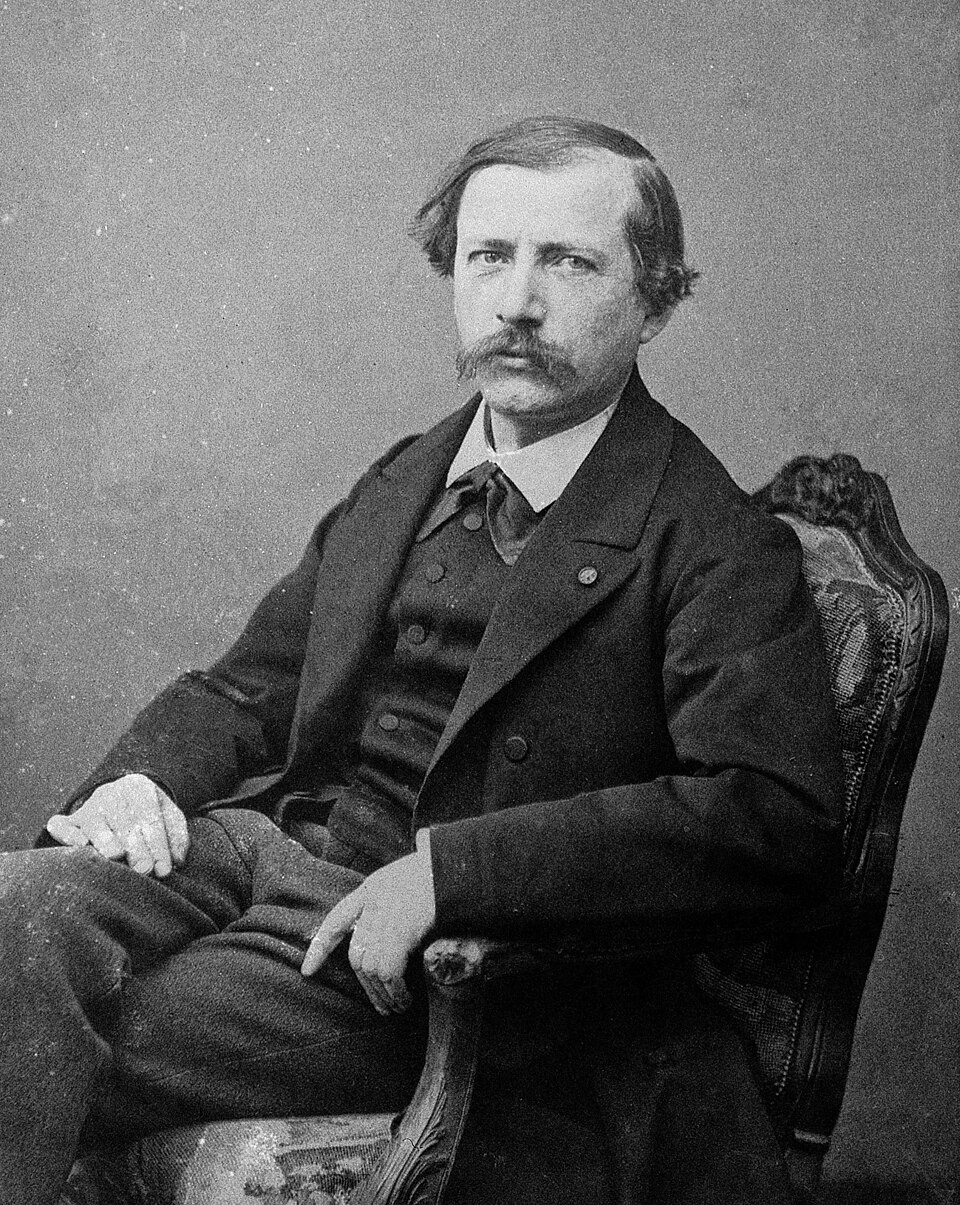
Marcellin Berthelot was born on October 25, 1827 · Paris [1][2][3][4][5][6][7][8][9][10][11][12][13][14][15][16][17][18][19]. He died on March 18, 1907 · Paris [19][2][3][5][20][6][7][21][8][9][10][11][12][13][14][15][17][18]. Berthelot's occupation was multifaceted, as he was a chemist, politician, Esperantist, physicist, and university teacher [18][22]. He was married to Sophie Berthelot and had four children: Philippe Berthelot, André Berthelot, René Berthelot, and Daniel Berthelot .
Berthelot's educational background included attending the Lycée Henri-IV and the Science Faculty of Paris . He was employed by the Collège de France from 1865 to 1907 . His field of expertise encompassed physical chemistry, organic chemistry, organic compound, and politics [23]. Berthelot was influenced by Antoine Jérôme Balard [22].
Throughout his career, Berthelot received numerous awards, including the Grand Cross of the Legion of Honour, Copley Medal, Pour le Mérite for Sciences and Arts order, Davy Medal, Concours général, and Fellow of the American Academy of Arts and Sciences, as well as one more . He held several prominent positions, such as irremovable senator from 1881 to 1907, Minister of Foreign Affairs from 1895 to 1896, Perpetual Secretary from 1900 onwards, and occupied seat 40 of the Académie française from 1900 to 1907 [24][25][26].
Berthelot was a member of several esteemed organizations, including the Royal Society, Société Philomathique de Paris, Académie Française, and Royal Swedish Academy of Sciences [27]. His diverse career and achievements reflect his broad range of interests and expertise. He spent his entire life in Paris, from his birth on October 25, 1827 · Paris [1][2][3][4][5][6][7][8][9][10][11][12][13][14][15][16][17][18][19] to his death on March 18, 1907 · Paris [19][2][3][5][20][6][7][21][8][9][10][11][12][13][14][15][17][18].
Key Facts
- Place of birth: former 7th arrondissement of Paris[11]
- Date of birth: October 29, 1827[12], 1827[13]
- Date of death: 1907[14]
- Place of burial: Panthéon[15]
- Father: Jacques-Martin Berthelot[16]
- Mother: Ernestine Sophie Claudine Biard[17]
- Spouse: Sophie Berthelot[18]
- Child: Philippe Berthelot[19], André Berthelot[20], René Berthelot[21], Daniel Berthelot[22], Marie-Hélène Berthelot[23], Camille Berthelot[24]
- Country of citizenship: France[25]
- Field of work: physical chemistry[26], organic chemistry[27], organic compound[28], politics[29], chemistry[30]
- Position held: irremovable senator[31], Q36400359[32], Minister of Foreign Affairs[33], Perpetual Secretary[34], member of the Académie française[35]
- Employer: Collège de France[36]
- Educated at: Lycée Henri-IV[37], Science Faculty of Paris[38]
- Award received: Grand Cross of the Legion of Honour[39], Copley Medal[40], Pour le Mérite for Sciences and Arts order[41], Davy Medal[42], Concours général[43], Fellow of the American Academy of Arts and Sciences[44], Foreign Member of the Royal Society[45]
- Member of: Royal Society[46], Société Philomathique de Paris[47], Académie Française[48], Royal Swedish Academy of Sciences[49], French Academy of Sciences[50], Saint Petersburg Academy of Sciences[51], Hungarian Academy of Sciences[52], American Academy of Arts and Sciences[53], Romanian Academy[54], Académie Nationale de Médecine[55], Accademia Nazionale dei Lincei[56], Russian Academy of Sciences[57], Royal Netherlands Academy of Arts and Sciences[58], Accademia Nazionale delle Scienze detta dei XL[59]
- Sex or gender: male[60]
- Movement: freethought[61]
- Doctoral student: Paul Sabatier[62]
- Commons category: Marcellin Berthelot[63]
- Archives at: ETH Zurich University Archives[64]
- Cause of death: myocardial infarction[65]
Body
Works and Contributions
Things named for Marcellin Berthelot include Berthelot Islands[66], an island group[67].
Why It Matters
Marcellin Berthelot has Wikipedia articles in 24 language editions, a strong signal of global cultural recognition.[68] He is known by 26 alternative names across languages and contexts.[69]
Works attributed to him include La Grande Encyclopédie[70], a reference work[71]. Entities named for him include Berthelot Islands[66], an island group[67].
His notable doctoral advisees include Paul Sabatier[72], a chemist[73], 1854–1941[74], of France[75], awarded the Grand Officer of the Legion of Honour[76], specialised in inorganic chemistry[77].
FAQs
Where was Marcellin Berthelot born?
Marcellin Berthelot's place of birth was Paris[2].
Where did Marcellin Berthelot die?
Marcellin Berthelot passed away in Paris[4].
Who were Marcellin Berthelot's parents?
Marcellin Berthelot's father was Jacques-Martin Berthelot[16]. Marcellin Berthelot's mother was Ernestine Sophie Claudine Biard[17].
Who was Marcellin Berthelot married to?
Marcellin Berthelot's spouses include Sophie Berthelot[18].
What did Marcellin Berthelot do for work?
Marcellin Berthelot worked as a chemist[5], politician[6], Esperantist[7], physicist[8], and university teacher[9].
Where did Marcellin Berthelot go to school?
Marcellin Berthelot was educated at Lycée Henri-IV[37] and Science Faculty of Paris[38].
What awards did Marcellin Berthelot receive?
Honors received include Grand Cross of the Legion of Honour[39], Copley Medal[40], Pour le Mérite for Sciences and Arts order[41], and Davy Medal[42].