
Luigi Pulci
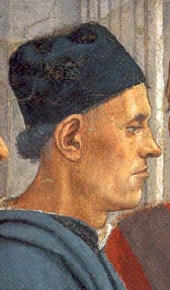
0 sources
Luigi Pulci
Summary
Luigi Pulci is a human[1]. Born in Florence[2], he… he was born on August 15, 1432[3]. He died in Padua[4]. He died on November 11, 1484[5]. He worked as a poet[6], diplomat[7], and writer[8]. He has Wikipedia articles in 17 language editions, a strong signal of global cultural recognition.[9]
Key Facts
- Luigi Pulci was born in Florence[2].
- Luigi Pulci passed away in Padua[4].
- Luigi Pulci was born on August 15, 1432[3].
- Luigi Pulci died on November 11, 1484[5].
- Italian was Luigi Pulci's native language[10].
- Luigi Pulci's professions included poet[6].
- Luigi Pulci worked as a diplomat[7].
- Luigi Pulci worked as a writer[8].
- A notable work attributed to Luigi Pulci is Morgante[11].
- A notable work attributed to Luigi Pulci is Il Ciriffo Calvaneo[12].
- A notable work attributed to Luigi Pulci is La giostra di Lorenzo de' Medici[13].
- A notable work attributed to Luigi Pulci is Rime[14].
- A notable work attributed to Luigi Pulci is Beca da Dicomano[15].
- Luigi Pulci is recorded as male[16].
- Luigi Pulci's instance of is recorded as human[17].
- Luigi Pulci's Commons category is recorded as Luigi Pulci[18].
- Luigi Pulci's family name is recorded as Pulci[19].
- Luigi Pulci's given name is recorded as Luigi[20].
- Luigi Pulci's described by source is recorded as Armenian Soviet Encyclopedia[21].
- Luigi Pulci's described by source is recorded as BEIC Digital Library[22].
- Luigi Pulci's described by source is recorded as Brockhaus and Efron Encyclopedic Dictionary[23].
- Luigi Pulci's described by source is recorded as The Nuttall Encyclopædia[24].
- Luigi Pulci's described by source is recorded as Library of the World's Best Literature[25].
- Luigi Pulci's described by source is recorded as Meyers Konversations-Lexikon, 4th edition (1885–1890)[26].
- Luigi Pulci's described by source is recorded as Encyclopædia Britannica 11th edition[27].
Body
Origins and Family
Luigi Pulci was born in Florence[2]. He was born on August 15, 1432[3]. Italian was his native language[10].
Career and Affiliations
Recorded occupations include poet[6], diplomat[7], and writer[8].
Works and Contributions
Notable works include Morgante[11], a literary work[28]; Il Ciriffo Calvaneo[12]; La giostra di Lorenzo de' Medici[13]; Rime[14]; and Beca da Dicomano[15].
Death and Burial
Luigi Pulci died on November 11, 1484[5]. He passed away in Padua[4].
Why It Matters
Luigi Pulci has Wikipedia articles in 17 language editions, a strong signal of global cultural recognition.[9] He is known by 4 alternative names across languages and contexts.[29]
He has been cited as an influence by Lord Byron[30], a poet[31], 1788–1824[32], of United Kingdom of Great Britain and Ireland[33], awarded the Fellow of the Royal Society[34], specialised in performing arts[35].
Works attributed to him include Morgante[36], a literary work[37].
FAQs
Where was Luigi Pulci born?
Luigi Pulci was born in Florence[2].
Where did Luigi Pulci die?
Luigi Pulci passed away in Padua[4].
What did Luigi Pulci do for work?
Luigi Pulci worked as poet[6], diplomat[7], and writer[8].
Who did Luigi Pulci influence?
Luigi Pulci has been cited as an influence by Lord Byron[30].