
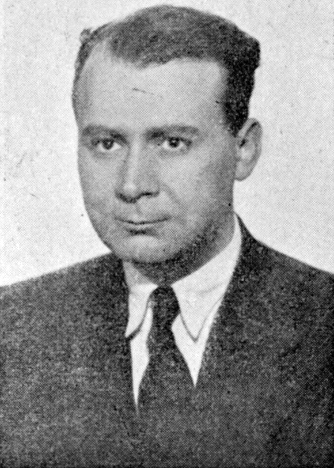
Lucian Blaga
0 sources
Summary
Lucian Blaga was born on May 9, 1895[1], in Lancrăm[2]. He died on May 6, 1961[3], in Cluj-Napoca[4]. He worked as a linguist[5], translator[6], philosopher[7], journalist[8], and diplomat[9]. He ranks in the top 0.72% of human entities by monthly Wikipedia readership (805 views/month, #7,230 of 1,000,298).[10]
Key Facts
- Place of burial: Lancrăm[11]
- Spouse: Cornelia Brediceanu[12]
- Child: Dorli Blaga[13]
- Country of citizenship: Austria–Hungary[14], Kingdom of Romania[15], Romanian People's Republic[16]
- Occupation: essayist[17], university teacher[18], poet[19], writer[20], librarian[21], playwright[22], librettist[23]
- Field of work: literary activity[24], essay[25], poetry[26], drama[27], philosophy[28], journalism[29], diplomacy[30], literary translation[31], translation from German[32], translation into Romanian[33]
- Position held: professor[34]
- Employer: Babeș-Bolyai University[35]
- Educated at: University of Vienna[36]
- Member of: Romanian Academy[37]
- Influenced by: Johann Wolfgang von Goethe[38]
- Sex or gender: male[39]
- Member of political party: National Christian Party[40], National Renaissance Front[41], Party of the Nation[42], National Popular Party[43]
- Commons category: Lucian Blaga[44]
- Cause of death: cancer[45]
- Family name: Blaga[46]
- Given name: Lucian[47]
- Topic's main category: Category:Lucian Blaga[48]
- Relative: Veturia Goga[49]
- Manner of death: natural causes[50]
- Described by source: Great Soviet Encyclopedia (1969–1978)[51], Biographical Dictionary of Central and Eastern Europe in the Twentieth Century[52]
- Languages spoken, written or signed: Romanian[53], German[54]
Body
Works and Contributions
Things named for Lucian Blaga include Lucian Blaga University of Sibiu[55], a public university[56], in Romania[57], founded in 1990[58] and Cluj-Napoca National Theatre[59], a theatre building[60], in Romania[61], founded in 1906[62].
Why It Matters
Lucian Blaga has Wikipedia articles in 19 language editions, a strong signal of global cultural recognition.[63] He is known by 11 alternative names across languages and contexts.[64]
Entities named for him include Lucian Blaga University of Sibiu[55], a public university[56], in Romania[57], founded in 1990[58] and Cluj-Napoca National Theatre[59], a theatre building[60], in Romania[61], founded in 1906[62].
FAQs
Where was Lucian Blaga born?
Lucian Blaga was born in Lancrăm[2].
Where did Lucian Blaga die?
Lucian Blaga died in Cluj-Napoca[4].
Who was Lucian Blaga married to?
Lucian Blaga's spouses include Cornelia Brediceanu[12].
What did Lucian Blaga do for work?
Lucian Blaga worked as a linguist[5], translator[6], philosopher[7], journalist[8], and diplomat[9].
Where did Lucian Blaga go to school?
Lucian Blaga was educated at University of Vienna[36].