
Lu Xun
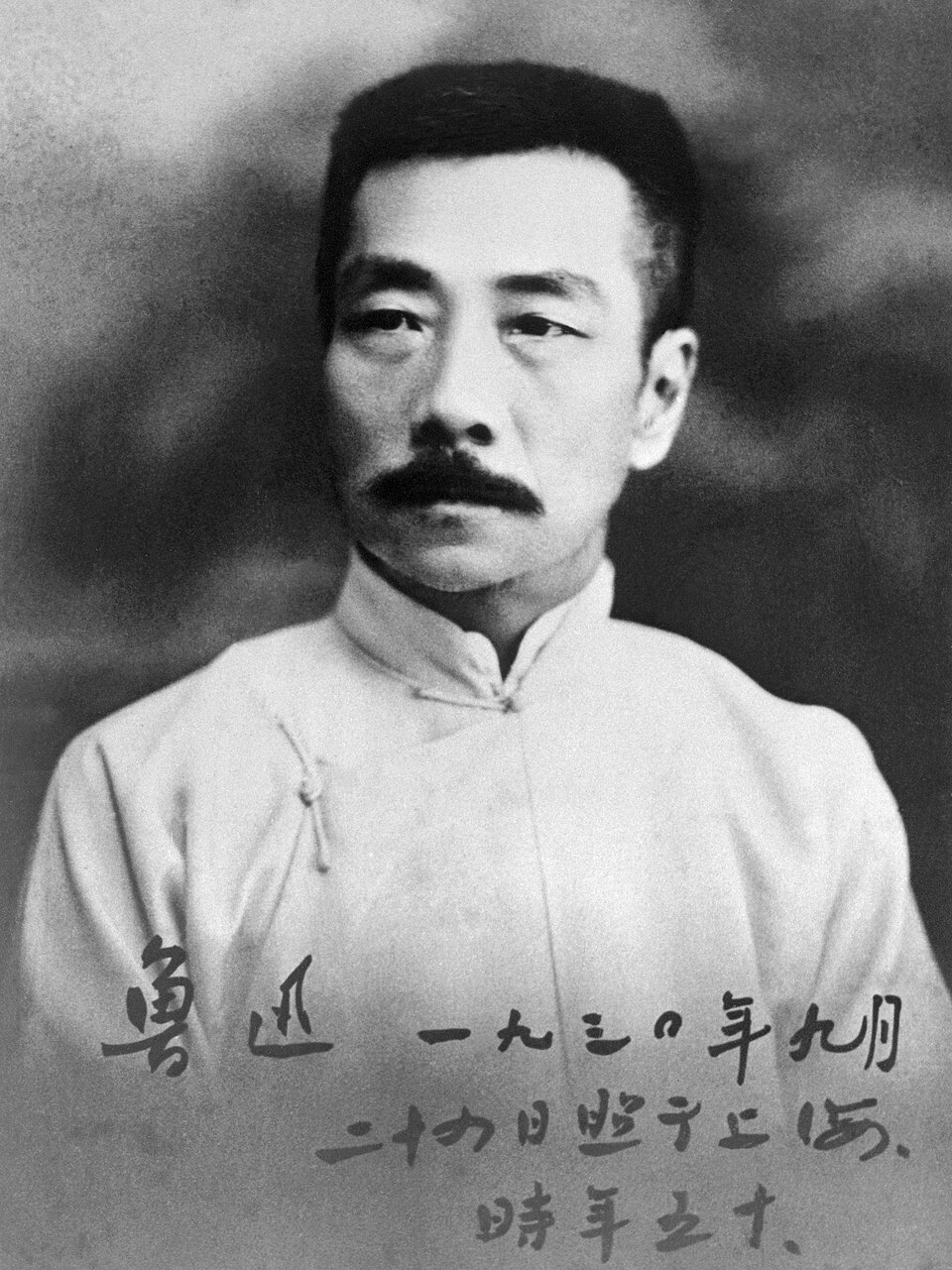
0 sources
Lu Xun
Summary
Lu Xun is a human[1]. He was born in Shaoxing[2]. He was born on September 25, 1881[3]. He passed away in Shanghai[4]. He died on October 19, 1936[5]. He worked as an essayist[6], poet[7], literary critic[8], Esperantist[9], and translator[10]. He ranks in the top 0.67% of human entities by monthly Wikipedia readership (2,199 views/month, #6,682 of 1,000,298).[11]
Key Facts
- Lu Xun was born in Shaoxing[2].
- Lu Xun passed away in Shanghai[4].
- Lu Xun was born on September 25, 1881[3].
- Lu Xun died on October 19, 1936[5].
- Burial took place at Lu Xun's tomb[12].
- Lu Xun's father was Zhou Boyi[13].
- Among Lu Xun's spouses was Zhu An[14].
- Among Lu Xun's spouses was Xu Guangping[15].
- A child of Lu Xun was Zhou Haiying[16].
- Lu Xun held citizenship in Qing dynasty[17].
- Lu Xun held citizenship in Republic of China[18].
- Chinese was Lu Xun's native language[19].
- Lu Xun's professions included essayist[6].
- Lu Xun's professions included poet[7].
- Lu Xun's professions included literary critic[8].
- Lu Xun's professions included Esperantist[9].
- Lu Xun's professions included translator[10].
- Lu Xun's professions included novelist[20].
- Lu Xun's field of work was creative and professional writing[21].
- Lu Xun's field of work was poetry[22].
- Lu Xun's field of work was essay[23].
- Lu Xun's field of work was literary criticism[24].
- Lu Xun's field of work was translation[25].
- Lu Xun was employed by Peking University[26].
- Lu Xun's education included a stint at Tohoku University[27].
Body
Origins and Family
Lu Xun was born in Shaoxing[2]. He was born on September 25, 1881[3]. His father was Zhou Boyi[13]. Chinese was his native language[19].
Education
Educated at Tohoku University[27], a national university[28], in Japan[29], founded in 1907[30], headquartered in Sendai[31]; Kobun Institute[32], a school[33], in Japan[34]; and Sendai Medical College[35].
Career and Affiliations
Recorded occupations include essayist[6], poet[7], literary critic[8], Esperantist[9], translator[10], and novelist[20]. Fields of work include creative and professional writing[21], an academic discipline[36]; poetry[22], a literary form[37]; essay[23], a literary genre[38]; literary criticism[24], a literary genre[39]; and translation[25], an academic major[40]. Lu Xun was employed by Peking University[26].
Works and Contributions
Notable works include The True Story of Ah Q[41], a literary work[42]; A Madman's Diary[43], a literary work[44]; Panghuang[45], a literary work[46]; Kong Yiji[47], a literary work[48]; Old Tales Retold[49], a literary work[50]; and Call to Arms[51], a literary work[52]. Things named for Lu Xun include Lu Xun Literary Institute[53], Lu Hsun[54], Lu Xun Park[55], Lu Xun Literary Prize[56], and 233547 Luxun[57].
Recognition
Lu Xun received the 100 heroes and model figures who have made outstanding contributions to the founding of New China[58].
Personal Life
Spouses include Zhu An[14], 1878–1947[59] and Xu Guangping[15], a writer[60], 1898–1968[61], of People's Republic of China[62]. A child of Lu Xun was Zhou Haiying[16].
Death and Burial
Lu Xun died on October 19, 1936[5]. He died in Shanghai[4]. The cause of death was tuberculosis[63]. He is buried at his tomb[12].
Why It Matters
Lu Xun ranks in the top 0.67% of human entities by monthly Wikipedia readership (2,199 views/month, #6,682 of 1,000,298).[11] He has Wikipedia articles in 30 language editions, a strong signal of global cultural recognition.[64] He is known by 67 alternative names across languages and contexts.[65]
Works attributed to him include Regret for the Past[66], a literary work[67]; Old Tales Retold[68], a literary work[69]; A Storm in a Teacup (Lu Xun)[70], a literary work[71]; The True Story of Ah Q[72], a literary work[73]; Call to Arms[74], a literary work[75]; and Kong Yiji[76], a literary work[77]. Entities named for him include Lu Xun Literary Institute[53], Lu Hsun[54], Lu Xun Park[55], Lu Xun Literary Prize[56], and 233547 Luxun[57].
FAQs
Where was Lu Xun born?
Lu Xun's place of birth was Shaoxing[2].
Where did Lu Xun die?
Lu Xun died in Shanghai[4].
Who were Lu Xun's parents?
Lu Xun's father was Zhou Boyi[13].
Who was Lu Xun married to?
Lu Xun's spouses include Zhu An[14] and Xu Guangping[15].
What did Lu Xun do for work?
Lu Xun worked as essayist[6], poet[7], literary critic[8], Esperantist[9], and translator[10].
Where did Lu Xun go to school?
Lu Xun was educated at Tohoku University[27], Kobun Institute[32], and Sendai Medical College[35].
What awards did Lu Xun receive?
Honors received include 100 heroes and model figures who have made outstanding contributions to the founding of New China[58].