
Louis-Hippolyte Lafontaine
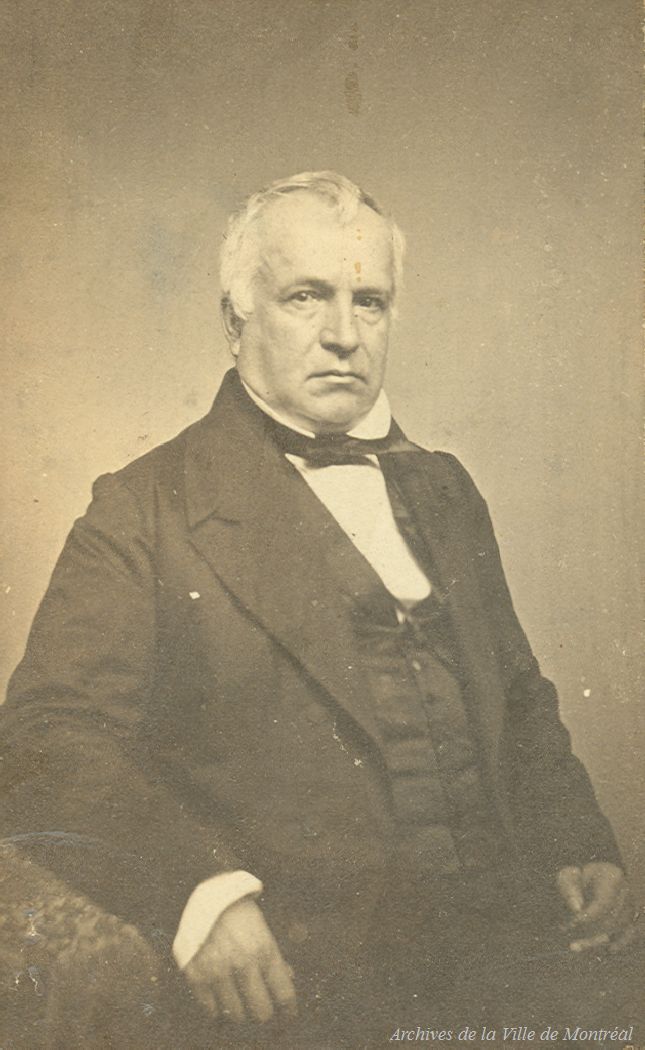
0 sources
Summary
Louis-Hippolyte Lafontaine was born on October 10, 1807[1], in Boucherville[2]. He died on February 26, 1864[3], in Montreal[4]. He worked as a politician[5], lawyer[6], and magistrate[7]. He ranks in the top 0.72% of human entities by monthly Wikipedia readership (815 views/month, #7,245 of 1,000,298).[8]
Key Facts
- Place of burial: Notre Dame des Neiges Cemetery[9]
- Father: Antoine Ménard dit Lafontaine[10]
- Spouse: Julie-Élisabeth-Geneviève Morrison[11], Adèle Berthelot[12]
- Country of citizenship: Canada[13]
- Position held: judge[14], Member of the Legislative Assembly of the Province of Canada[15]
- Educated at: Collège de Montréal[16]
- Award received: Knight of St. Sylvester[17], Knight Commander of the Order of St Michael and St George[18], Person of National Historic Significance[19]
- Sex or gender: male[20]
- Noble title: baronet[21]
- Member of political party: Parti canadien[22]
- Commons category: Louis-Hippolyte La Fontaine[23]
- Archives at: BAnQ Vieux-Montréal[24]
- Family name: Fontaine[25]
- Given name: Louis[26]
- Topic's main category: Category:Louis-Hippolyte La Fontaine[27]
- Commons gallery: Louis-Hippolyte Lafontaine[28]
- Honorific suffix: baronet[29]
- Described by source: Dictionary of National Biography, first supplement[30], Encyclopædia Britannica 11th edition[31], The Encyclopedia Americana[32]
- Languages spoken, written or signed: French[33]
- Writing language: French[34]
- Copyright status as a creator: copyrights on works have expired[35]
Body
Works and Contributions
Things named for Louis-Hippolyte Lafontaine include La Fontaine Park[36], an urban park[37], in Canada[38], founded in 1874[39] and he Bridge-Tunnel[40], a bridge–tunnel[41], in Canada[42].
Why It Matters
Louis-Hippolyte Lafontaine has Wikipedia articles in 9 language editions, a strong signal of global cultural recognition.[43] He is known by 9 alternative names across languages and contexts.[44]
Entities named for him include La Fontaine Park[36], an urban park[37], in Canada[38], founded in 1874[39] and he Bridge-Tunnel[40], a bridge–tunnel[41], in Canada[42].
FAQs
Where was Louis-Hippolyte Lafontaine born?
Louis-Hippolyte Lafontaine's place of birth was Boucherville[2].
Where did Louis-Hippolyte Lafontaine die?
Louis-Hippolyte Lafontaine died in Montreal[4].
Who were Louis-Hippolyte Lafontaine's parents?
Louis-Hippolyte Lafontaine's father was Antoine Ménard dit Lafontaine[10].
Who was Louis-Hippolyte Lafontaine married to?
Louis-Hippolyte Lafontaine's spouses include Julie-Élisabeth-Geneviève Morrison[11] and Adèle Berthelot[12].
What did Louis-Hippolyte Lafontaine do for work?
Louis-Hippolyte Lafontaine worked as a politician[5], lawyer[6], and magistrate[7].
Where did Louis-Hippolyte Lafontaine go to school?
Louis-Hippolyte Lafontaine was educated at Collège de Montréal[16].
What awards did Louis-Hippolyte Lafontaine receive?
Honors received include Knight of St. Sylvester[17], Knight Commander of the Order of St Michael and St George[18], and Person of National Historic Significance[19].