
Lindisfarne Gospels
8th-century illuminated Latin gospel book
Press Enter · cited answer in seconds
0 sources
Summary
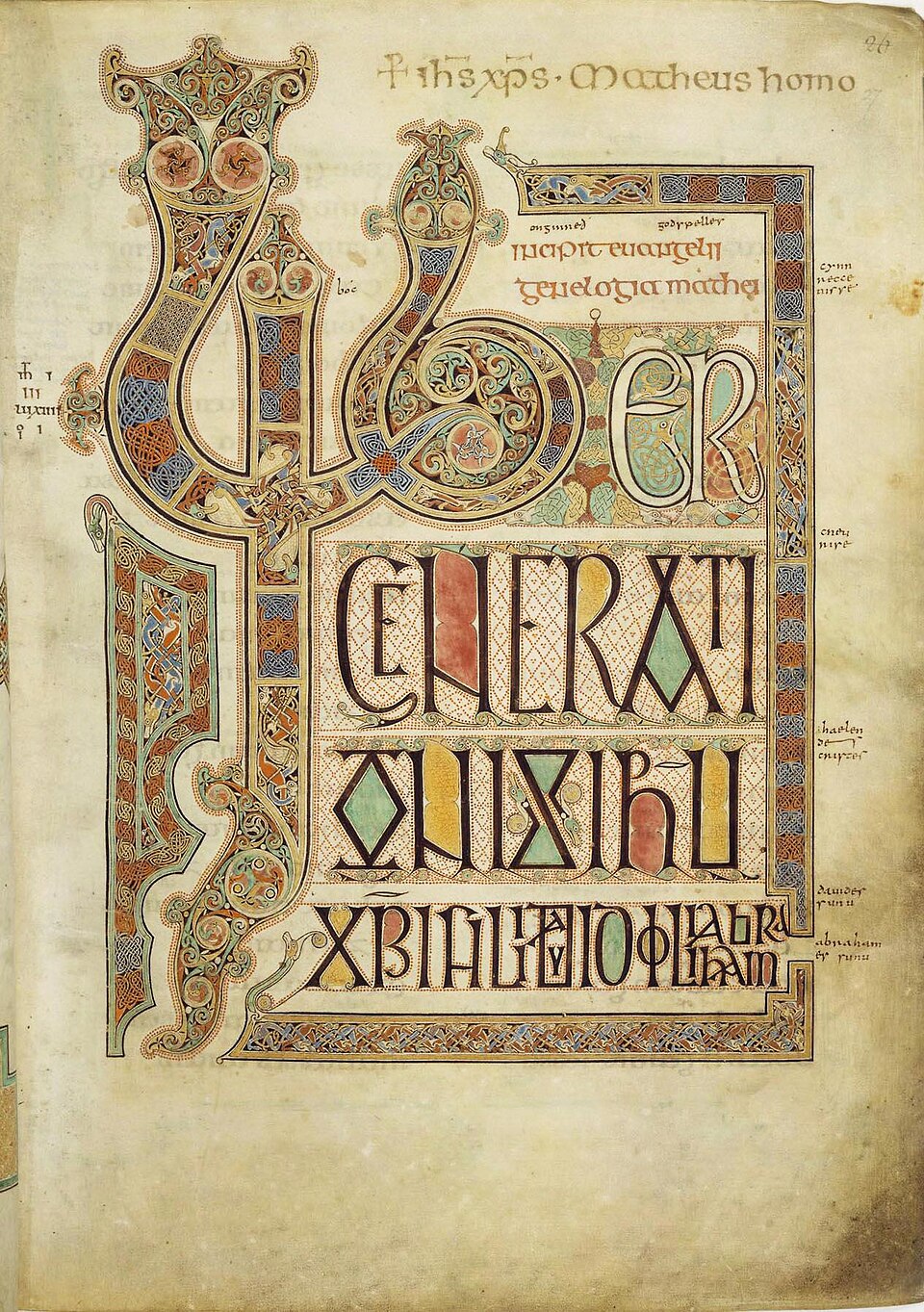
Lindisfarne Gospels is an illuminated manuscript[1]. It ranks in the top 2% of illuminated manuscript entities by monthly Wikipedia readership (3,034 views/month).[2]
Key Facts
- Creator: Eadfrith of Lindisfarne[3]
- Country: United Kingdom[4]
- Instance of: Gospel Book[5], codex[6]
- Movement: Insular art[7]
- Made from material: parchment[8]
- Collection: Cotton library[9], British Library[10]
- Inventory number: Cotton Ms. Nero D IV.[11]
- Location: British Library[12], England[13]
- Part of: Cotton library[14]
- Commons category: Lindisfarne Gospels (710-721) - BL Cotton MS Nero D IV[15]
- Language of work or name: Latin[16], Old English[17]
- Inception: 715[18], January 1, 700[19]
- Exhibition history: Europeana 280[20]
- Work available at URL: https://bl.uk/manuscripts/FullDisplay.aspx?ref=Cotton_MS_Nero_D_IV[21]
- Described at URL: http://www.bl.uk/onlinegallery/sacredtexts/lindisfarne.html[22]
- Official name: An Anglo-Saxon gospel-book (‘The Lindisfarne Gospels’)[23]
- Title: Lindisfarne Gospels[24]
- Height: 365 millimetre[25]
- Width: 275 millimetre[26]
Why It Matters
Lindisfarne Gospels has Wikipedia articles in 20 language editions, a strong signal of global cultural recognition.[27] It is known by 40 alternative names across languages and contexts.[28]