
Let It Be
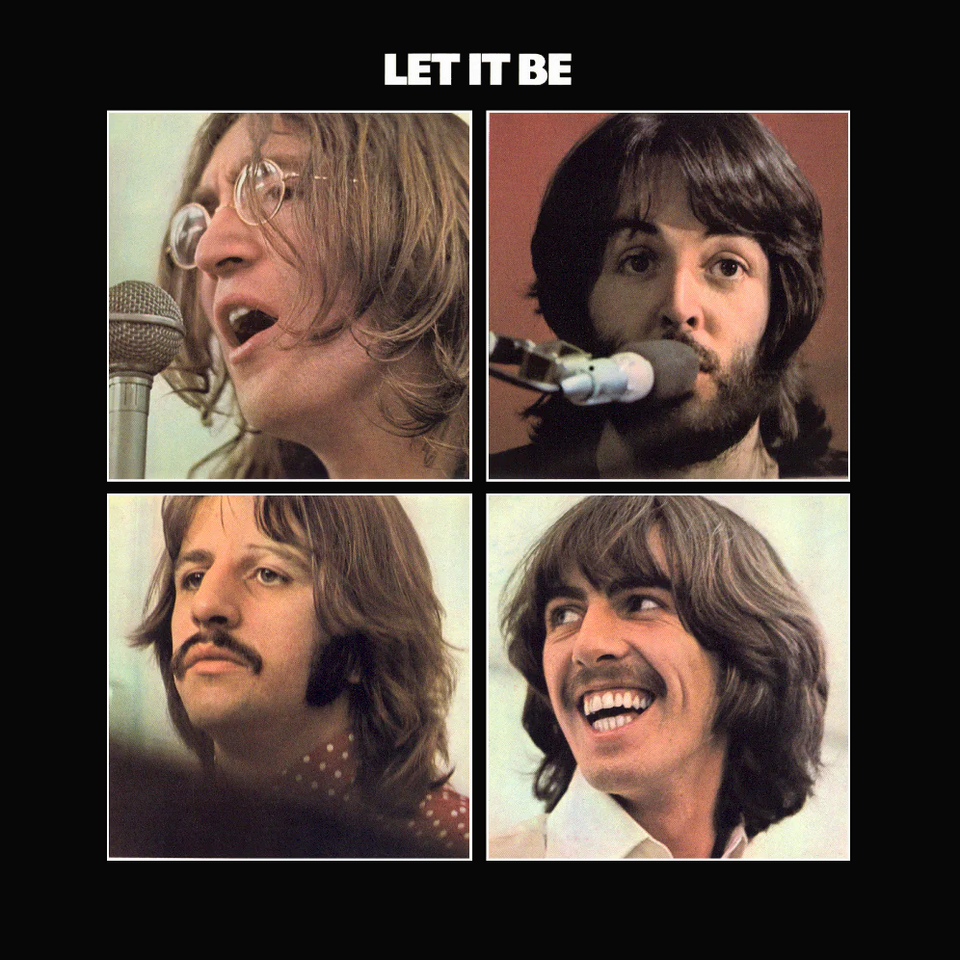
0 sources
Summary
Let It Be is an album[1]. It ranks in the top 0.058% of album entities by monthly Wikipedia readership (35,300 views/month, #35 of 60,676).[2]
Key Facts
- Genre: rock music[3], blues[4], rhythm and blues[5]
- Producer: George Martin[6], Phil Spector[7]
- Performer: The Beatles[8]
- Record label: Apple Records[9]
- Place of publication: United Kingdom[10], United States[11]
- Part of: The Beatles' albums in chronological order[12], The Beatles soundtrack albums discography[13], The Beatles UK albums discography[14]
- Commons category: Let It Be (Beatles album)[15]
- Language of work or name: English[16]
- Distribution format: LP record[17], 8-track tape[18], compact cassette[19], compact disc[20], music streaming[21], music download[22]
- Review score: 4.5[23]
- Recorded at studio or venue: The Beatles studio[24]
- Publication date: May 8, 1970[25]
- Tracklist: Two of Us[26], Dig a Pony[27], Across the Universe[28], I Me Mine[29], Dig It[30], Let It Be[31], Maggie Mae[32], I've Got a Feeling[33], One After 909[34], The Long and Winding Road[35], For You Blue[36], Get Back[37]
- Topic has template: Template:Let It Be[38]
- Title: Let It Be[39]
- Different from: Let It Be[40], Let It Be - Fear Never Ends[41]
- Duration: 2113 seconds[42]
- Number of parts of this work: 12 audio track[43]
- Derivative work: Let It Be[44]
- Form of creative work: studio album[45]
Product Details
The following facts are restated verbatim from public-domain and CC0 open-data sources — every line is independently verifiable against the named source's catalog.
MusicBrainz — CC0 open music encyclopedia
-
Release type: Album[46]
-
First release date: 1970-05-08[47]
-
Genre(s): beat music, blues, blues rock, classic rock, merseybeat, pop, pop rock, rock[48]
-
Community tags: beat music, bittersweet, blues, blues rock, classic rock, energetic, folk/country, melodic, merseybeat, pop, pop rock, rhythm and blues, rock, warm[49]
-
MusicBrainz ID: bff544a7-56e0-3ed6-9e0f-3b676cca9111[50]
Why It Matters
Let It Be has Wikipedia articles in 28 language editions, a strong signal of global cultural recognition.[51] It is known by 10 alternative names across languages and contexts.[52]