
Léo Ferré
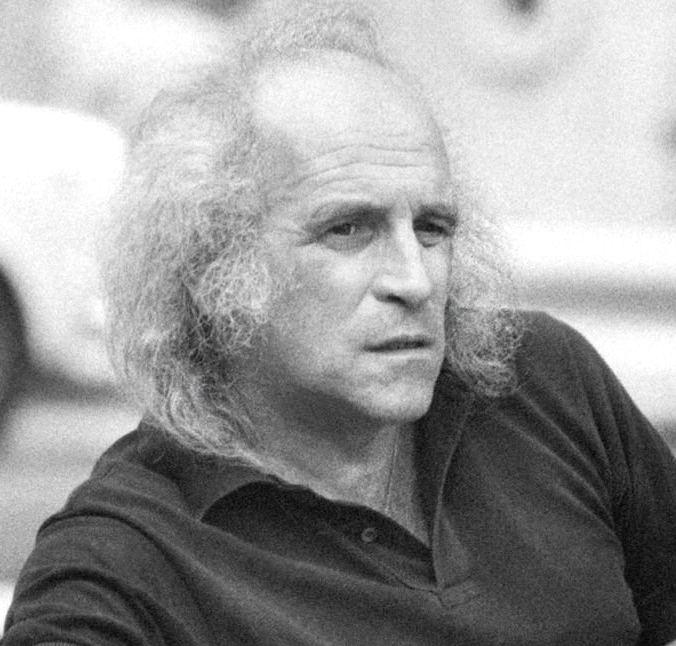
0 sources
Summary
Léo Ferré was born on August 24, 1916[1], in Monaco[2]. He died on July 14, 1993[3], in Castellina in Chianti[4]. He worked as a songwriter[5], singer-songwriter[6], writer[7], radio personality[8], and conductor[9]. He ranks in the top 0.72% of human entities by monthly Wikipedia readership (3,462 views/month, #7,194 of 1,000,298).[10]
Key Facts
- Place of burial: Monaco Cemetery[11]
- Spouse: Madeleine Ferré[12]
- Child: Mathieu Ferré[13]
- Country of citizenship: Monaco[14], France[15]
- Occupation: pianist[16], singer[17], poet[18], composer[19], musician[20], bandleader[21]
- Field of work: performing arts[22]
- Educated at: Sciences Po[23], Albert I Lycée[24]
- Notable work: L'Espoir[25], Amour Anarchie[26], Il n'y a plus rien[27], Léo Ferré[28], Les Chansons d'Aragon[29], Verlaine et Rimbaud[30], Léo Ferré chante Baudelaire[31], La Chanson du mal-aimé[32], La Violence et l'Ennui[33], L'Opéra du pauvre[34]
- Sex or gender: male[35]
- Movement: classical music[36]
- Genre: chanson[37], spoken word[38], classical music[39], French pop[40]
- Record label: RCA Records[41], Barclay[42], Odeon[43], Le Chant du Monde[44]
- Discography: Léo Ferré discography[45]
- Commons category: Léo Ferré[46]
- Residence: Castellina in Chianti[47]
- Family name: Ferré[48]
- Given name: Léo[49], Albert[50], Charles[51], Antoine[52]
- Official website: http://www.leo-ferre.com/[53]
- Topic's main category: Category:Léo Ferré[54]
- Relative: Annie Butor[55]
- Political ideology: anarchism[56]
Product Details
The following facts are restated verbatim from public-domain and CC0 open-data sources — every line is independently verifiable against the named source's catalog.
MusicBrainz — CC0 open music encyclopedia
-
Type: Person[57]
-
Country: FR[58]
-
Began / founded: 1916-08-24[59]
-
Ended / dissolved: 1993-07-14[60]
-
Genre(s): chanson française, chanson à texte, modern classical, poetry, pop[61]
-
Community tags: chanson, chanson française, chanson à texte, european, france, français, french, modern classical, monaco, poetry, pop, singer/songwriter[62]
-
MusicBrainz ID: 15b1cbac-060a-4136-9e07-4622c52c0f60[63]
Why It Matters
Léo Ferré has Wikipedia articles in 21 language editions, a strong signal of global cultural recognition.[64] He is known by 33 alternative names across languages and contexts.[65]
He has been cited as an influence by Hubert-Félix Thiéfaine[66], a singer-songwriter[67], b. 1948[68], of France[69], awarded the Officer of Arts and Letters[70]; Paco Ibáñez[71], a singer[72], b. 1934[73], of Spain[74], awarded the Gold Medal of Merit in the Fine Arts[75]; and José Antonio Labordeta[76], a politician[77], 1935–2010[78], of Spain[79], awarded the Grand Cross of the Civil Order of Alfonso X the Wise[80], specialised in Spanish literature[81].
FAQs
Where was Léo Ferré born?
Léo Ferré's place of birth was Monaco[2].
Where did Léo Ferré die?
Léo Ferré died in Castellina in Chianti[4].
Who was Léo Ferré married to?
Léo Ferré's spouses include Madeleine Ferré[12].
What did Léo Ferré do for work?
Léo Ferré worked as a songwriter[5], singer-songwriter[6], writer[7], radio personality[8], and conductor[9].
Where did Léo Ferré go to school?
Léo Ferré was educated at Sciences Po[23] and Albert I Lycée[24].
Who did Léo Ferré influence?
Léo Ferré has been cited as an influence by Hubert-Félix Thiéfaine[66], Paco Ibáñez[71], and José Antonio Labordeta[76].