lead(II) chromate
0 sources
lead(II) chromate
Summary
lead(II) chromate is a type of chemical entity[1]. It ranks in the top 6% of type_of_chemical_entity entities by monthly Wikipedia readership (20 views/month).[2]
Key Facts
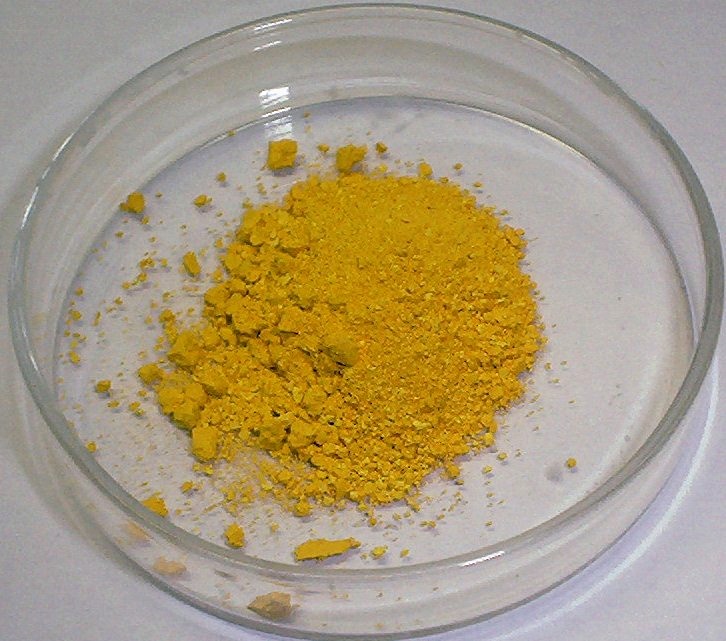
- lead(II) chromate's image is recorded as Lead chromate.JPG[3].
- lead(II) chromate's instance of is recorded as type of chemical entity[4].
- lead(II) chromate's CAS Registry Number is recorded as 7758-97-6[5].
- lead(II) chromate's EC number is recorded as 231-846-0[6].
- lead(II) chromate's canonical SMILES is recorded as [O-]Cr(=O)[O-].[Pb+2]Cr(=O)[O-].[Pb+2]">[7].
- lead(II) chromate's InChI is recorded as InChI=1S/Cr.4O.Pb/q;;;2*-1;+2[8].
- lead(II) chromate's InChIKey is recorded as MOUPNEIJQCETIW-UHFFFAOYSA-N[9].
- lead(II) chromate's chemical formula is recorded as CrO₄Pb[10].
- lead(II) chromate's subclass of is recorded as chromate salt[11].
- lead(II) chromate's subclass of is recorded as lead compound[12].
- lead(II) chromate's has use is recorded as dye[13].
- lead(II) chromate's Commons category is recorded as Lead chromate[14].
- lead(II) chromate's said to be the same as is recorded as chrome yellow[15].
- lead(II) chromate's MeSH descriptor ID is recorded as C031895[16].
- lead(II) chromate's has part is recorded as oxygen[17].
- lead(II) chromate's has part is recorded as lead[18].
- lead(II) chromate's has part is recorded as chromium[19].
- lead(II) chromate's Freebase ID is recorded as /m/0d13gq[20].
- lead(II) chromate's UNII is recorded as AA3229AOUS[21].
- lead(II) chromate's RTECS number is recorded as GB2975000[22].
- lead(II) chromate's ChemSpider ID is recorded as 22868[23].
- lead(II) chromate's PubChem CID is recorded as 24460[24].
- lead(II) chromate's ZVG number is recorded as 2140[25].
- lead(II) chromate's ChEBI ID is recorded as 86257[26].
- lead(II) chromate's UN number is recorded as 3288[27].
Why It Matters
lead(II) chromate ranks in the top 6% of type_of_chemical_entity entities by monthly Wikipedia readership (20 views/month).[2] It has Wikipedia articles in 19 language editions, a strong signal of global cultural recognition.[28] It is known by 5 alternative names across languages and contexts.[29]