
Lawrence of Brindisi
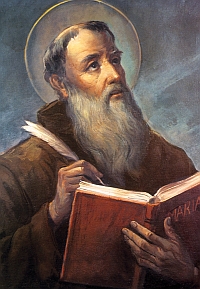
0 sources
Summary
Lawrence of Brindisi is a human[1]. He was born in Brindisi[2]. He was born on July 22, 1559[3]. He died in Lisbon[4]. He died on July 22, 1619[5]. He worked as a diplomat[6], Catholic priest[7], Doctor of the Church[8], and Catholic theologian[9]. He ranks in the top 0.72% of human entities by monthly Wikipedia readership (237 views/month, #7,241 of 1,000,298).[10]
Key Facts
- Lawrence of Brindisi was born in Brindisi[2].
- Lawrence of Brindisi died in Lisbon[4].
- Lawrence of Brindisi was born on July 22, 1559[3].
- Lawrence of Brindisi died on July 22, 1619[5].
- Lawrence of Brindisi worked as a diplomat[6].
- Lawrence of Brindisi worked as a Catholic priest[7].
- Lawrence of Brindisi's professions included Doctor of the Church[8].
- Lawrence of Brindisi's professions included Catholic theologian[9].
- Lawrence of Brindisi held the position of ambassador[11].
- Lawrence of Brindisi held the position of General Vicar of the Capuchins[12].
- Lawrence of Brindisi held the position of superior general[13].
- Lawrence of Brindisi was educated at University of Padua[14].
- A notable work attributed to Lawrence of Brindisi is San Lorenzo da Brindisi (Rotta)[15].
- Lawrence of Brindisi's religion is recorded as Catholic Church[16].
- Lawrence of Brindisi is recorded as male[17].
- Lawrence of Brindisi's instance of is recorded as human[18].
- Lawrence of Brindisi's Commons category is recorded as Lawrence of Brindisi[19].
- Lawrence of Brindisi's canonization status is recorded as saint[20].
- Lawrence of Brindisi's canonization status is recorded as Catholic saint[21].
- Lawrence of Brindisi's honorific prefix is recorded as Doctor of the Church[22].
- Lawrence of Brindisi's religious order is recorded as Order of Friars Minor Capuchin[23].
- Lawrence of Brindisi's family name is recorded as Russo[24].
- Lawrence of Brindisi's given name is recorded as Giulio Cesare[25].
- Lawrence of Brindisi's feast day is recorded as July 21[26].
- Lawrence of Brindisi's topic's main category is recorded as Category:Lawrence of Brindisi[27].
Body
Origins and Family
Lawrence of Brindisi was born in Brindisi[2]. He was born on July 22, 1559[3].
Education
Lawrence of Brindisi was educated at University of Padua[14].
Career and Affiliations
Recorded occupations include diplomat[6], Catholic priest[7], Doctor of the Church[8], and Catholic theologian[9]. Positions held include ambassador[11], a diplomatic rank[28]; General Vicar of the Capuchins[12]; and superior general[13], an ecclesiastical occupation[29].
Works and Contributions
A notable work attributed to Lawrence of Brindisi is San Lorenzo da Brindisi (Rotta)[15].
Personal Life
Lawrence of Brindisi's religion is recorded as Catholic Church[16].
Death and Burial
Lawrence of Brindisi died on July 22, 1619[5]. He died in Lisbon[4].
Why It Matters
Lawrence of Brindisi ranks in the top 0.72% of human entities by monthly Wikipedia readership (237 views/month, #7,241 of 1,000,298).[10] He has Wikipedia articles in 18 language editions, a strong signal of global cultural recognition.[30] He is known by 57 alternative names across languages and contexts.[31]
FAQs
Where was Lawrence of Brindisi born?
Born in Brindisi[2].
Where did Lawrence of Brindisi die?
Lawrence of Brindisi died in Lisbon[4].
What did Lawrence of Brindisi do for work?
Lawrence of Brindisi worked as diplomat[6], Catholic priest[7], Doctor of the Church[8], and Catholic theologian[9].
Where did Lawrence of Brindisi go to school?
Lawrence of Brindisi was educated at University of Padua[14].