
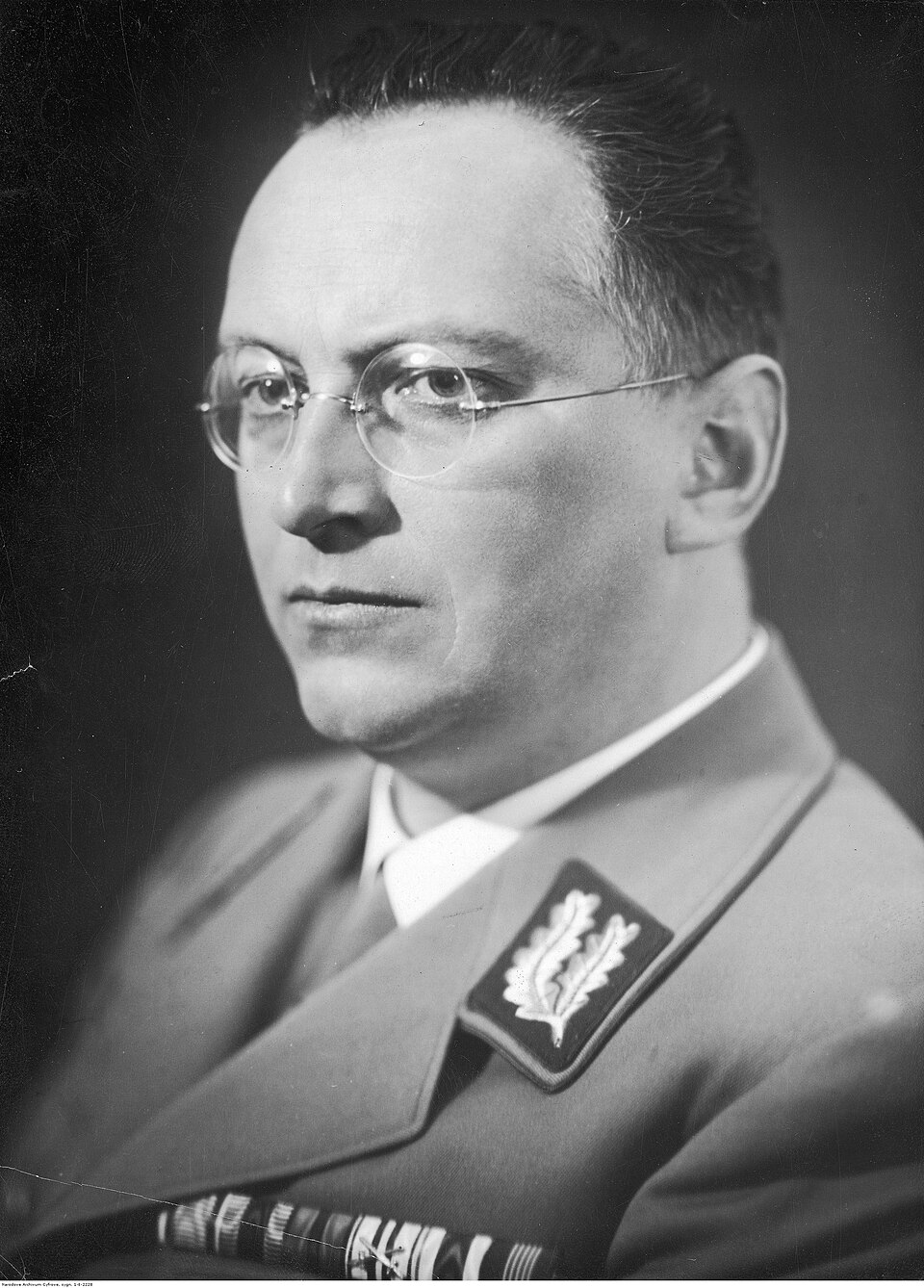
Konrad Henlein
Czechoslovak German nation politician (1898-1945)
Press Enter · cited answer in seconds
0 sources
Summary
Konrad Henlein was born on May 6, 1898[1], in Vratislavice nad Nisou[2]. He died on May 10, 1945[3], in Plzeň[4]. He worked as a politician[5], physical education teacher[6], and functionary[7]. He ranks in the top 0.71% of human entities by monthly Wikipedia readership (3,892 views/month, #7,079 of 1,000,298).[8]
Key Facts
- Place of death: Bory[9]
- Place of burial: Plzeň Central Cemetery[10]
- Country of citizenship: Germany[11], Austria–Hungary[12], Czechoslovakia[13], Nazi Germany[14]
- Position held: member of the Reichstag of Nazi Germany[15]
- Member of: Schutzstaffel[16]
- Religion or worldview: Catholicism[17]
- Sex or gender: male[18]
- Member of political party: Sudeten German Party[19], Nazi Party[20]
- Military branch: Austro-Hungarian Army[21]
- Commons category: Konrad Henlein[22]
- Cause of death: bleeding[23]
- Participated in conflict: World War II[24]
- Family name: Henlein[25]
- Given name: Konrad[26]
- Allegiance: Nazi Germany[27]
- Manner of death: suicide[28]
- Languages spoken, written or signed: German[29], Czech[30]
- Name in native language: Konrad Henlein[31]
- On focus list of Wikimedia project: Wikiproject Nuremberg Trials[32]
Why It Matters
Konrad Henlein has Wikipedia articles in 23 language editions, a strong signal of global cultural recognition.[33] He is known by 25 alternative names across languages and contexts.[34]
FAQs
Where was Konrad Henlein born?
Konrad Henlein's place of birth was Vratislavice nad Nisou[2].
Where did Konrad Henlein die?
Konrad Henlein died in Plzeň[4].
What did Konrad Henlein do for work?
Konrad Henlein worked as a politician[5], physical education teacher[6], and functionary[7].