
Kazi Nazrul Islam
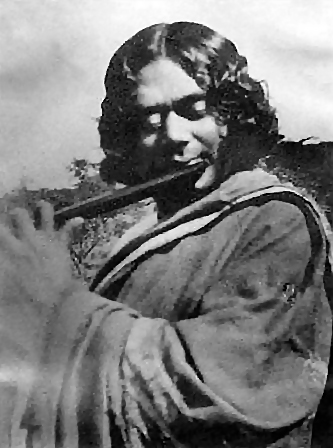
0 sources
Summary
Kazi Nazrul Islam was born on May 24, 1899[1], in Churulia[2]. He died on August 29, 1976[3], in Dhaka[4]. He worked as a poet[5], translator[6], writer[7], singer[8], and soldier[9]. He ranks in the top 0.7% of human entities by monthly Wikipedia readership (5,186 views/month, #6,978 of 1,000,298).[10]
Key Facts
- Place of burial: Mausoleum of Kazi Nazrul Islam[11]
- Child: Kazi Sabyasachi[12]
- Country of citizenship: British Raj[13], India[14], Dominion of India[15], Bangladesh[16]
- Native language: Bangla[17]
- Occupation: short story writer[18]
- Notable work: Notuner Gaan[19], Mrityukshuda[20], Agniveena[21], Bandhan Hara[22], Bisher Bashi[23], Sanchita[24], Dolan-chanpa[25], Chhayanat[26], Q13060033[27]
- Award received: Ekushey Padak[28], Independence Award in Literature[29], Padma Bhushan[30]
- Religion or worldview: Sunni Islam[31]
- Sex or gender: male[32]
- Commons category: Kazi Nazrul Islam[33]
- Military, police or special rank: havaldar[34]
- Cause of death: Pick disease[35]
- Participated in conflict: World War I[36]
- Family name: Islam[37]
- Given name: Kazi[38]
- Topic's main category: Category:Kazi Nazrul Islam[39]
- Topic's main Wikimedia portal: Portal:Kazi Nazrul Islam[40]
- Manner of death: natural causes[41]
- Languages spoken, written or signed: Bangla[42]
- Commons Creator page: Kazi Nazrul Islam[43]
- Name in native language: কাজী নজরুল ইসলাম[44]
Body
Works and Contributions
Things named for Kazi Nazrul Islam include Kazi Nazrul Islam International Airport[45], an airport[46], in India[47] and Kazi Nazrul Islam Mahavidyalaya[48], a university[49], in India[50], founded in 1981[51].
Why It Matters
Kazi Nazrul Islam has Wikipedia articles in 23 language editions, a strong signal of global cultural recognition.[52] He is known by 22 alternative names across languages and contexts.[53]
Works attributed to him include Nazrul Geeti[54], a music genre[55]. Entities named for him include Kazi Nazrul Islam International Airport[45], an airport[46], in India[47] and Kazi Nazrul Islam Mahavidyalaya[48], a university[49], in India[50], founded in 1981[51].
FAQs
Where was Kazi Nazrul Islam born?
Kazi Nazrul Islam was born in Churulia[2].
Where did Kazi Nazrul Islam die?
Kazi Nazrul Islam died in Dhaka[4].
What did Kazi Nazrul Islam do for work?
Kazi Nazrul Islam worked as a poet[5], translator[6], writer[7], singer[8], and soldier[9].
What awards did Kazi Nazrul Islam receive?
Honors received include Ekushey Padak[28], Independence Award in Literature[29], and Padma Bhushan[30].